Have you ever cut into a perfectly seared steak, only to find it undercooked in the center, or worse, surprisingly dry? The secret to consistently achieving perfectly cooked, juicy meat every time lies in one indispensable kitchen tool: the meat cooking thermometer probe. This device takes the guesswork out of cooking, ensuring both culinary perfection and food safety. Whether you’re grilling, roasting, smoking, or pan-searing, a reliable meat thermometer probe is your trusted partner for flawless results.
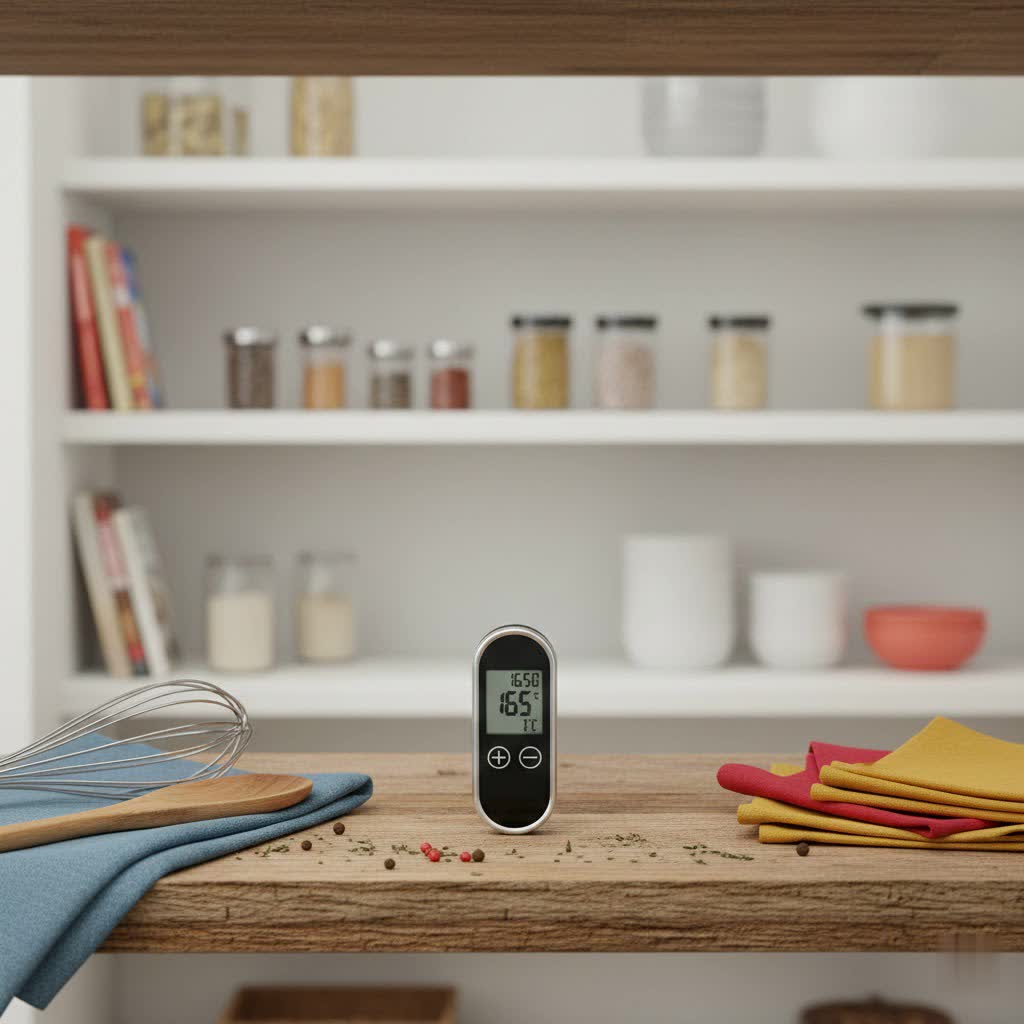
Meat Thermometer Probes: Overview and Why They Are Essential
A meat cooking thermometer probe is a specialized tool designed to measure the internal temperature of food, particularly meat, as it cooks. It consists of a sharp, metal probe that is inserted into the thickest part of the food, connected to a display unit that shows the temperature. The primary function is to provide precise temperature readings, which are crucial for two main reasons: food safety and achieving desired doneness.
Using a meat thermometer probe is paramount for food safety, as it ensures that meat reaches an internal temperature sufficient to kill harmful bacteria and pathogens, preventing foodborne illnesses. Beyond safety, it empowers home cooks and professional chefs alike to achieve the exact level of doneness they desire, whether it’s a rare steak, a medium-rare roast, or perfectly cooked poultry. This precision eliminates the need for guesswork, reducing the risk of overcooking and drying out expensive cuts of meat, or undercooking them, which can be both unappetizing and unsafe. The result is consistently flavorful, tender, and juicy dishes.
Modern meat thermometer probes come in various designs, from simple analog models to sophisticated digital devices with advanced features. Understanding the differences between these types is key to selecting the right tool for your cooking style.
Popular Types of Meat Thermometer Probes: Pros and Cons
The world of meat thermometer probes offers a range of options, each with distinct advantages and disadvantages suited to different cooking applications.
Analog Meat Thermometer Probes
Analog meat thermometers, often featuring a bimetallic strip that moves a needle on a dial, represent the most traditional and budget-friendly option.
- Pros: They are generally inexpensive, straightforward to use, and don’t require batteries, making them reliable even during power outages. Many are oven-safe and can be left in meat during cooking.
- Cons: Their accuracy can be lower compared to digital models, and the dial can be difficult to read precisely. They also tend to have a slower response time, making them less ideal for quick temperature checks.
|
Our Picks for the Best Meat Thermometer in 2026
As an Amazon Associate I earn from qualifying purchases.
|
||
| Num | Product | Action |
|---|---|---|
| 1 | Escali AH1 Stainless Steel Oven Safe Meat Thermometer, Extra Large 2.5-inches Dial, Temperature Labeled for Beef, Poultry, Pork, and Veal Silver NSF Certified |

|
| 2 | Meat Thermometer Digital - Instant Read Waterproof Food Thermometer with Backlight for Cooking, Grill, Candy, Kitchen & Stocking Stuffers for Men - Red |
|
| 3 | Meat Thermometer Digital for Grilling and Cooking - ANDAXIN Waterproof Ultra-Fast Instant Read Food thermometers with Backlight & Calibration for Kitchen, Deep Fry, BBQ, Grill(Red/Black), LCD |
|
| 4 | 2 Pack Stainless Steel Meat Thermometer, Safe Leave in Oven, 2.5-in Extra-Large Dial Food Thermometer for Cooking, Temperature Probe for Baking, Steak, Turkey - Kitchen Gadgets - Silver |
|
| 5 | ThermoPro TP19H Digital Meat Thermometer for Cooking with Ambidextrous Backlit and Motion Sensing Kitchen Cooking Food Thermometer for BBQ Grill Smoker Oil Fry Candy Instant Read Thermometer |
|
| 6 | 0.5 Sec Instant Read Meat Thermometer Digital with ±0.5℉ Precision, Food Thermometer for Cooking Kitchen Gadgets, Oven Grill Candy BBQ Essentials Accessories, Gifts for Him Dad Men Birthday, Red |
|
| 7 | Meat Thermometer Digital, Instant Read Meat ThermometerI for Grill and Cooking, Waterproof Food Thermometer for Kitchen and Outside, BBQ, Turkey, Candy, Liquids, Beef |
|
| 8 | ThermoPro TP16 Large LCD Digital Cooking Food Meat Thermometer for Smoker Oven Kitchen BBQ Grill Thermometer Clock Timer with Stainless Steel Temperature Probe |
|
| 9 | Alpha Grillers Meat Thermometer Digital - Instant Read Food Thermometer for Cooking and Grilling Gifts for Men Valentines Day Gifts for Him Her Mom Dad |
|
| 10 | Instant Read Meat Thermometer, Fast & Accurate Digital Food Thermometer with Backlight, Waterproof & Magnet for Grilling, Cooking, BBQ, Smoker, Baking, and Candy Making Blue |
|
Digital Meat Thermometer Probes
Digital meat thermometer probes offer enhanced accuracy and readability, making them a popular choice for many home cooks.
- Pros: They provide highly accurate readings, often within ±1 to 2°F, and display temperatures clearly on an LCD screen. Many models come with advanced features such as alarm functions, timers, and preset temperatures for various meats, ensuring you pull your food off the heat at the exact right moment. Some digital probes are designed to be left in the oven, connected by a heat-resistant wire to an external display.
- Cons: They require batteries, which need occasional replacement, and are typically more expensive than their analog counterparts.
Leave-In Probe Meat Thermometers
Specifically designed for monitoring temperatures over extended cooking periods, leave-in probe thermometers are a game-changer for roasting, smoking, and grilling large cuts of meat.
- Pros: These probes can be inserted into the meat and left inside the oven, grill, or smoker, with a heat-resistant cable connecting to a display unit outside. This allows continuous temperature monitoring without opening the cooking chamber, preventing heat loss and fluctuations. Many offer alarm functions that alert you when your target temperature is reached.
- Cons: The wired connection can sometimes be cumbersome, and the probe must be carefully placed to avoid contact with bones or heating elements.
Instant-Read Meat Thermometer Probes
For quick spot checks and thinner cuts of meat, instant-read thermometer probes are invaluable.
- Pros: As their name suggests, these thermometers provide rapid temperature readings, often in 1 to 8 seconds. They are ideal for pan-searing steaks, checking grilled chicken, or verifying the temperature of a casserole before serving. Their portability and speed make them highly convenient.
- Cons: Instant-read thermometers are not designed to be left in food during cooking, as the main unit typically contains electronic components that are not heat-resistant. You must insert, read, and remove them quickly.
Comparing Meat Thermometer Probes
To help you make an informed decision, here’s a comparison of the different types of meat thermometer probes:
| Feature | Analog | Digital | Leave-In Probe | Instant-Read Probe |
|---|---|---|---|---|
| Accuracy | Lower (±5-10°F) | High (±1-2°F) | High (±1-2°F) | Very High (±0.5-1°F) |
| Response Time | Slow (30+ seconds) | Moderate (5-10 seconds) | Continuous monitoring | Fast (1-8 seconds) |
| Power Source | Mechanical (no batteries) | Batteries | Batteries (for display) | Batteries |
| Usability | Simple, basic reading | Clear digital display, often with alerts | Remote monitoring, alarms | Quick spot checks, portable |
| Oven-Safe | Yes (can be left in food) | Some wired models are oven-safe | Yes (probe and cable only) | No (not designed to be left in oven) |
| Best For | Roasts, traditional baking | General cooking, roasts, basic grilling | Roasting, smoking, grilling large cuts | Steaks, poultry, quick checks, thin cuts |
| Price Range | Low | Mid to High | Mid to High | Mid to High |
| Special Features | None | Alarms, timers, presets, backlit display | Alarms, timers, remote display, sometimes wireless (Bluetooth/WiFi) | Auto-off, rotating display, thin probe tip |
How to Choose the Right Meat Thermometer Probe for You
Selecting the perfect meat thermometer probe involves considering your cooking habits, precision needs, and budget.
Determine Your Cooking Needs
First, think about the types of meats you typically cook and your preferred cooking methods.
- What kind of meat do you usually cook? If you often prepare large roasts, briskets, or whole poultry in the oven or smoker, a leave-in probe thermometer (especially a wireless one) will provide continuous monitoring, saving you from constantly opening the oven door. For quick-cooking items like steaks, chicken breasts, or burgers, an instant-read thermometer is ideal for fast spot checks to prevent overcooking.
- How accurate do you need to be? If culinary precision is paramount for you, prioritize digital models with high accuracy ratings (e.g., ±1°F or better). Some advanced probes can even measure ambient temperatures in your cooking environment, which is excellent for smoking or grilling.
- Do you need special features? Consider if features like programmable alarms, preset temperature guides for different meats, large backlit displays, or wireless connectivity (Bluetooth or WiFi to a smartphone app) would enhance your cooking experience. Wireless options offer incredible freedom, allowing you to monitor your cook from a distance.
Consider Your Budget
Meat thermometer probes come in a wide range of prices.
- Budget-friendly options: Basic analog or entry-level digital instant-read thermometers are available at lower price points and can still offer significant improvements over guessing.
- Mid-range options: These often include more robust digital instant-read or wired leave-in probes with additional features like alarms and faster response times.
- High-end options: Premium wireless multi-probe thermometers with smart app integration offer the most convenience and advanced features, but come with a higher price tag. Choose a model that provides the best value for your needs without overspending on features you won’t use.
Brand Reputation and Reviews
Always opt for reputable brands known for quality and accuracy.
- Research brands: Look for well-established names in kitchen tools and thermometers.
- Read reviews: Check online reviews from other users. Real-world feedback can highlight a product’s durability, ease of use, and actual performance. Pay attention to comments regarding accuracy, speed, and customer service.
Proper Usage of a Meat Thermometer Probe
Using your meat thermometer probe correctly is as important as choosing the right one. Incorrect placement can lead to inaccurate readings and potentially unsafe food.
How to Insert the Probe Accurately
The key to an accurate reading is inserting the probe into the thickest part of the meat, away from bones, fat, and gristle.
- For large cuts (roasts, whole poultry): Insert the probe into the center of the thickest part. For whole chickens or turkeys, the breast is usually the best spot. Ensure the probe tip does not touch any bone, as bones conduct heat differently and can give an artificially high reading.
- For thin cuts (steaks, chops, burgers): Instead of inserting vertically from the top, push the probe horizontally through the side of the meat until the tip reaches the center. This ensures the full sensing area is within the meat’s core.
- For leave-in probes: Once inserted, ensure the probe is stable. The cable should be routed carefully to avoid direct contact with heating elements or flames, and the display unit kept outside the hot environment.
USDA Guidelines for Safe Internal Temperatures
Adhering to USDA guidelines ensures your food is safe to eat. Here are some common safe minimum internal temperatures:
- Beef, Pork, Veal, and Lamb (steaks, chops, roasts): 145°F (63°C) with a 3-minute rest time.
- Ground Meats (beef, pork, veal, lamb): 160°F (71°C).
- Poultry (whole, ground, parts): 165°F (74°C).
- Fish: 145°F (63°C).
Always refer to the latest USDA guidelines for specific recommendations. For desired doneness levels (e.g., rare, medium-rare beef), you can pull meat off the heat at a slightly lower temperature, understanding that the temperature will rise a few degrees during resting (“carryover cooking”).
Cleaning and Maintenance
Proper care extends the life and maintains the accuracy of your thermometer.
- Cleaning: After each use, clean the probe with warm, soapy water. For stubborn residue, a gentle scrub with a soft brush can help. Avoid submerging the entire unit (especially digital displays) unless it’s explicitly rated as waterproof. Sanitize the probe if it has come into contact with raw meat.
- Storage: Store your thermometer in a clean, dry place. Many come with protective sheaths for probes to prevent damage. Ensure wired probes are not kinked or strained during storage.
Top 5 Meat Thermometer Probes Highly Recommended
Based on extensive testing and user feedback, these five meat thermometer probes consistently stand out for their accuracy, speed, and features:
- ThermoWorks Thermapen ONE: Widely regarded as the gold standard for instant-read thermometers, the Thermapen ONE delivers readings in just one second with exceptional accuracy (±0.5°F). Its auto-rotating display, waterproof design, and robust build make it a favorite among professionals. It’s perfect for quick checks on everything from steaks to baked goods.
- MEATER Plus/Meater Pro: For those seeking ultimate wireless freedom, the MEATER series is revolutionary. These truly wireless probes connect via Bluetooth to a smartphone app, monitoring both internal meat temperature and ambient cooking temperature. The app provides guided cooks, estimated cooking times, and alerts. The Meater Pro, the latest iteration, boasts even higher heat resistance and a longer battery life, making it suitable for grills, smokers, and even deep frying.
- ThermoWorks ChefAlarm: A top-tier leave-in probe thermometer, the ChefAlarm is celebrated for its intuitive interface, high accuracy, and versatility. It features a large, backlit display, a robust probe, and programmable high/low alarms. It’s ideal for roasts, slow cooks, candy making, and even sous vide.
- ThermoPro TP20 Wireless Meat Thermometer: This budget-friendly wireless option provides excellent performance without breaking the bank. It comes with two probes (one for meat, one for ambient temperature) and a remote receiver with a good range. It’s easy to set up and use, offering preset temperatures for various meats and customizable alarms.
- Typhur Sync Dual Thermometer: Praised for its robust design and vivid LED display, the Typhur Sync is a dual-probe leave-in thermometer that offers both app connectivity and a standalone display. Its flared probe base makes it easy to handle even with greasy hands, and its precision makes it great for everyday cooking from quick steaks to longer roasts.
> “A meat thermometer is not just a gadget; it’s an investment in consistently delicious and safe meals. It truly transforms home cooking from guesswork to precision.” – Chef John Smith, Culinary Instructor.
Conclusion
The meat cooking thermometer probe is an essential tool that elevates your cooking from good to consistently great. It removes the uncertainty from internal temperature management, ensuring every dish you prepare is both perfectly safe and exquisitely delicious. By understanding the different types available, knowing how to use them correctly, and choosing a model that fits your specific needs, you unlock the secret to restaurant-quality results in your own kitchen.
Don’t let another meal be a guessing game. Invest in a quality meat thermometer probe and experience the confidence and satisfaction of cooking meat to perfection every time. What’s your favorite type of meat to cook with a probe thermometer?
Frequently Asked Questions
What is the difference between an instant-read and a leave-in meat thermometer probe?
An instant-read probe is used for quick spot checks and is removed from the food after a few seconds, while a leave-in probe remains in the meat throughout the cooking process, providing continuous temperature monitoring via a heat-resistant cable and external display.
Can I use a meat thermometer probe for other foods?
Absolutely! Meat thermometer probes are versatile and can be used to check the internal temperature of bread, casseroles, hot liquids, deep-frying oil, or even grilled vegetables to ensure they reach the desired temperature and doneness.
How do I calibrate my meat thermometer probe?
A common method is the ice bath test: fill a glass with crushed ice and water, insert the probe without touching the sides or bottom, and wait for the reading to stabilize. It should read 32°F (0°C). Some digital thermometers have a calibration function, or you may need to adjust an analog thermometer using a small wrench.
Is a wireless meat thermometer probe worth the investment?
For avid grillers, smokers, or those who prepare large roasts, a wireless meat thermometer probe is often worth the investment. It offers unmatched convenience, allowing you to monitor your food’s temperature remotely via Bluetooth or Wi-Fi, which prevents heat loss from opening your cooker and gives you the freedom to tend to other tasks.
