Achieving perfectly smoked meats is an art, a delicate balance of time, temperature, and technique. Yet, nothing ruins that masterpiece faster than guessing your way through the cook. Imagine stepping away from your smoker, confident that your brisket or pork shoulder is steadily approaching perfection, without needing to constantly hover. This isn’t a dream; it’s the reality a high-quality wireless meat thermometer brings to your smoking journey. Whether you’re a seasoned pitmaster or just starting, understanding and utilizing the right wireless meat thermometer for your smoker is the key to unlocking consistent, mouth-watering results every single time.
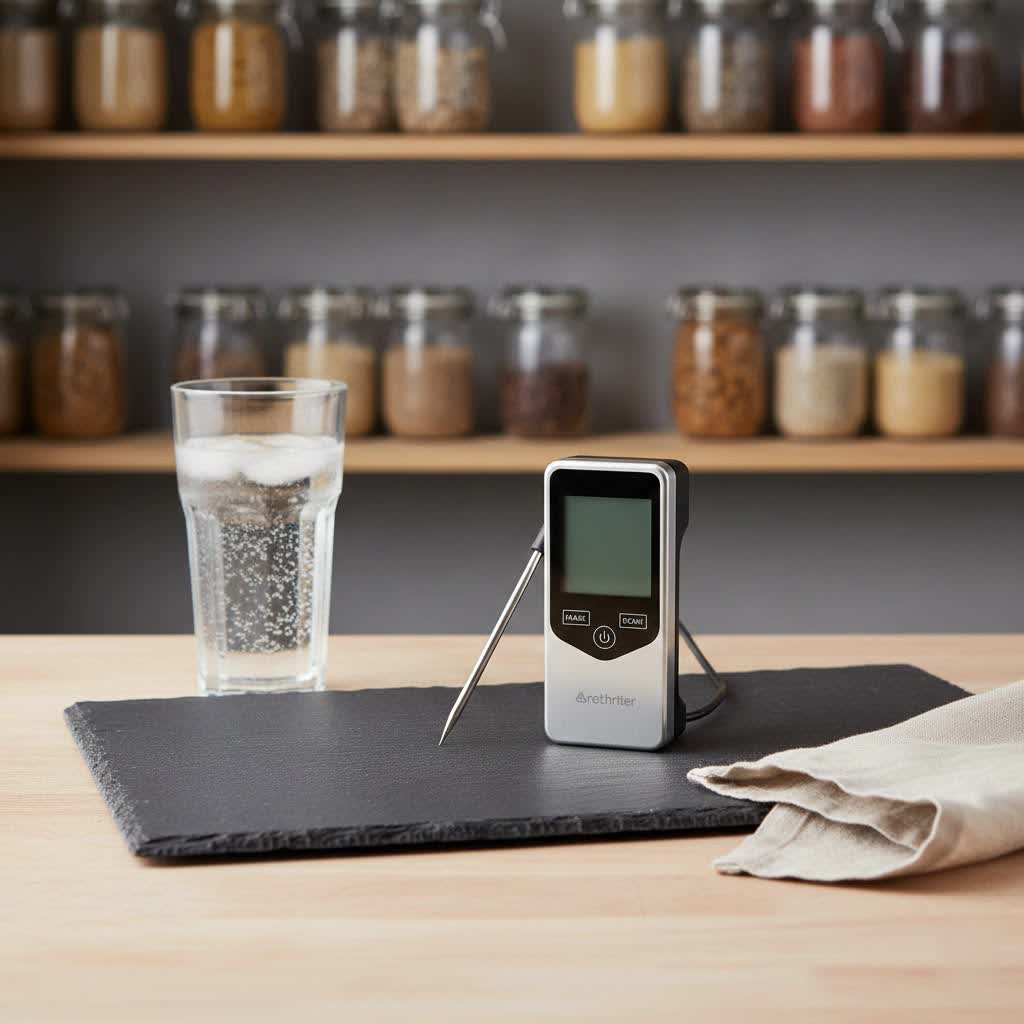
Wireless Meat Thermometer: Overview and Why You Need One
A meat thermometer is an indispensable kitchen tool designed to measure the internal temperature of food, ensuring it reaches safe and desired doneness. While traditional thermometers require manual checks, a wireless meat thermometer takes convenience to the next level, allowing you to monitor your cook remotely.
Using a meat thermometer, especially a wireless one, is crucial for several reasons when smoking. Firstly, it’s about food safety. Different meats require specific internal temperatures to eliminate harmful bacteria, and a thermometer provides that critical assurance. Secondly, it guarantees perfect flavor and texture. Overcooked meat becomes dry and tough, while undercooked meat is, well, undercooked. A precise temperature reading ensures your food is cooked exactly to your preference, achieving that ideal tenderness and juiciness. For low and slow smoking, maintaining consistent temperatures both within the meat and the smoker environment is paramount, and wireless thermometers excel at this, giving you real-time updates without needing to open the smoker and lose precious heat.
While the market offers various types of meat thermometers—analog, digital, probe, and instant-read—for smoking, the focus is predominantly on digital probe thermometers, specifically those with wireless capabilities. These allow continuous monitoring over extended periods, making them ideal for long smoking sessions.
Popular Wireless Meat Thermometer Types: Pros and Cons
When it comes to wireless meat thermometers for smoking, the landscape is dominated by digital models, which can be broadly categorized by their connectivity and form factor.
Analog Meat Thermometer
|
Our Picks for the Best Meat Thermometer in 2026
As an Amazon Associate I earn from qualifying purchases.
|
||
| Num | Product | Action |
|---|---|---|
| 1 | Meat Thermometer Digital for Grilling and Cooking - ANDAXIN Waterproof Ultra-Fast Instant Read Food thermometers with Backlight & Calibration for Kitchen, Deep Fry, BBQ, Grill(Red/Black), LCD |

|
| 2 | Escali AH1 Stainless Steel Oven Safe Meat Thermometer, Extra Large 2.5-inches Dial, Temperature Labeled for Beef, Poultry, Pork, and Veal Silver NSF Certified |
|
| 3 | Meat Thermometer Digital - Instant Read Waterproof Food Thermometer with Backlight for Cooking, Grill, Candy, Kitchen & Stocking Stuffers for Men - Red |
|
| 4 | Alpha Grillers Meat Thermometer Digital - Instant Read Food Thermometer for Cooking and Grilling Gifts for Men Valentines Day Gifts for Him Her Mom Dad |
|
| 5 | 2 Pack Stainless Steel Meat Thermometer, Safe Leave in Oven, 2.5-in Extra-Large Dial Food Thermometer for Cooking, Temperature Probe for Baking, Steak, Turkey - Kitchen Gadgets - Silver |
|
| 6 | Instant Read Meat Thermometer, Fast & Accurate Digital Food Thermometer with Backlight, Waterproof & Magnet for Grilling, Cooking, BBQ, Smoker, Baking, and Candy Making Blue |
|
| 7 | 0.5 Sec Instant Read Meat Thermometer Digital with ±0.5℉ Precision, Food Thermometer for Cooking Kitchen Gadgets, Oven Grill Candy BBQ Essentials Accessories, Gifts for Him Dad Men Birthday, Red |
|
| 8 | ThermoPro TP16 Large LCD Digital Cooking Food Meat Thermometer for Smoker Oven Kitchen BBQ Grill Thermometer Clock Timer with Stainless Steel Temperature Probe |
|
| 9 | Meat Thermometer Digital, Instant Read Meat ThermometerI for Grill and Cooking, Waterproof Food Thermometer for Kitchen and Outside, BBQ, Turkey, Candy, Liquids, Beef |
|
| 10 | ThermoPro TP19H Digital Meat Thermometer for Cooking with Ambidextrous Backlit and Motion Sensing Kitchen Cooking Food Thermometer for BBQ Grill Smoker Oil Fry Candy Instant Read Thermometer |
|
Analog thermometers, often found as dial-style gauges, are typically inexpensive and don’t require batteries. However, they are generally less accurate, harder to read precisely, and offer no remote monitoring capabilities, making them unsuitable for the precision and convenience required for smoking. They serve better as basic oven or grill lid thermometers for ambient temperature checks, but not for internal meat temperature monitoring in a smoker.
Digital Meat Thermometer
Digital thermometers provide quick, precise readings on an easy-to-read display. When equipped with wireless technology, they become indispensable for smoking. They usually feature high accuracy, multiple probes, and advanced functionalities like alarms and preset temperatures.
Probe Meat Thermometer
This category encompasses most wireless meat thermometers for smokers. They consist of one or more heat-resistant probes inserted into the meat, connected to a base unit, which then wirelessly transmits data to a remote receiver or a smartphone app. These are “leave-in” thermometers, designed to stay in the meat throughout the entire cooking process.
- Pros:
- Continuous Monitoring: Essential for long smoking sessions.
- Multiple Probes: Often come with several probes to monitor different cuts of meat or both meat and ambient smoker temperatures simultaneously.
- High Accuracy: Generally more precise than analog options.
- Remote Tracking: Monitor temperatures from a distance via Bluetooth or Wi-Fi.
- Cons:
- Wired Probes: Some models still have wires connecting probes to a base unit, which can be cumbersome to manage.
- Battery Dependent: Requires batteries for operation.
- Cost: Typically more expensive than basic thermometers.
Instant-Read Meat Thermometer
Instant-read thermometers are handheld devices designed for quick, on-the-spot temperature checks. While highly accurate and fast, they are not suited for continuous monitoring in a smoker. You’d have to constantly open the smoker lid to use one, which lets out heat and smoke, defeating the purpose of a stable smoking environment. They are best used for quick verification at the end of a cook or for thinner cuts of meat on a grill.
Wireless Thermometer Connectivity: Bluetooth vs. Wi-Fi
Within digital probe thermometers, the primary distinction in wireless models lies in their connectivity:
- Bluetooth Wireless Meat Thermometer:
- Pros: Generally more affordable, easy to pair with smartphones.
- Cons: Limited range (typically 100-300 feet), signal can be interrupted by thick smoker walls or obstacles, less reliable for very long distances or when moving far from the smoker.
- Wi-Fi Wireless Meat Thermometer:
- Pros: Offers extended or virtually unlimited range (as long as you have Wi-Fi signal), more reliable for monitoring from anywhere in your home or even away from home (if cloud-connected).
- Cons: Often requires a hub or gateway, can be more expensive, more complex initial setup.
- Some “truly wireless” probes (e.g., Meater) embed all sensors and transmitters in the probe itself, transmitting to a charging block (Bluetooth) which can then connect to Wi-Fi for extended range.
Comparison Table of Wireless Meat Thermometer Features
| Feature | Bluetooth Only Models | Wi-Fi/Bluetooth Hybrid Models | Truly Wireless Probes (e.g., Meater) |
|---|---|---|---|
| Connectivity | Bluetooth | Bluetooth & Wi-Fi (via hub/gateway) | Bluetooth (probe to hub), Wi-Fi (hub to router) |
| Range | Short (100-300 ft) | Long/Unlimited | Moderate (probe to hub), Unlimited (hub to app) |
| Probe Type | Wired to base unit | Wired to base unit | Integrated, no wires |
| Accuracy | High (typically ±1°F) | Very High (typically ±0.5-1°F) | High (typically ±1°F) |
| Multi-Probe | Common (2-6 probes) | Common (4-8 probes) | Multiple individual probes |
| App Integration | Standard | Advanced with cloud features | Standard with intuitive app |
| Ambient Sensor | Often dedicated ambient probe | Often dedicated ambient probe or integrated | Integrated into the probe |
| Battery Life | Varies, usually long for base unit, probes powered by base | Varies | Varies, often excellent for probes |
| Price Range | Mid-range | Higher-end | Mid to High-end |
| Best For | Backyard smoking, short-to-medium cooks | Long-haul smoking, remote monitoring | High heat searing, untethered monitoring |
How to Choose the Right Wireless Meat Thermometer for Your Smoker
Selecting the perfect wireless meat thermometer requires considering your specific smoking habits and priorities.
Determine Your Usage Needs
- What types of meat do you smoke? If you frequently smoke large cuts like brisket or pork shoulder, you’ll benefit from a multi-probe system to monitor different sections of the meat and the ambient pit temperature.
- How precise do you need to be? Most digital thermometers offer excellent accuracy (within ±1°F), but some high-end models boast even tighter tolerances. For critical cooks, investing in higher accuracy can make a difference.
- What features are essential? Consider if you need advanced features like preset temperatures for various meats, custom alarms, cooking graphs, or estimated cook times. Do you prefer a simple remote receiver or a feature-rich smartphone app? For long smokes, Wi-Fi connectivity is a game-changer, allowing you to run errands or relax indoors without losing connection. If you plan to sear after smoking, ensure the probes can withstand high heat.
Your Budget
Wireless meat thermometers come in a wide price range. Bluetooth-only models tend to be more affordable, while Wi-Fi enabled systems with multiple probes and extensive app functionality will be on the higher end. Determine what you’re willing to invest, keeping in mind that a reliable thermometer can save you from ruined cooks.
Brand and Reviews
Always opt for reputable brands known for accuracy, durability, and customer support. Brands like ThermoWorks, Meater, ThermoPro, and Chef iQ consistently receive high praise from the BBQ community. Reading user reviews can provide real-world insights into connectivity range, battery life, and app performance, which are critical for wireless devices.
How to Use a Wireless Meat Thermometer Correctly
Proper usage of your wireless meat thermometer is just as important as choosing the right one. Follow these steps for accurate and safe cooking:
- Charge or Install Batteries: Ensure your thermometer’s probes and base unit (if applicable) are fully charged or have fresh batteries before starting a long cook.
- Probe Placement is Key:
- Insert the probe into the thickest part of the meat, avoiding bones, gristle, or large pockets of fat. These can conduct heat differently and give inaccurate readings.
- For poultry, insert into the thickest part of the breast or thigh without touching bone.
- For large cuts like brisket, use multiple probes: one in the “flat” and another in the “point” to track different doneness levels, and an ambient probe to monitor the smoker’s air temperature.
- Ensure the probe is inserted deep enough for the sensor to be at the true center of the meat.
- Connect to App/Receiver: Turn on your thermometer and connect it to its companion app on your smartphone or remote receiver following the manufacturer’s instructions.
- Set Target Temperatures: Use the app or receiver to set your desired final internal temperature for the meat, referencing USDA guidelines for food safety (e.g., poultry 165°F, pork 145°F, beef medium-rare 130-135°F). Set high and low alarms for ambient smoker temperatures to maintain consistency.
- Stabilize Your Smoker: Before inserting the probes, bring your smoker to its desired cooking temperature and let it stabilize. This ensures accurate ambient readings.
- Monitor Remotely: Keep the base unit close enough to the smoker for a strong connection. Then, monitor your cook from a distance, enjoying the freedom of not being tethered to the smoker.
- Clean and Store: After each use, clean probes with warm, soapy water. Avoid submerging the probe’s cable or transmitter in water unless explicitly rated as fully submersible. Store your thermometer in its case to protect it from damage.
Top 5 Wireless Meat Thermometers for Smoking
Based on extensive testing and user feedback, here are five highly-regarded wireless meat thermometers that excel for smoking:
- ThermoWorks Signals (Wi-Fi/Bluetooth): Known for its professional-grade accuracy and robust build, the Signals offers four channels (three food probes, one air probe) and seamless Wi-Fi and Bluetooth connectivity. Its large, easy-to-read display and intuitive app make it a favorite for serious pitmasters. It also supports their Billows fan for temperature control.
- Meater 2 Plus (Truly Wireless Bluetooth/Wi-Fi): The Meater 2 Plus stands out with its completely wireless probe design, featuring multiple internal sensors for both meat and ambient temperatures. It connects to an app via Bluetooth, and its charging block can extend the range or connect to Wi-Fi for unlimited monitoring. Ideal for those who hate wires and desire high-heat searing capability.
- Typhur Sync Dual (Wi-Fi/Bluetooth): This thermometer offers excellent range and accuracy with dual probes capable of monitoring both internal meat and ambient temperatures. Its sub-1G technology aims for more reliable range. The app is generally well-received for its user-friendliness and comprehensive features.
- CHEF iQ iQ Sense (Wi-Fi/Bluetooth): The iQ Sense features four internal sensors and impressive heat resistance. It boasts unlimited wireless range via Wi-Fi through its Smart Hub and a smart app that offers predictive cook times and guided recipes. This model is praised for its integrated features and convenience.
- ThermoPro TempSpike Pro (Truly Wireless Bluetooth/Wi-Fi): Similar to Meater in its truly wireless probe design, the TempSpike Pro offers multiple internal and ambient sensors. It provides a standalone display on its base unit, which can be removed, and connects to an app via Bluetooth and can extend to Wi-Fi. It’s often highlighted for its competitive price point and solid performance.
> “A wireless meat thermometer isn’t just a gadget; it’s an essential tool that elevates your smoking game from guesswork to guaranteed perfection, freeing you to enjoy the process without compromise.” – Admin, Reviewedia.com
Conclusion
A wireless meat thermometer is an indispensable companion for any smoking enthusiast, transforming the often-stressful process into an enjoyable, confident culinary adventure. By providing accurate, real-time data directly to your device, these smart tools ensure food safety, prevent overcooking, and consistently deliver perfectly cooked, succulent results. From understanding the nuances of different connectivity types to proper probe placement and leveraging advanced app features, embracing this technology will undoubtedly make you a more confident and skilled backyard chef. So, are you ready to elevate your smoking experience and achieve culinary perfection every time?
Frequently Asked Questions
What is the maximum range of a wireless meat thermometer?
The range varies significantly. Bluetooth-only models typically offer 100-300 feet, which can be affected by physical barriers. Wi-Fi enabled thermometers, often using a hub or gateway, can offer virtually unlimited range as long as both the hub and your monitoring device have an internet connection.
Can I use a wireless meat thermometer in an oven or grill too?
Yes, most wireless meat thermometers designed for smokers are also perfectly suitable for use in ovens and on grills. The heat resistance of the probes and their ability to continuously monitor internal temperatures make them versatile for various cooking methods, ensuring consistent results across the board.
How many probes do I need for smoking?
For smoking, a thermometer with at least two probes is recommended: one for the internal temperature of your meat and one for monitoring the ambient temperature inside the smoker. If you’re cooking multiple cuts or a very large piece of meat like a full brisket, 3-4 probes can be highly beneficial for comprehensive monitoring.
How do I clean and maintain my wireless meat thermometer?
After each use, thoroughly clean the probes with warm, soapy water and a soft sponge. Ensure the probe connections and base unit (if not waterproof) do not get wet. Always refer to the manufacturer’s instructions for specific cleaning and care guidelines, and store the thermometer in a protective case when not in use to prolong its lifespan.
