Imagine serving a perfectly cooked steak, juicy and tender, or a succulent roast that’s safe to eat every time. This isn’t just for professional chefs; with an internal meat thermometer, you can achieve culinary perfection and ensure food safety in your home kitchen. For over a decade, I’ve delved into the world of meat thermometers, testing hundreds of models to understand their technology, accuracy, and practical applications. Join me as we explore this indispensable tool, transforming your cooking from guesswork to gourmet.
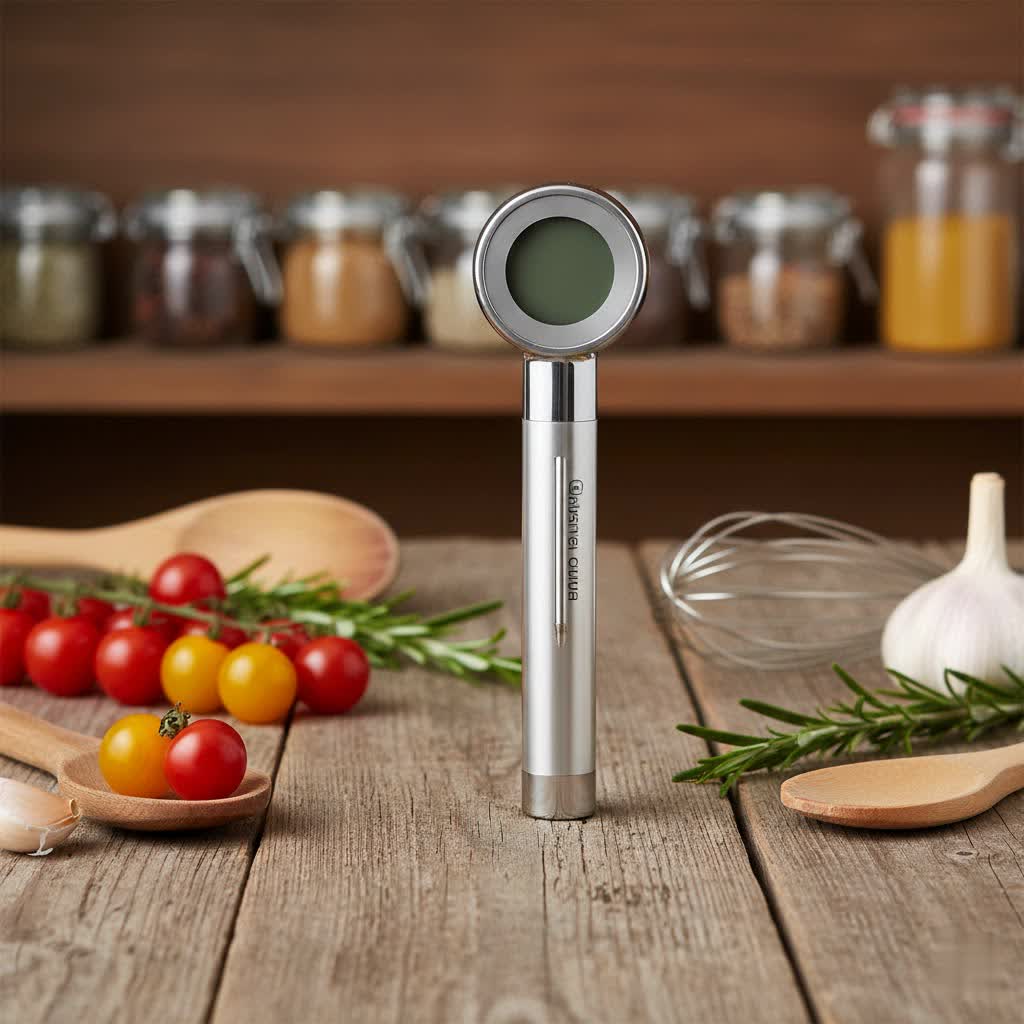
Internal Meat Thermometer: Overview and Why You Need One
An internal meat thermometer is a specialized device designed to measure the temperature at the core of your food. It’s a game-changer for home cooks, offering precision that timers and guesswork simply can’t match. Beyond achieving your desired doneness—from a perfectly rare steak to a well-done chicken—this tool is paramount for food safety. Undercooked meats can harbor harmful bacteria, posing a risk of foodborne illness. By accurately monitoring the internal temperature, you can kill these germs and serve meals with confidence.
Furthermore, a meat thermometer helps preserve the natural moisture and flavor of your food. Overcooking is a common pitfall, leading to dry, tough results. With precise temperature readings, you can remove your meat from the heat at just the right moment, locking in juices and maximizing taste. On the market today, you’ll find various types, including analog, digital, probe, and instant-read thermometers, each catering to different cooking needs and preferences.
Common Types of Internal Meat Thermometers: Pros and Cons
Choosing the right internal meat thermometer can seem daunting with so many options available. Understanding the characteristics of each type will guide you toward the best fit for your cooking style.
Analog Meat Thermometer
Analog meat thermometers, often featuring a traditional dial, have been a kitchen staple for years.
- Pros: They are generally inexpensive and do not require batteries, making them a straightforward and accessible option.
- Cons: These thermometers typically offer lower accuracy and can be challenging to read precisely. They also take longer to register a stable temperature reading.
|
Our Picks for the Best Meat Thermometer in 2026
As an Amazon Associate I earn from qualifying purchases.
|
||
| Num | Product | Action |
|---|---|---|
| 1 | ThermoPro TP19H Digital Meat Thermometer for Cooking with Ambidextrous Backlit and Motion Sensing Kitchen Cooking Food Thermometer for BBQ Grill Smoker Oil Fry Candy Instant Read Thermometer |

|
| 2 | Meat Thermometer Digital for Grilling and Cooking - ANDAXIN Waterproof Ultra-Fast Instant Read Food thermometers with Backlight & Calibration for Kitchen, Deep Fry, BBQ, Grill(Red/Black), LCD |
|
| 3 | Meat Thermometer Digital, Instant Read Meat ThermometerI for Grill and Cooking, Waterproof Food Thermometer for Kitchen and Outside, BBQ, Turkey, Candy, Liquids, Beef |
|
| 4 | Instant Read Meat Thermometer, Fast & Accurate Digital Food Thermometer with Backlight, Waterproof & Magnet for Grilling, Cooking, BBQ, Smoker, Baking, and Candy Making Blue |
|
| 5 | Alpha Grillers Meat Thermometer Digital - Instant Read Food Thermometer for Cooking and Grilling Gifts for Men Valentines Day Gifts for Him Her Mom Dad |
|
| 6 | ThermoPro TP16 Large LCD Digital Cooking Food Meat Thermometer for Smoker Oven Kitchen BBQ Grill Thermometer Clock Timer with Stainless Steel Temperature Probe |
|
| 7 | 2 Pack Stainless Steel Meat Thermometer, Safe Leave in Oven, 2.5-in Extra-Large Dial Food Thermometer for Cooking, Temperature Probe for Baking, Steak, Turkey - Kitchen Gadgets - Silver |
|
| 8 | 0.5 Sec Instant Read Meat Thermometer Digital with ±0.5℉ Precision, Food Thermometer for Cooking Kitchen Gadgets, Oven Grill Candy BBQ Essentials Accessories, Gifts for Him Dad Men Birthday, Red |
|
| 9 | Meat Thermometer Digital - Instant Read Waterproof Food Thermometer with Backlight for Cooking, Grill, Candy, Kitchen & Stocking Stuffers for Men - Red |
|
| 10 | Escali AH1 Stainless Steel Oven Safe Meat Thermometer, Extra Large 2.5-inches Dial, Temperature Labeled for Beef, Poultry, Pork, and Veal Silver NSF Certified |
|
Digital Meat Thermometer
Digital thermometers have surged in popularity due to their modern features and reliability.
- Pros: Known for high accuracy and clear, easy-to-read digital displays, many models offer additional functionalities like alarms, backlighting, and programmable settings for specific meats. They provide quick readings, often within a few seconds.
- Cons: They are usually more expensive than analog models and rely on batteries for operation.
Probe Meat Thermometer (Leave-in)
Probe thermometers are designed for continuous monitoring throughout the cooking process.
- Pros: These thermometers can be inserted into the meat and left in the oven, grill, or smoker, allowing you to track temperature changes in real-time without opening the cooking appliance. Many come with a wired probe connected to an external display, some even offering wireless connectivity for remote monitoring. They are ideal for roasts and slow-cooked dishes.
- Cons: Care must be taken to ensure the probe avoids bones or fatty areas for accuracy. Some designs may have plastic components not suitable for prolonged high heat, though dedicated oven-safe models are readily available.
Instant-Read Meat Thermometer
Instant-read thermometers are perfect for quick spot-checks, providing rapid temperature readings.
- Pros: They are exceptionally fast, delivering accurate temperatures within a few seconds. Their portable design makes them convenient for grilling, frying, or checking multiple items.
- Cons: These thermometers are not designed to be left in the meat during cooking, as their plastic components can melt or be damaged by sustained high heat. They require repeated insertion for larger cuts to ensure even cooking.
Internal Meat Thermometer Comparison Table
| Feature | Analog | Digital | Probe (Leave-in) | Instant-Read |
|---|---|---|---|---|
| Accuracy | Moderate | High | High | Very High |
| Speed | Slow (15-20+ seconds) | Fast (5-10 seconds) | Continuous monitoring | Very Fast (1-5 seconds) |
| Features | Basic dial | Backlight, alarms, presets | Alarms, remote monitoring | Backlight, auto-on/off |
| Price Range | Low | Medium to High | Medium to High | Medium to High |
| Power | None (bimetallic strip) | Batteries | Batteries | Batteries |
| In-Oven Use | Yes (some oven-safe models) | No (base unit outside) | Yes | No |
| Best For | Roasts (basic) | Everyday cooking, grilling | Roasting, smoking, BBQ | Quick checks, thin cuts |
| Pros | Inexpensive, no batteries | Accurate, easy to read | Continuous, remote alerts | Quick, precise, portable |
| Cons | Less precise, harder to read | Needs batteries, higher cost | Tricky placement | Not oven-safe |
How to Choose the Right Internal Meat Thermometer
Selecting the ideal internal meat thermometer is a personal choice that hinges on your cooking habits and priorities. Consider these factors to make an informed decision.
Determine Your Usage Needs
What kind of cooking do you do most often? If you frequently roast large cuts of meat or smoke briskets, a probe thermometer with remote monitoring capabilities might be invaluable. For quick checks of steaks, burgers, or chicken breasts, a fast and accurate instant-read thermometer is your best friend. Consider whether you need features like preset temperatures for different meats, customizable alarms, or even Bluetooth connectivity to monitor your cook from a distance. High-precision cooking, like sous vide or candy making, might necessitate a thermometer with tenth-of-a-degree accuracy.
Your Budget
Meat thermometers come in a wide price range. Basic analog models are very affordable, while high-end digital or wireless probe thermometers can be a significant investment. Establish how much you’re willing to spend, keeping in mind that a good quality thermometer is an investment in both your culinary results and food safety. Sometimes, a slightly higher initial cost translates to greater accuracy, durability, and a more enjoyable cooking experience.
Brand and Reviews
Reputation matters. Look for brands known for their accuracy and reliability in the culinary world. ThermoWorks, ThermoPro, and OXO are frequently recommended by experts and home cooks alike. Reading user reviews can offer real-world insights into a thermometer’s performance, ease of use, and durability. Pay attention to comments regarding response time, display readability, and battery life to ensure the thermometer meets your expectations.
Proper Use of Your Internal Meat Thermometer
Using an internal meat thermometer correctly is crucial for both safety and culinary excellence. Follow these guidelines to get the most accurate readings every time.
First, proper insertion is key. Always insert the probe into the thickest part of the meat, being careful to avoid bones, fat, or gristle, which can conduct heat differently and lead to inaccurate readings. For large roasts or whole poultry, aim for the center of the thickest area, often the breast for chicken or turkey. For thinner cuts like steaks, chops, or burgers, insert the thermometer horizontally from the side to reach the true center of the patty or cut, rather than vertically from the top.
According to culinary experts, when using an instant-read thermometer for large cuts, it’s beneficial to push the probe entirely through the meat until it emerges on the other side (or hits bone), then slowly withdraw it. Observe the temperature display as you retract; the lowest reading you encounter indicates the coolest—and usually least cooked—part of the meat, which is the most critical temperature to track.
Before relying on your thermometer, calibration is recommended. A simple ice water bath can verify accuracy: fill a glass with ice and cold water, stir, then insert the probe without touching the sides or bottom. A correctly calibrated thermometer should read 32°F (0°C). If it doesn’t, consult the manufacturer’s instructions for adjustment or consider a replacement.
Always adhere to USDA guidelines for safe minimum internal temperatures to eliminate harmful bacteria:
- Beef, Pork, Veal, Lamb (steaks, chops, roasts): 145°F (63°C), with a 3-minute rest time.
- Ground Meats (beef, pork, lamb, veal): 160°F (71°C).
- All Poultry (whole, ground, pieces): 165°F (74°C).
- Fish: 145°F (63°C) or until flesh is opaque and separates easily with a fork.
- Leftovers & Casseroles: 165°F (74°C).
Remember the phenomenon of carryover cooking: meat continues to cook even after being removed from the heat source. For this reason, it’s often advised to remove meat from the heat 5 to 10 degrees Fahrenheit below your target temperature. Then, allow it to rest for 5 to 10 minutes (longer for larger cuts). This resting period allows the internal temperature to rise to its final point and for juices to redistribute throughout the meat, resulting in a more tender and flavorful product.
Finally, cleaning and maintenance are vital for longevity and hygiene. After each use, thoroughly clean the probe with warm, soapy water and sanitize it to prevent cross-contamination. Store your thermometer properly to protect the probe and display.
Top 5 Internal Meat Thermometers for Culinary Excellence
Based on extensive testing and user reviews, these internal meat thermometers consistently stand out for their accuracy, speed, and useful features, helping you achieve perfect results every time.
-
ThermoWorks Thermapen ONE: Widely regarded as the gold standard, the Thermapen ONE is celebrated for its blistering one-second response time and exceptional accuracy. Its auto-rotating display, automatic on/off function, and rugged design make it a favorite among professional chefs and serious home cooks. It provides readings to the tenth of a degree, offering unparalleled precision.
-
ThermoPro TP20 (or similar ThermoPro wireless models): An excellent choice for those who need to monitor cooks from a distance. Models like the TP20 typically feature a wireless receiver that displays real-time temperatures from probes inserted into the meat and/or the ambient cooking environment. They are known for their user-friendly interface and good value, often featuring dual probes for monitoring multiple items simultaneously.
-
ChefsTemp Quad XPro: For cooks who juggle multiple dishes or larger cuts, the Quad XPro offers multiple probe channels (often four), allowing you to track various temperatures at once. It’s a robust digital thermometer, praised for its accuracy and sturdy build, making it a reliable companion for complex cooking projects.
-
OXO Good Grips Chef’s Precision Digital Leave-In Thermometer: Designed specifically for oven and grill use, this leave-in thermometer features an extra-long, heat-resistant cord that connects the probe in the meat to a digital display unit outside the appliance. It’s ideal for roasts, ensuring continuous monitoring without opening the oven door and losing heat.
-
Meater Plus Bluetooth Meat Thermometer: This innovative wireless thermometer connects to your smartphone via an app, offering a truly untethered cooking experience. The probe itself is entirely wireless and measures both internal meat temperature and ambient cooking temperature. The app provides estimated cook times, alerts, and guided cooking programs, perfect for smoking or grilling where remote monitoring is a huge advantage.
Conclusion
Mastering the art of cooking perfect meat is within your reach, and the internal meat thermometer is your most reliable ally. From ensuring food safety to achieving that ideal juicy tenderness, this essential tool eliminates guesswork and elevates your culinary confidence. Whether you opt for a lightning-fast instant-read or a continuous-monitoring probe, investing in a quality internal meat thermometer will transform your kitchen experience. Don’t settle for undercooked or overcooked meals any longer.
Ready to take control of your cooking and impress your guests with perfectly prepared dishes? What’s the next dish you’re excited to perfectly master with your new internal meat thermometer?
Frequently Asked Questions
My meat thermometer reads the correct temperature, but the meat still looks pink. Is it safe to eat?
Yes, for certain red meats like beef, pork, and lamb, a pink color can remain even after reaching a safe internal temperature, especially after resting. Always rely on the thermometer reading for safety, not just visual cues.
How often should I calibrate my internal meat thermometer?
It’s a good practice to calibrate your thermometer regularly, especially if it’s been dropped or exposed to extreme temperature changes. A simple ice water test can quickly verify its accuracy.
Can I leave any meat thermometer in the oven during cooking?
No, only oven-safe or “leave-in” probe thermometers are designed to withstand continuous high heat. Instant-read thermometers typically have plastic components that can melt or be damaged if left in a hot oven or grill.
What is carryover cooking and why is it important for internal meat thermometers?
Carryover cooking refers to the phenomenon where meat continues to cook and its internal temperature rises for several minutes after it’s removed from the heat source. It’s important to account for this by pulling meat off the heat a few degrees below the target temperature, allowing it to reach perfection during the resting period.
