Imagine biting into a perfectly cooked steak, juicy and tender, with that ideal pink center. Or perhaps a succulent brisket, fall-apart tender, smoked to perfection. What’s the secret ingredient that turns good barbecue into great barbecue? It’s not just the rub, the wood chips, or even your grilling prowess alone. It’s precision, and that precision comes from your trusty barbecue meat thermometer. Without one, you’re left guessing, risking undercooked, unsafe meat or, equally heartbreaking, an overcooked, dry culinary tragedy. This comprehensive guide will equip you with everything you need to know about barbecue meat thermometers, helping you choose the best one for your grilling style and use it like a seasoned pitmaster.
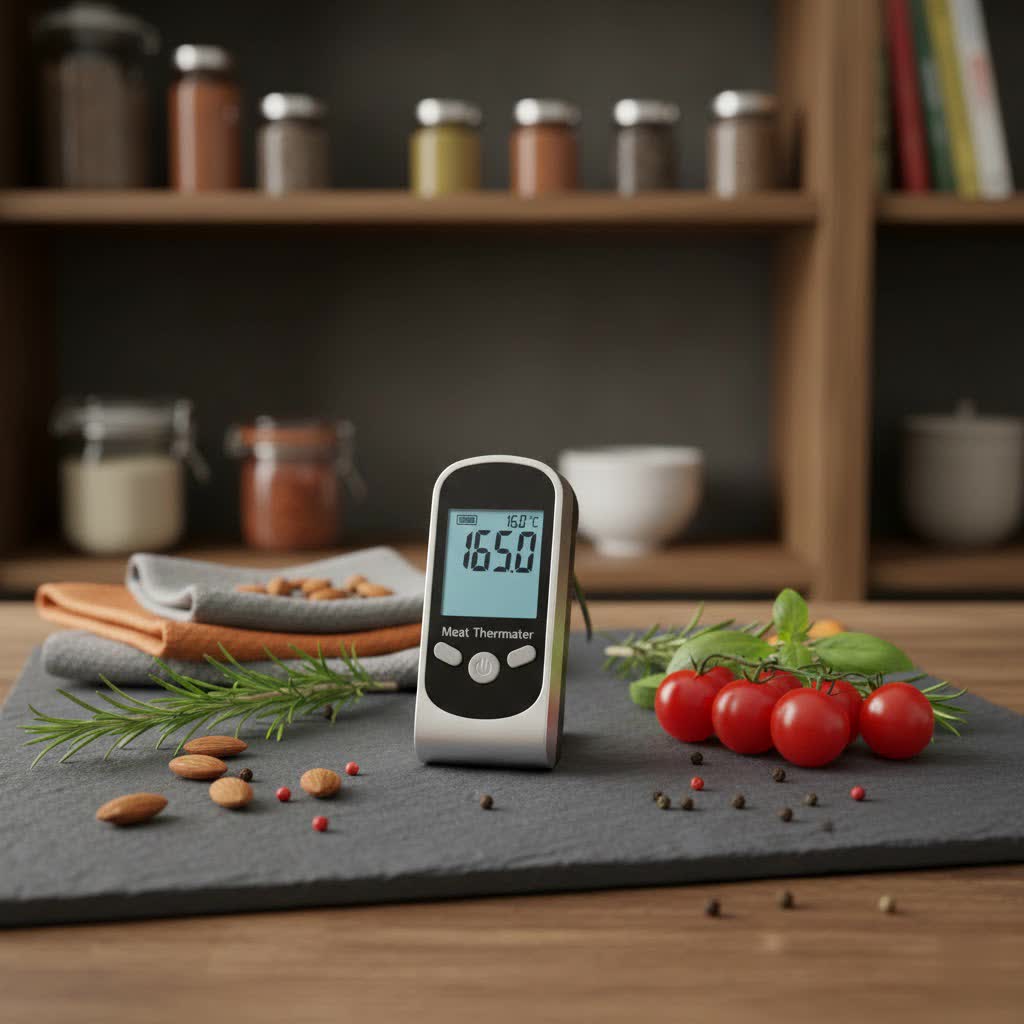
Barbecue Meat Thermometer: Overview and Why Every Griller Needs One
A barbecue meat thermometer is an indispensable tool designed to measure the internal temperature of food, typically meat, during the cooking process. Its primary function is to eliminate guesswork, providing an accurate reading of doneness and ensuring food safety. Whether you’re grilling steaks, smoking a brisket, or roasting a whole chicken, knowing the precise internal temperature is paramount.
Why is a barbecue meat thermometer so critical? First and foremost, it’s about food safety. Harmful bacteria can thrive in undercooked meats, leading to foodborne illnesses. Relying on visual cues like color or texture isn’t enough; only a thermometer can confirm that your meat has reached the safe internal temperature recommended by health authorities. Beyond safety, it’s about culinary perfection. Every cut of meat has an optimal temperature range for its desired doneness – medium-rare beef, tender pork, or juicy poultry. A meat thermometer allows you to hit that sweet spot consistently, unlocking maximum flavor and tenderness, transforming your cooking from a gamble into a consistent success.
On today’s market, barbecue meat thermometers come in various forms, including traditional analog models, rapid digital instant-reads, and advanced probe thermometers, often with wireless capabilities. Each type serves different cooking scenarios, offering unique advantages to help you achieve your barbecue goals.
Navigating the World of Barbecue Meat Thermometers: Types, Pros, and Cons
Understanding the different types of barbecue meat thermometers available is the first step to finding your perfect match. Each has its strengths and weaknesses, making certain models more suitable for specific grilling tasks.
Analog Meat Thermometer
These are the most basic and often the cheapest thermometers, featuring a dial face and a metal probe. They typically work on a bimetallic coil principle, expanding and contracting with temperature changes to move the needle.
- Pros:
- Affordable: Generally the least expensive option.
- Easy to use: No batteries required, simple design.
- Oven-safe: Many are designed to be left in the meat during cooking.
- Cons:
- Low accuracy: Often less precise than digital models.
- Difficult to read: Small dials can be hard to interpret quickly and accurately, especially in low light.
- Slow response time: Can take 10-30 seconds or more to provide a stable reading.
- Not ideal for quick checks: Their slow speed makes them unsuitable for fast-cooking items like thin steaks.
|
Our Picks for the Best Meat Thermometer in 2026
As an Amazon Associate I earn from qualifying purchases.
|
||
| Num | Product | Action |
|---|---|---|
| 1 | Meat Thermometer Digital - Instant Read Waterproof Food Thermometer with Backlight for Cooking, Grill, Candy, Kitchen & Stocking Stuffers for Men - Red |

|
| 2 | 2 Pack Stainless Steel Meat Thermometer, Safe Leave in Oven, 2.5-in Extra-Large Dial Food Thermometer for Cooking, Temperature Probe for Baking, Steak, Turkey - Kitchen Gadgets - Silver |
|
| 3 | ThermoPro TP19H Digital Meat Thermometer for Cooking with Ambidextrous Backlit and Motion Sensing Kitchen Cooking Food Thermometer for BBQ Grill Smoker Oil Fry Candy Instant Read Thermometer |
|
| 4 | Instant Read Meat Thermometer, Fast & Accurate Digital Food Thermometer with Backlight, Waterproof & Magnet for Grilling, Cooking, BBQ, Smoker, Baking, and Candy Making Blue |
|
| 5 | Alpha Grillers Meat Thermometer Digital - Instant Read Food Thermometer for Cooking and Grilling Gifts for Men Valentines Day Gifts for Him Her Mom Dad |
|
| 6 | Escali AH1 Stainless Steel Oven Safe Meat Thermometer, Extra Large 2.5-inches Dial, Temperature Labeled for Beef, Poultry, Pork, and Veal Silver NSF Certified |
|
| 7 | 0.5 Sec Instant Read Meat Thermometer Digital with ±0.5℉ Precision, Food Thermometer for Cooking Kitchen Gadgets, Oven Grill Candy BBQ Essentials Accessories, Gifts for Him Dad Men Birthday, Red |
|
| 8 | Meat Thermometer Digital for Grilling and Cooking - ANDAXIN Waterproof Ultra-Fast Instant Read Food thermometers with Backlight & Calibration for Kitchen, Deep Fry, BBQ, Grill(Red/Black), LCD |
|
| 9 | Meat Thermometer Digital, Instant Read Meat ThermometerI for Grill and Cooking, Waterproof Food Thermometer for Kitchen and Outside, BBQ, Turkey, Candy, Liquids, Beef |
|
| 10 | ThermoPro TP16 Large LCD Digital Cooking Food Meat Thermometer for Smoker Oven Kitchen BBQ Grill Thermometer Clock Timer with Stainless Steel Temperature Probe |
|
Digital Instant-Read Meat Thermometer
Digital instant-read thermometers are a favorite among home cooks and professionals alike for their speed and accuracy. They feature a digital display and a sharp probe that provides readings in mere seconds.
- Pros:
- High accuracy: Delivers precise temperature readings, often within 1-2 degrees.
- Fast response time: Provides readings in 1-5 seconds, sometimes even faster.
- Easy to read: Clear digital displays, often backlit, make them simple to use in any lighting.
- Versatile: Excellent for quick checks on thin cuts, deep-frying, or baking.
- Cons:
- Requires batteries: Needs battery replacement or recharging.
- Not oven-safe (generally): Most instant-read models are not designed to be left in meat during extended cooking in an oven or grill, as high ambient temperatures can damage them.
- Higher price: Typically more expensive than analog models.
Probe (Leave-in) Meat Thermometer
Probe thermometers, also known as leave-in thermometers, are designed to stay in your meat throughout the cooking process. They typically consist of a probe connected by a heat-resistant wire to an external display unit.
- Pros:
- Continuous monitoring: Allows you to track temperature changes without opening the grill or oven, preserving heat.
- Ideal for long cooks: Perfect for roasts, briskets, and other large cuts that require extended cooking times.
- Often features alarms: Many models come with alarms to alert you when your target temperature is reached.
- Cons:
- Wires can be cumbersome: The cable can sometimes get in the way or be damaged if not handled carefully.
- Requires careful placement: The probe needs to be inserted correctly to avoid bone or hot spots and ensure accurate readings.
- Display unit is fixed: You need to be near the grill to see the readings unless it’s a wireless model.
Wireless (Bluetooth/Wi-Fi) Meat Thermometer
Wireless meat thermometers are an evolution of probe thermometers, offering enhanced convenience by transmitting temperature data to a remote receiver or a smartphone app via Bluetooth or Wi-Fi.
- Pros:
- Remote monitoring: Check temperatures from a distance, allowing you to socialize or multitask.
- Advanced features: Apps often include preset temperatures for different meats, customizable alarms, and temperature graphing.
- Multiple probes: Many models support multiple probes to monitor several cuts of meat or ambient grill temperature simultaneously.
- Truly wireless options available: Some probes are entirely wire-free, offering maximum freedom.
- Cons:
- Connectivity issues: Bluetooth range can be limited, and Wi-Fi might drop.
- Higher price: These advanced models are typically the most expensive.
- Requires charging: Probes and/or base units need regular charging.
Infrared Thermometers
While not meat thermometers in the traditional sense, infrared thermometers are useful tools for grillers. They measure surface temperature without direct contact, ideal for checking grill grates, pizza stones, or cast iron pans.
- Pros:
- Instant surface readings: Provides immediate temperature checks of cooking surfaces.
- Non-contact: Hygienic and easy to use for quick surface checks.
- Cons:
- Does not measure internal temperature: Cannot tell you the doneness of your meat.
- Limited utility for meat cooking: Not a substitute for a meat thermometer.
Comparison Table: Different Meat Thermometers
| Feature | Analog | Digital Instant-Read | Wired Probe | Wireless (Bluetooth/Wi-Fi) Probe |
|---|---|---|---|---|
| Accuracy | Moderate | High | High | High |
| Speed | Slow (10-30+ sec) | Fast (1-5 sec) | Continuous display | Continuous display |
| Features | Basic dial | Backlight, hold function | Alarms, timers, external display | Remote monitoring (app), presets, multi-probe, graphing, alarms |
| Price | Low | Medium | Medium-High | High |
| Oven/Grill Safe | Yes (some models) | No (typically) | Yes | Yes |
| Battery | No | Yes (disposable/rechargeable) | Yes (disposable/rechargeable) | Yes (rechargeable) |
| Best For | Budget-conscious, general oven use | Quick checks, thin cuts | Roasts, smoking, continuous monitoring | Long cooks, remote monitoring, multi-tasking |
Guide to Choosing the Right Meat Thermometer
Choosing the perfect barbecue meat thermometer involves considering your specific cooking habits, needs, and budget. With so many options, let’s break down how to make the best choice.
Determine Your Needs
Think about how you typically cook and what you grill most often.
- What type of meat do you usually cook? If you primarily grill thin steaks, burgers, or chicken breasts, a fast and accurate instant-read thermometer is your best friend. For larger cuts like briskets, pork butts, or whole turkeys that require hours of cooking, a probe thermometer with continuous monitoring, especially a wireless one, is invaluable.
- How much accuracy do you need? For everyday cooking, a digital thermometer offering ±2°F accuracy is usually sufficient. For competition BBQ or gourmet cooking where every degree counts, investing in a high-precision model (often ±1°F or better) might be worth it.
- Do you need special features? Alarms that notify you when your target temperature is reached are incredibly helpful for preventing overcooking. Timers, pre-set temperature guides for different meats, and app-connectivity for remote monitoring can significantly enhance your grilling experience. Some advanced models even monitor ambient grill temperature alongside the meat’s internal temperature.
Your Budget
Barbecue meat thermometers range widely in price, from under $20 for basic digital models to over $200 for advanced wireless systems with multiple probes.
- Entry-level: Budget-friendly options (under $30-$50) often include reliable instant-read thermometers like the ThermoPro ThermoPop 2 or basic wired probes.
- Mid-range: In the $50-$150 bracket, you’ll find high-quality instant-reads like the ThermoWorks Thermapen ONE (often considered an investment, but worth it for its speed and accuracy) and some excellent wired or basic Bluetooth probe thermometers.
- High-end: For over $150, you’re looking at sophisticated wireless systems with Wi-Fi connectivity, multiple probes, and advanced app features, such as the MEATER Pro or ThermoWorks Signals.
Invest in the best you can afford, as reliability and accuracy are key to preventing costly cooking mistakes and ensuring safe food.
Brand and Reviews
Always opt for reputable brands known for their quality and customer support. Brands like ThermoWorks, MEATER, ThermoPro, and ChefsTemp consistently receive high praise from professional chefs and home grillers alike. Before purchasing, read user reviews and expert comparisons to get real-world insights into a product’s performance, durability, and ease of use. This can highlight potential issues like connectivity problems or slow readings that might not be obvious from product descriptions.
How to Use Your Meat Thermometer Correctly
Even the best barbecue meat thermometer is only as good as its user. Knowing how to use it correctly is vital for accurate readings and perfect results every time.
How to Insert the Meat Thermometer into the Meat for the Most Accurate Reading
Proper probe placement is crucial. Always insert the thermometer into the thickest part of the meat, avoiding bone, gristle, or large pockets of fat, as these can give inaccurate readings. Bones conduct heat differently, and fat pockets can also have varying temperatures.
- For large cuts (roasts, briskets, whole poultry): Insert the probe into the deepest part of the thickest section. For poultry, aim for the thickest part of the thigh or breast, ensuring it doesn’t touch the bone.
- For thinner cuts (steaks, chicken breasts, burgers): Insert the probe horizontally from the side into the center of the thickest part. This ensures the sensor tip is fully embedded in the meat for an accurate reading.
- For instant-read thermometers: Insert the probe, wait a few seconds for the reading to stabilize, then remove it. Do not leave instant-read thermometers in the meat while it cooks in a hot oven or grill.
- For probe/wireless thermometers: Ensure the probe is inserted deep enough for the sensor to be fully within the meat. Many probes have an indicator line for minimum insertion depth. Leave it in during cooking for continuous monitoring.
Safe Temperatures for Different Types of Meat (USDA Guidelines)
Adhering to USDA guidelines for safe internal temperatures is critical for food safety. Remember that meat continues to cook (carryover cooking) even after being removed from the heat, so you might want to pull it a few degrees before the target.
- Poultry (chicken, turkey, duck): 165°F (74°C)
- Ground Meats (beef, pork, lamb): 160°F (71°C)
- Pork (roasts, chops, steaks): 145°F (63°C), followed by a 3-minute rest
- Beef, Veal, Lamb (steaks, roasts, chops):
- Rare: 120-125°F (49-52°C)
- Medium-Rare: 130-135°F (54-57°C)
- Medium: 140-145°F (60-63°C)
- Medium-Well: 150-155°F (66-68°C)
- Well-Done: 160°F+ (71°C+)
- Fish: 145°F (63°C)
- Casseroles & Leftovers: 165°F (74°C)
How to Clean and Care for Your Barbecue Meat Thermometer
Proper cleaning and storage will extend the life and accuracy of your thermometer.
- Clean after each use: Wipe the probe with hot, soapy water immediately after each use to prevent food residue from drying. You can use a sanitizing wipe for extra cleanliness.
- Avoid submerging the display: Unless your thermometer is explicitly rated as fully waterproof (e.g., IP67), do not submerge the entire unit in water. Clean the probe carefully, keeping the display unit dry.
- Calibrate periodically: To check accuracy, perform an ice bath test: Fill a glass with ice and water, stir, and insert your thermometer. It should read 32°F (0°C). If it’s off, some analog models can be recalibrated; digital ones may need replacement if consistently inaccurate.
- Store properly: Keep your thermometer in a clean, dry place. Protect probes from bending or damage.
Top 5 Most Popular Barbecue Meat Thermometers Today (Detailed Review)
Here’s a closer look at some of the most highly-regarded barbecue meat thermometers, catering to different needs and budgets, consistently praised for their performance and reliability.
1. ThermoWorks Thermapen ONE (Instant-Read)
Widely considered the gold standard for instant-read thermometers, the Thermapen ONE delivers unparalleled speed and accuracy.
- Features: Sub-second readings (0.5 to 1 second), ±0.5°F (±0.3°C) accuracy, auto-rotating display, motion-sensing sleep/wake mode, waterproof (IP67).
- Pros: Extremely fast and accurate, robust build, easy to read in any orientation, durable.
- Cons: Premium price point, not designed for leave-in use.
- Best for: Grillers and cooks who demand the fastest, most accurate spot checks for everything from thin steaks to checking multiple pieces of chicken.
2. MEATER Plus / MEATER Pro (Wireless Bluetooth)
The MEATER line offers truly wireless smart meat thermometers, perfect for monitoring cooks remotely without any wires.
- Features: Single, fully wireless probe (no cables), dual temperature sensors (internal meat temp and ambient grill temp), guided cook system via smartphone app, estimated cook time and rest time, Bluetooth connectivity with extended range (Plus model) or Wi-Fi (Pro model via charger).
- Pros: No wires, seamless app experience, excellent for long cooks and smoking, monitors both meat and ambient temperatures, great for multitasking.
- Cons: Higher price, probe can be thick for thinner cuts, Bluetooth range can be affected by grill lids or walls, requires charging.
- Best for: Smokers, roasters, and grillers who want complete freedom from wires and comprehensive remote monitoring through their smartphone.
3. ThermoWorks Smoke (Wired Probe, Remote Display)
For those serious about smoking and longer cooks, the ThermoWorks Smoke provides reliable, continuous monitoring with a dedicated remote receiver.
- Features: Dual-channel (one meat, one ambient probe), durable wired probes, large backlit display on base unit, remote receiver with a range of up to 300 feet, high and low alarms.
- Pros: Very accurate and reliable, robust construction, simple to use, excellent range for remote monitoring, perfect for managing pit and meat temperatures simultaneously.
- Cons: Not app-controlled (dedicated receiver), wires need careful management.
- Best for: Dedicated smokers and grillers who need continuous, precise monitoring for multiple long cooks, prioritizing reliability and range over smartphone integration.
4. ChefsTemp Quad XPro (Digital Wired Multi-Probe)
The ChefsTemp Quad XPro is a feature-rich, robust digital thermometer offering multiple wired probes for versatile cooking.
- Features: Four probe channels (three for meat, one for ambient), large backlit LCD display, magnetic base, high/low temperature alarms, up to 1000 ft wireless range (via specific models).
- Pros: Multi-probe functionality for complex cooks, sturdy build, clear display, good wireless range (for certain models), waterproof.
- Cons: Wired probes can be cumbersome for some, requires batteries.
- Best for: Grillers who regularly cook multiple items at once or large roasts, needing precise control and monitoring of various temperatures.
5. ThermoPro ThermoPop 2 (Budget-Friendly Instant-Read)
The ThermoPro ThermoPop 2 is an excellent budget-friendly instant-read thermometer that offers great performance for its price.
- Features: 2-3 second response time, ±0.9°F (±0.5°C) accuracy, 360° rotating backlit display, waterproof (IP67).
- Pros: Affordable, very fast and accurate for its price, easy to read, durable and waterproof.
- Cons: Not for leave-in use, battery-powered.
- Best for: Everyday grillers and home cooks looking for a reliable, fast, and accurate instant-read thermometer without breaking the bank.
Conclusion
The journey to becoming a confident, skilled home chef or pitmaster begins with precision. A high-quality barbecue meat thermometer is not just another gadget; it’s an indispensable tool that ensures food safety, eliminates guesswork, and consistently delivers perfectly cooked, flavorful results. From the lightning-fast instant-read models like the ThermoWorks Thermapen ONE to the innovative wireless systems like the MEATER Pro, there’s a perfect thermometer out there to match every grilling style and budget. By understanding the types, choosing wisely, and using your thermometer correctly, you’ll unlock a new level of culinary excellence. So, which barbecue meat thermometer will be your next trusted grilling companion?
Frequently Asked Questions
What is the difference between an instant-read and a leave-in barbecue meat thermometer?
An instant-read thermometer provides a quick temperature snapshot (1-5 seconds) when inserted into the meat and is then removed. It’s great for quick checks. A leave-in (or probe) thermometer stays in the meat throughout the cooking process, offering continuous temperature monitoring, ideal for long cooks like roasts or smoking.
How often should I calibrate my barbecue meat thermometer?
It’s a good practice to check your thermometer’s calibration every few months or if you suspect it’s inaccurate. The simplest way is the ice bath test: immerse the probe in a glass of ice water (stirred) for 30 seconds; it should read 32°F (0°C). If it’s off, follow manufacturer instructions for recalibration or consider replacement.
Can I use a regular kitchen meat thermometer for barbecue?
While a regular kitchen meat thermometer can measure temperature, specialized barbecue meat thermometers are often designed to withstand higher ambient temperatures found in grills and smokers, may have longer probes, and feature remote monitoring capabilities more suited for outdoor cooking environments.
How many probes do I need for my barbecue meat thermometer?
For basic grilling of a single item, one probe is usually sufficient. However, if you’re smoking large cuts of meat, cooking multiple items, or want to monitor both the meat’s internal temperature and the ambient grill temperature, a multi-probe thermometer (2-4 probes) is highly recommended.
What causes a barbecue meat thermometer to give inaccurate readings?
Inaccurate readings can be caused by several factors: inserting the probe too close to bone or fat, not inserting it deep enough into the thickest part of the meat, not allowing enough time for the reading to stabilize (especially with instant-reads), or a thermometer that is out of calibration or faulty.
