Imagine the perfect roast, succulent and tender, cooked precisely to your liking without constant guesswork. This culinary dream becomes a reality with the right tools, and at the heart of precision cooking lies the leave-in meat thermometer. Whether you’re a seasoned chef or a home cook looking to elevate your dishes, a leave-in meat thermometer is an indispensable gadget that promises consistency, safety, and mouth-watering results. It’s the secret weapon against overcooked, dry meats and undercooked, unsafe meals, transforming your cooking experience from anxious anticipation to confident execution.
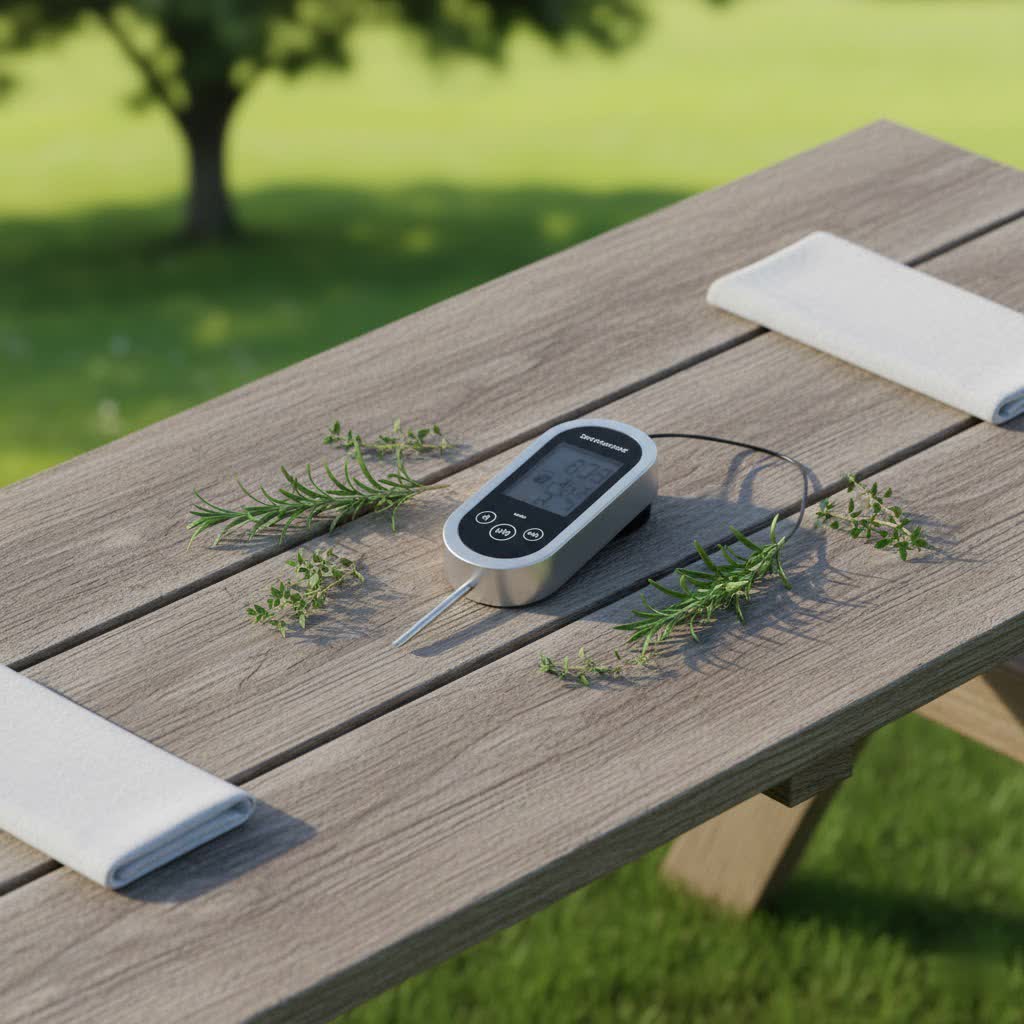
Meat Thermometers: An Overview and Why They Are Essential
A meat thermometer is a device designed to measure the internal temperature of cooked meat, poultry, and other foods. Its primary purpose is to ensure that food reaches a safe internal temperature to destroy harmful bacteria, thereby preventing foodborne illnesses. Beyond safety, a meat thermometer is crucial for achieving optimal flavor and texture. Overcooking can lead to dry, tough meat, while undercooking fails to develop the desired tenderness and juiciness.
Using a meat thermometer removes the guesswork from cooking, allowing you to hit that ideal medium-rare steak or perfectly roasted chicken every single time. It’s not just about safety; it’s about culinary excellence. For cuts of meat that require longer cooking times, such as roasts or briskets, a leave-in thermometer offers continuous monitoring, providing real-time data without the need to repeatedly open the oven or grill, which can cause significant heat loss and prolong cooking.
Unpacking Leave-In Meat Thermometers: Pros and Cons
Leave-in meat thermometers are a specific category designed for continuous temperature monitoring throughout the cooking process. They remain inserted in the food while it cooks, sending real-time temperature readings to an external display or a connected smart device.
What is a Leave-In Meat Thermometer?
|
Our Picks for the Best Meat Thermometer in 2026
As an Amazon Associate I earn from qualifying purchases.
|
||
| Num | Product | Action |
|---|---|---|
| 1 | 2 Pack Stainless Steel Meat Thermometer, Safe Leave in Oven, 2.5-in Extra-Large Dial Food Thermometer for Cooking, Temperature Probe for Baking, Steak, Turkey - Kitchen Gadgets - Silver |

|
| 2 | 0.5 Sec Instant Read Meat Thermometer Digital with ±0.5℉ Precision, Food Thermometer for Cooking Kitchen Gadgets, Oven Grill Candy BBQ Essentials Accessories, Gifts for Him Dad Men Birthday, Red |
|
| 3 | ThermoPro TP19H Digital Meat Thermometer for Cooking with Ambidextrous Backlit and Motion Sensing Kitchen Cooking Food Thermometer for BBQ Grill Smoker Oil Fry Candy Instant Read Thermometer |
|
| 4 | Instant Read Meat Thermometer, Fast & Accurate Digital Food Thermometer with Backlight, Waterproof & Magnet for Grilling, Cooking, BBQ, Smoker, Baking, and Candy Making Blue |
|
| 5 | ThermoPro TP16 Large LCD Digital Cooking Food Meat Thermometer for Smoker Oven Kitchen BBQ Grill Thermometer Clock Timer with Stainless Steel Temperature Probe |
|
| 6 | Meat Thermometer Digital, Instant Read Meat ThermometerI for Grill and Cooking, Waterproof Food Thermometer for Kitchen and Outside, BBQ, Turkey, Candy, Liquids, Beef |
|
| 7 | Meat Thermometer Digital - Instant Read Waterproof Food Thermometer with Backlight for Cooking, Grill, Candy, Kitchen & Stocking Stuffers for Men - Red |
|
| 8 | Escali AH1 Stainless Steel Oven Safe Meat Thermometer, Extra Large 2.5-inches Dial, Temperature Labeled for Beef, Poultry, Pork, and Veal Silver NSF Certified |
|
| 9 | Meat Thermometer Digital for Grilling and Cooking - ANDAXIN Waterproof Ultra-Fast Instant Read Food thermometers with Backlight & Calibration for Kitchen, Deep Fry, BBQ, Grill(Red/Black), LCD |
|
| 10 | Alpha Grillers Meat Thermometer Digital - Instant Read Food Thermometer for Cooking and Grilling Gifts for Men Valentines Day Gifts for Him Her Mom Dad |
|
A leave-in meat thermometer, also known as a probe thermometer, consists of a heat-resistant probe that is inserted into the thickest part of the meat and connected by a wire or wirelessly to a base unit or app. Unlike instant-read thermometers, which are used for quick spot-checks, leave-in models are built to withstand prolonged exposure to high oven, grill, or smoker temperatures. They provide a continuous stream of temperature data, often with alarms that notify you when your food reaches its target doneness.
Advantages
The benefits of using a leave-in meat thermometer are numerous, particularly for larger cuts and slow-cooking methods. The most significant advantage is continuous monitoring, which eliminates the need to constantly open the oven or grill. This prevents heat fluctuations, ensuring a more stable cooking environment and leading to more consistent results. Wireless models offer remote tracking, allowing you to monitor temperatures from a distance via an app on your smartphone, providing unparalleled convenience, especially during long smoking sessions or when entertaining guests. They are also ideal for food safety, as they reliably indicate when meats have reached the minimum safe internal temperature recommended by health organizations. Finally, they guarantee perfect doneness, helping you achieve specific levels of doneness (e.g., rare, medium, well-done) for different types of meat, enhancing both flavor and texture.
Disadvantages
While highly beneficial, leave-in meat thermometers do have a few drawbacks. They typically come with a higher initial cost compared to basic instant-read thermometers, especially models with advanced wireless features. Proper probe placement is crucial; incorrect insertion can lead to inaccurate readings, potentially resulting in under or overcooked food. For wireless models, battery dependency can be a concern, requiring regular charging or battery replacement, though many modern units feature long-lasting rechargeable batteries or auto-shutoff functions. Some wired models might also introduce cable management challenges, as the wires need to safely exit the cooking appliance without being pinched or exposed to excessive heat.
Types of Leave-In Meat Thermometers: Finding Your Match
Leave-in meat thermometers broadly fall into two categories, each offering distinct advantages depending on your cooking style and needs.
Wired Probe Thermometers
Wired probe thermometers feature a heat-resistant probe connected by a cable to an external display unit. The probe remains in the meat throughout cooking, while the display unit sits safely outside the oven, grill, or smoker. These are generally less expensive than their wireless counterparts and offer reliable, real-time temperature readings. Many models include alarms that sound when the target temperature is reached, and some come with pre-programmed settings for various types of meat. The main consideration with wired models is the cable itself, which must be routed carefully to avoid damage from heat or pinching.
Wireless Bluetooth/Wi-Fi Thermometers
Representing the cutting edge of meat thermometer technology, wireless Bluetooth or Wi-Fi models offer maximum convenience and flexibility. These probes communicate wirelessly with a receiver unit or directly with an app on your smartphone or tablet. Many wireless probes are entirely cable-free and integrate multiple sensors to monitor both the internal temperature of the food and the ambient temperature of your cooking environment (oven, grill, smoker). Features often include:
- Extended Range: Bluetooth models typically offer ranges up to a few hundred feet, while Wi-Fi connected thermometers can provide virtually unlimited range as long as both the base and your smart device have internet access.
- App Integration: Companion apps often provide customizable alerts, USDA-recommended temperature guidelines, cooking graphs, estimated cooking times, and even resting period calculations.
- Dual Sensors: Many advanced models measure both internal meat temperature and ambient cooking temperature, giving you a complete picture of your cook.
- Rechargeable Batteries: Most feature long-lasting, rechargeable batteries.
These smart features make wireless thermometers ideal for complex cooks like briskets or whole turkeys, where precise, long-term monitoring and mobility are highly valued.
Feature Comparison: What to Look for in a Leave-In Meat Thermometer
Choosing the best leave-in meat thermometer involves weighing several key features against your specific cooking habits and preferences.
| Feature | Description | Considerations |
|---|---|---|
| Accuracy | How precisely the thermometer measures temperature. | Look for +/- 0.5°F for consistent results. |
| Wireless Range | The distance over which wireless models can transmit data. | Bluetooth (up to 300-600 ft) or Wi-Fi (longer/unlimited). |
| App Integration | Features and usability of the companion smartphone app. | Presets, alarms, graphs, remote monitoring, user-friendly interface. |
| Probe Material | Durability and heat resistance of the probe. | Stainless steel is common. Ceramic bands for high ambient temperatures. |
| Max Temperature | The maximum internal food and ambient temperatures the probe can withstand. | Ensure it meets your cooking needs (e.g., smoking can involve high ambient temps). |
| Number of Probes | Single or multiple probes for monitoring different cuts or ambient temps. | Dual probes are great for monitoring two meats or meat/ambient. |
| Display | Readability of the base unit’s screen. | Large, backlit, rotating displays are a plus. |
| Battery Life | How long the thermometer operates on a single charge/set of batteries. | Rechargeable with auto-shutoff features are convenient. |
| Ease of Cleaning | How simple it is to clean the probes and unit. | Dishwasher-safe probes are a bonus. |
How to Choose the Right Leave-In Meat Thermometer for Your Kitchen
Selecting the ideal leave-in meat thermometer can significantly impact your culinary success. Consider these factors to find the perfect match for your needs.
Assess Your Cooking Needs
First, think about the types of meat you frequently cook and your preferred cooking methods. Are you primarily roasting large cuts in the oven, smoking briskets for hours, or grilling various steaks? For long, slow cooks like smoking, a wireless thermometer with dual food and ambient temperature sensors is invaluable. If you mostly roast in the oven, a reliable wired probe or a simpler wireless model might suffice. Determine if you need to monitor multiple pieces of meat simultaneously; if so, a multi-probe system would be beneficial.
Consider Your Budget
Leave-in meat thermometers vary widely in price, from budget-friendly wired models to premium smart wireless systems. Decide what you’re willing to spend, keeping in mind that higher-priced options often offer enhanced features like greater accuracy, longer wireless range, and more sophisticated app functionalities. Investing a little more upfront can save frustration and lead to better results in the long run.
Wireless vs. Wired
The choice between wireless and wired often comes down to convenience versus cost. Wireless thermometers offer unmatched freedom, allowing you to monitor your cook from anywhere within range (or even remotely via Wi-Fi). This is perfect for backyard grilling or when you need to step away from the kitchen. However, they typically require charging. Wired thermometers are generally more affordable and may offer a more consistent connection without worrying about signal drops, but the physical cable can be cumbersome and needs careful handling to avoid heat damage or pinching.
Smart Features & App Usability
Many modern leave-in thermometers come with smart features accessed through a dedicated smartphone app. Look for apps that are intuitive, stable, and offer valuable functions like customizable alarms, pre-set cooking programs for different meats and doneness levels, real-time graphing of temperature trends, and estimated cooking and resting times. Some advanced apps even suggest when to flip or remove your meat from the heat. A robust and user-friendly app greatly enhances the overall experience.
Durability and Ease of Cleaning
Ensure the thermometer is built to last. Probes should be made of durable, heat-resistant stainless steel. Check the maximum temperature ratings for both the probe (internal food temp) and the wire/handle (ambient temp) to ensure they can withstand your cooking environments. Consider how easy the probes are to clean; some are even dishwasher-safe, offering a significant convenience boost.
Mastering Your Leave-In Meat Thermometer: Usage and Care
Proper usage and maintenance are key to ensuring your leave-in meat thermometer provides accurate readings and lasts for years to come.
How to Use a Meat Thermometer Correctly
For the most accurate reading, insert the probe into the thickest part of the meat, away from any bones or large pockets of fat. Bones can conduct heat differently and give an inaccurate reading, while fat renders and doesn’t reflect the true muscle temperature. For poultry, insert the probe into the thickest part of the thigh, again avoiding bone. Ensure the probe tip is fully embedded in the meat. With wired probes, carefully route the cable to avoid it being pinched by oven doors or exposed to direct flames. For wireless probes, ensure the base unit or your smartphone is within the recommended range. Many smart thermometers will also guide you on insertion and placement.
> “The single most important factor for accurate temperature readings is probe placement. Always aim for the center of the thickest part of the meat, clear of bone, to get the true internal temperature.” – Admin, Reviewedia.com
USDA Safe Temperature Guidelines
While specific doneness levels are a matter of preference, reaching safe internal temperatures is non-negotiable for food safety. The USDA recommends the following minimum internal temperatures:
- Poultry (whole, ground, pieces): 165°F (74°C)
- Ground Meat (beef, pork, lamb, veal): 160°F (71°C)
- Beef, Pork, Veal, Lamb (roasts, steaks, chops): 145°F (63°C) with a 3-minute rest time
- Fish: 145°F (63°C)
- Casseroles and Leftovers: 165°F (74°C)
Always allow for a “rest time” after removing meat from the heat. During this period, the internal temperature will continue to rise by a few degrees (known as carryover cooking) and the juices will redistribute, resulting in a more tender and flavorful product.
Cleaning and Storage
After each use, clean your meat thermometer probe thoroughly with hot, soapy water. While some probes are dishwasher-safe, always check the manufacturer’s instructions. The main unit (and especially wireless charging bases) should generally not be submerged in water; wipe them clean with a damp cloth. Store your thermometer in a clean, dry place, ideally in its original case or a designated drawer to protect the probe and wiring from damage. For wireless models, ensure the base is charged or batteries are fresh so it’s ready for your next culinary adventure.
Top Leave-In Meat Thermometers on the Market (Detailed Review)
To help you make an informed decision, here’s a look at some of the best leave-in meat thermometers praised for their performance and features.
1. Meater Pro (formerly 2 Plus)
The Meater Pro stands out as a leading entirely wireless leave-in meat thermometer. It features a sleek, durable probe with dual sensors that monitor both the internal meat temperature (up to 220°F) and the ambient temperature of your oven, grill, or smoker (up to 1000°F). Its impressive wireless range (up to 250 feet, with up to 2,500 feet in open air with its charger acting as a repeater) connects seamlessly to a highly intuitive app. The Meater app provides guided cooks, estimated cooking and resting times, and alerts, making it incredibly user-friendly for both novices and experts. Users rave about its accuracy and the convenience of monitoring their cook from afar without cables. The probe is even dishwasher-safe for easy cleanup. While it comes with a premium price tag, its robust features and reliable performance make it a favorite for grilling and smoking enthusiasts.
2. ThermoPro Twin TempSpike Plus
The ThermoPro Twin TempSpike Plus offers excellent value for a wireless leave-in thermometer with dual probes. This model boasts a 600-foot wireless range, allowing significant freedom of movement. Its compact and thoughtfully designed magnetic base sticks conveniently to your grill or refrigerator, displaying temperatures and offering a backlight for low-light conditions. The system uses color-coded probes (one black, one white) to easily differentiate between two separate cuts of meat or to monitor meat and ambient temperature simultaneously. The accompanying app provides customizable alerts and USDA-recommended temperature guidelines. With an auto-shutoff feature and rechargeable batteries, it’s designed for efficiency. It can withstand ambient temperatures up to 1050°F, making it suitable for various high-heat cooking methods, although its internal probe max temp is 212°F, which is sufficient for most meats but slightly lower than some competitors.
3. Typhur Sync Dual Thermometer
The Typhur Sync Dual Thermometer is praised for its exceptional display and robust connectivity. It features two stainless steel and ceramic probes, capable of measuring internal temperatures up to 572°F. What sets the Typhur Sync apart is its versatile connectivity: it uses both Bluetooth and built-in Wi-Fi, offering nearly unlimited range through your home network. The large, vivid LED display on the base unit makes it easy to read temperatures at a glance, even without the app. Its flared probe base also aids in easy and safe removal, even with greasy hands. While positioned at a slightly higher price point, the Typhur Sync’s combination of a clear display, accurate readings, and advanced wireless capabilities makes it an excellent choice for those who want both local and remote monitoring options.
Conclusion
Choosing the best leave-in meat thermometer is a game-changer for any home cook. It removes the guesswork, ensures food safety, and guarantees perfectly cooked, succulent results every single time. From traditional wired models to advanced wireless smart thermometers, there’s a perfect match for every cooking style and budget. By prioritizing features like accuracy, range, app functionality, and durability, you can select a tool that will elevate your culinary creations.
Investing in a quality leave-in meat thermometer is an investment in consistently delicious and safe meals. Are you ready to take the uncertainty out of your cooking and truly master your meats?
Frequently Asked Questions
How far do wireless meat thermometers typically reach?
The range of wireless meat thermometers varies by model. Bluetooth-only devices might reach up to 250-600 feet in open air, while those with Wi-Fi connectivity or signal boosters can extend their range significantly, sometimes offering virtually unlimited monitoring via internet connection, depending on your home network.
Are leave-in meat thermometers accurate?
Yes, modern leave-in meat thermometers are highly accurate. Most top brands claim precision within ±0.5°F, which is critical for food safety and achieving precise doneness. Testing often involves comparing readings against medical-grade thermometers in controlled environments like ice baths to ensure reliability.
Can I use a leave-in thermometer in a deep fryer or smoker?
Many leave-in meat thermometers, particularly wireless smart probes like the Meater Pro, are designed to withstand high ambient temperatures, making them suitable for use in deep fryers, smokers, and grills. Always check the manufacturer’s specifications for maximum temperature limits to ensure the thermometer is appropriate for your intended cooking method.
