Imagine consistently cooking your favorite meats to perfect tenderness and juicy flavor, every single time. No more guessing, no more dry, overcooked poultry, or underdone roasts risking foodborne illness. This culinary dream becomes a reality with the right tool: a good digital meat thermometer. This essential kitchen gadget takes the guesswork out of cooking, ensuring both food safety and impeccable results. Whether you’re a seasoned chef or a home cook aspiring for perfection, understanding the nuances of digital meat thermometers will elevate your cooking game dramatically.
Digital Meat Thermometers: An Overview and Why They Are Essential
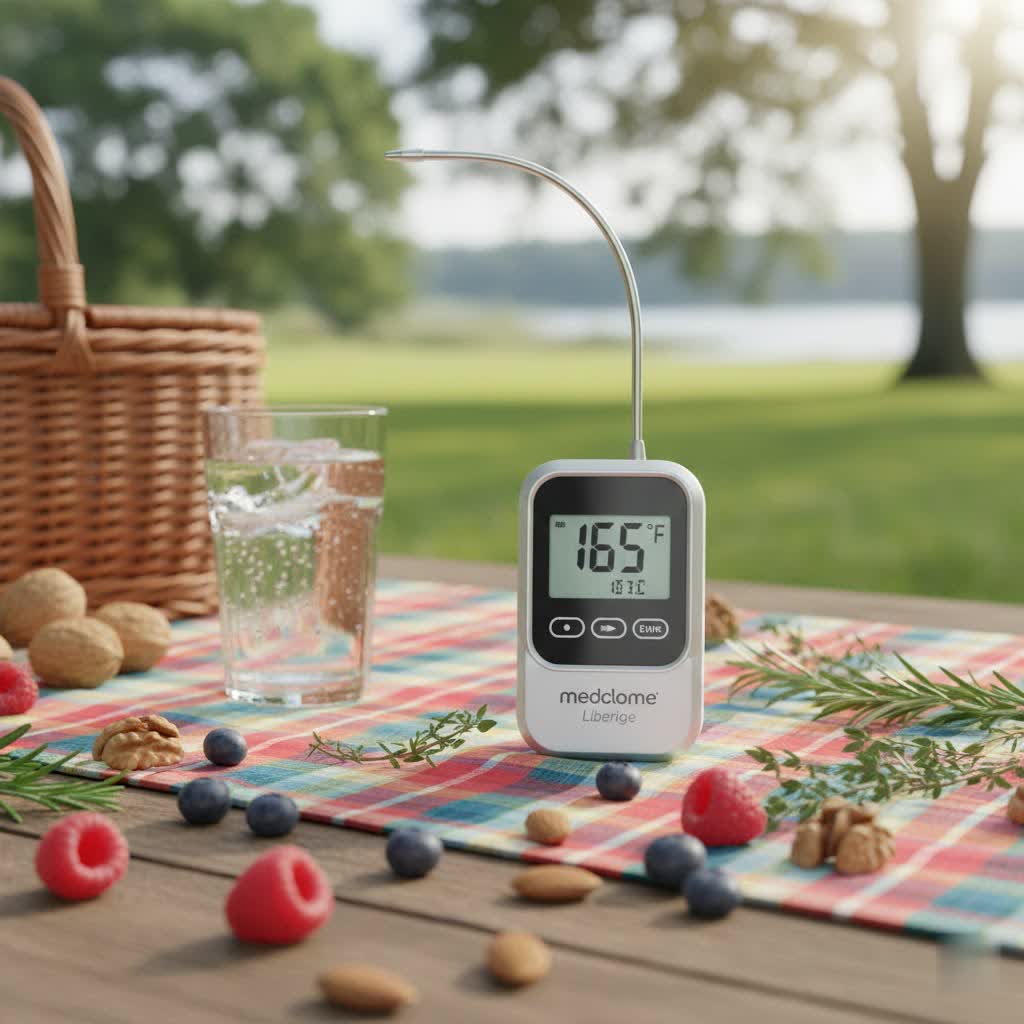
A digital meat thermometer is a precision instrument designed to measure the internal temperature of food, primarily meats, to ensure they reach a safe and desired level of doneness. Unlike traditional analog thermometers, digital models offer quick, precise, and easy-to-read temperature displays, making them indispensable in any modern kitchen.
The importance of using a meat thermometer cannot be overstated. Firstly, it’s crucial for food safety. The USDA provides specific internal temperature guidelines for different types of meat to kill harmful bacteria, preventing foodborne illnesses. Secondly, a thermometer guarantees perfect flavor and texture. Overcooking can dry out meat, while undercooking leaves it raw. A digital thermometer ensures your steak is a perfect medium-rare, your chicken is juicy, and your roast is tender throughout. Lastly, it promotes consistency. Once you know the ideal temperature for your preferred doneness, you can replicate that success every time.
Today’s market offers several popular types of digital meat thermometers, each suited for different cooking styles:
- Digital Instant-Read Thermometers: Best for quick spot checks.
- Digital Probe/Leave-In Thermometers: Ideal for monitoring temperature during longer cooking processes in ovens or grills.
- Smart/Wireless Digital Thermometers: Offer advanced features like app connectivity and remote monitoring.
Popular Types of Digital Meat Thermometers: Pros and Cons
Choosing the right digital meat thermometer depends largely on your cooking habits and needs. Each type offers distinct advantages and some limitations.
Digital Instant-Read Meat Thermometers
These are perhaps the most common and versatile digital thermometers. You insert the probe, wait a few seconds, and get an accurate reading.
- Pros:
- Speed: Provide readings in as little as 1 to 4 seconds, allowing for quick checks without significant heat loss.
- Accuracy: Highly precise, often within 1 degree Fahrenheit.
- Portability: Compact and easy to store or carry in an apron pocket.
- Versatility: Excellent for quick checks on roasts, steaks, grilled items, and even for testing the temperature of deep-frying oil or candy.
- Cons:
- Not for Leave-In Use: Cannot be left in the oven, grill, or smoker during cooking, as the electronic components are not heat-resistant.
- Requires Presence: You need to be physically present to take readings.
|
Our Picks for the Best Meat Thermometer in 2026
As an Amazon Associate I earn from qualifying purchases.
|
||
| Num | Product | Action |
|---|---|---|
| 1 | Escali AH1 Stainless Steel Oven Safe Meat Thermometer, Extra Large 2.5-inches Dial, Temperature Labeled for Beef, Poultry, Pork, and Veal Silver NSF Certified |

|
| 2 | Meat Thermometer Digital - Instant Read Waterproof Food Thermometer with Backlight for Cooking, Grill, Candy, Kitchen & Stocking Stuffers for Men - Red |
|
| 3 | Meat Thermometer Digital for Grilling and Cooking - ANDAXIN Waterproof Ultra-Fast Instant Read Food thermometers with Backlight & Calibration for Kitchen, Deep Fry, BBQ, Grill(Red/Black), LCD |
|
| 4 | Meat Thermometer Digital, Instant Read Meat ThermometerI for Grill and Cooking, Waterproof Food Thermometer for Kitchen and Outside, BBQ, Turkey, Candy, Liquids, Beef |
|
| 5 | 0.5 Sec Instant Read Meat Thermometer Digital with ±0.5℉ Precision, Food Thermometer for Cooking Kitchen Gadgets, Oven Grill Candy BBQ Essentials Accessories, Gifts for Him Dad Men Birthday, Red |
|
| 6 | ThermoPro TP16 Large LCD Digital Cooking Food Meat Thermometer for Smoker Oven Kitchen BBQ Grill Thermometer Clock Timer with Stainless Steel Temperature Probe |
|
| 7 | 2 Pack Stainless Steel Meat Thermometer, Safe Leave in Oven, 2.5-in Extra-Large Dial Food Thermometer for Cooking, Temperature Probe for Baking, Steak, Turkey - Kitchen Gadgets - Silver |
|
| 8 | Alpha Grillers Meat Thermometer Digital - Instant Read Food Thermometer for Cooking and Grilling Gifts for Men Valentines Day Gifts for Him Her Mom Dad |
|
| 9 | Instant Read Meat Thermometer, Fast & Accurate Digital Food Thermometer with Backlight, Waterproof & Magnet for Grilling, Cooking, BBQ, Smoker, Baking, and Candy Making Blue |
|
| 10 | ThermoPro TP19H Digital Meat Thermometer for Cooking with Ambidextrous Backlit and Motion Sensing Kitchen Cooking Food Thermometer for BBQ Grill Smoker Oil Fry Candy Instant Read Thermometer |
|
Digital Probe/Leave-In Meat Thermometers
Designed for continuous temperature monitoring, these thermometers feature a heat-resistant probe connected by a wire to an external display unit.
- Pros:
- Continuous Monitoring: Allows you to track the meat’s internal temperature without opening the oven or grill, which helps maintain consistent cooking temperatures.
- Alarms: Many models include alarms that alert you when the target temperature is reached or if temperatures drop too low or get too high.
- Ideal for Roasts and Long Cooks: Perfect for large cuts of meat, smoking, or barbecuing where consistent temperature is key.
- Cons:
- Slower Readings: While accurate, they typically take slightly longer for an initial reading compared to instant-read models (around 5 seconds for top models).
- Wire Management: The probe wire can sometimes kink or be cumbersome to store.
- Temperature Limits: The wire may have a maximum heat-safe temperature, making it unsuitable for extremely high-temperature grilling in some cases.
Smart/Wireless Digital Meat Thermometers
These represent the cutting edge of meat thermometer technology, often integrating with smartphones or dedicated receivers for remote monitoring.
- Pros:
- Remote Monitoring: Track temperatures from anywhere within range (Bluetooth or Wi-Fi), often through a dedicated app.
- Dual Sensors: Many wireless probes feature multiple sensors to monitor both internal food temperature and ambient oven/grill temperature.
- Preset Cooking Guides: Apps often provide guided cooking programs for various meats and doneness levels.
- Cable-Free Convenience: Some models are completely wireless probes, eliminating the need for a wire.
- Cons:
- Higher Price Point: Generally more expensive than traditional digital models.
- App Dependency: Relies on app functionality and Bluetooth/Wi-Fi signal strength, which can sometimes be inconsistent.
- Battery Life: Wireless probes require charging or batteries, and continuous app usage can drain phone battery.
- No Direct Display: Some fully wireless probes lack an on-device display, making a smartphone or receiver essential.
Comparative Table: Digital Meat Thermometer Types
To help you quickly discern the differences, here’s a comparative overview of the main digital meat thermometer types:
| Feature | Digital Instant-Read | Digital Probe/Leave-In | Smart/Wireless Digital |
|---|---|---|---|
| Accuracy | Excellent (±1°F) | Excellent (±1°F) | Excellent (±1°F) |
| Speed | Very Fast (1-4 seconds) | Fast (approx. 5 seconds for continuous) | Varies, usually fast for initial/continuous |
| Key Features | Auto-rotating screen, backlight, auto-on/off | Alarms, timers, magnetic base, long probe wire | App connectivity, remote monitoring, dual sensors, preset guides |
| Best Use Case | Quick checks for steaks, chicken, deep-frying, candy | Roasts, smoking, grilling, baking (long cooks) | Grilling, smoking, multi-cooks, remote monitoring |
| Typical Price | Budget to Mid-Range | Mid-Range | Mid to High-End |
| Pros | Speedy, versatile, portable | Continuous monitoring, alarms, hands-free | Ultimate convenience, advanced features, data |
| Cons | Not for leave-in oven use | Wire management, display outside oven | App dependency, higher cost, battery reliant |
How to Choose the Right Digital Meat Thermometer
Selecting the ideal digital meat thermometer involves considering your personal cooking style, frequency, and budget. It’s about finding the tool that best supports your culinary ambitions.
Assess Your Cooking Needs
Before making a purchase, think about how you typically cook.
- What types of meat do you usually prepare? If you frequently grill steaks or pan-sear chicken, an instant-read thermometer will be incredibly valuable for quick checks. For large roasts, briskets, or whole poultry that require hours in the oven or smoker, a leave-in probe or smart wireless thermometer is more appropriate for continuous monitoring.
- How crucial is precision and speed? For delicate items or when striving for exact doneness (e.g., sous vide), faster and highly accurate instant-read thermometers are preferred. If you need to monitor ambient temperatures in a smoker alongside meat, a multi-probe smart thermometer is ideal.
- Do you need special features? Features like a backlight for low-light conditions, an auto-rotating display for easy reading, audible alarms, or Bluetooth/Wi-Fi connectivity for remote monitoring can significantly enhance your cooking experience. Consider if you want guided cooking programs via an app.
Consider Your Budget
Digital meat thermometers come in a wide price range. You can find reliable budget-friendly options, as well as premium models with advanced features.
- Entry-level digital thermometers (often instant-read) can be found for under $30, offering basic functionality and decent accuracy.
- Mid-range options ($30-$80) often provide faster readings, better build quality, and additional features like backlights, magnetic bases, or basic alarm functions.
- High-end or smart thermometers ($80-$200+) offer superior speed, robust construction, wireless connectivity, multiple probes, and sophisticated app integrations. Determine how much you’re willing to invest in cooking convenience and precision.
Brand Reputation and Reviews
Always opt for reputable brands known for quality and customer support. Brands like ThermoWorks, Meater, OXO, ThermoPro, and ChefsTemp consistently receive high praise from both professional chefs and home cooks. Reading user reviews and expert comparisons can provide invaluable insights into a thermometer’s real-world performance, durability, and any potential quirks. Pay attention to comments regarding accuracy, speed, ease of use, and battery life.
Proper Usage and Care for Your Digital Meat Thermometer
Even the best digital meat thermometer will only perform optimally if used and maintained correctly. Understanding these simple steps ensures accurate readings and extends the lifespan of your device.
How to Properly Insert the Probe:
To get the most accurate reading, always insert the thermometer probe into the thickest part of the meat, avoiding bones, gristle, or large pockets of fat. Bones and fat can conduct heat differently or block the probe, leading to inaccurate readings. For whole poultry, insert into the inner thigh near the breast, but not touching the bone. For roasts or steaks, aim for the center. If using an instant-read thermometer, take multiple readings in different spots to confirm doneness.
Safe Internal Temperatures (USDA Guidelines):
- Poultry (whole or ground): 165°F (74°C)
- Ground Meats (beef, pork, lamb): 160°F (71°C)
- Beef, Pork, Veal, & Lamb (steaks, roasts, chops):
- Medium-Rare: 145°F (63°C) (then allow to rest for 3 minutes)
- Medium: 160°F (71°C)
- Well-Done: 170°F (77°C)
- Fish: 145°F (63°C)
Cleaning and Storage:
After each use, clean the thermometer probe thoroughly with hot, soapy water. Avoid submerging the main display unit or housing unless the manufacturer explicitly states it is fully waterproof. Many digital thermometers are “splash-proof” but not designed for full immersion. Dry the probe completely before storing. Store your thermometer in its protective sheath or case to prevent damage to the probe and sensor. This also helps keep the display clean and scratch-free.
Top Digital Meat Thermometers: Detailed Reviews
Navigating the multitude of options can be daunting, so here are some highly-regarded digital meat thermometers that stand out for their performance and features.
1. ThermoWorks Thermapen ONE (Best Overall Instant-Read)
Widely considered the gold standard, the Thermapen ONE lives up to its name with a reported one-second response time. “The Thermapen ONE was our top instant-read thermometer, besting 23 other models,” notes Serious Eats, highlighting its “blisteringly fast response times and incredibly accurate readings”. It features a large, 360-degree auto-rotating display and an auto-backlight, making it easy to read from any angle or in low light. Its robust build and auto-on/off function enhance user experience. While it comes with a higher price tag, its speed, accuracy, and durability make it a favorite among professionals and home cooks alike.
2. ThermoWorks ThermoPop 2 (Best Budget-Friendly Instant-Read)
For those seeking Thermapen-level quality without the premium price, the ThermoPop 2 is an excellent choice. This model offers an auto-rotating screen that is brighter and larger than its predecessor, along with near-instant readings and impressive accuracy. Its slim profile and cap, which can hook onto an apron, make it highly convenient. It’s a fantastic entry point into accurate digital thermometry, offering superb value for everyday cooking tasks.
3. ThermoWorks ChefAlarm (Best Leave-In Probe Thermometer)
The ChefAlarm is a powerhouse for roasts and longer cooks. This leave-in probe thermometer is praised for its accuracy, responsiveness, and user-friendly interface. It features a large, well-organized screen, clearly labeled buttons, and a magnetic base for easy placement on an oven or fridge. Users can set high and low-temperature alarms and utilize its built-in timer. It’s a reliable companion for ensuring perfectly cooked large cuts of meat, offering peace of mind throughout the cooking process.
4. Meater Plus Bluetooth Meat Thermometer (Best Smart Wireless)
For tech-savvy cooks who appreciate remote monitoring, the Meater Plus is a game-changer. This completely wireless probe connects to your smartphone via Bluetooth, allowing you to track both internal meat temperature and ambient cooking temperature through its intuitive app. The app offers guided cooking programs, estimated cook times, and sends notifications directly to your device. Its sleek design and smart features make it a popular choice for grilling, smoking, and oven roasting, giving you freedom from being tethered to the kitchen.
5. ThermoPro TP20 Wireless Remote Meat Thermometer (Best Value Wireless Probe)
While not as “smart” as the Meater, the ThermoPro TP20 offers excellent value for remote monitoring. This system typically includes two probes (one for meat, one for ambient temperature) and a portable receiver, allowing you to monitor temperatures from up to 300 feet away. It features USDA preset temperatures, custom temperature settings, and alarms. It’s a robust and affordable option for those who want the convenience of remote monitoring without needing a smartphone app.
“A good meat thermometer should be fast and accurate. It should also have a range of useful features, like an easily readable screen and a backlight.” – Riddley Gemperlein-Schirm, Associate Editorial Director, Serious Eats
Conclusion
A good digital meat thermometer is an indispensable tool that empowers you to cook with confidence, ensuring both safety and delicious results. By understanding the different types available – from lightning-fast instant-read models to sophisticated wireless systems – and considering your specific cooking needs, you can choose the perfect digital meat thermometer to elevate your culinary creations. Investing in this simple gadget transforms guesswork into precision, allowing you to consistently achieve perfectly cooked meats every time.
What kind of dishes will you perfect with your new digital meat thermometer?
Frequently Asked Questions
How do you use a meat thermometer?
To use a meat thermometer, insert the probe into the thickest part of the meat, avoiding bone or fat. Turn it on (if it doesn’t activate automatically) and wait a few seconds for the digital display to show the accurate internal temperature. Ensure the reading matches your desired doneness or USDA safety guidelines.
Can you leave a digital meat thermometer in the oven?
It depends on the type. Leave-in probe thermometers are specifically designed to remain in the meat throughout the cooking process in an oven or grill, with the display unit placed outside. Instant-read thermometers, however, should never be left in the oven as their electronic components can be damaged by prolonged high heat.
What other foods can a meat thermometer be used for?
Beyond meats, a versatile digital thermometer can be used for various cooking tasks. It’s excellent for checking the temperature of deep-frying oil to ensure crispness, monitoring delicate candy and caramel preparations, verifying the doneness of baked goods like bread, and even ensuring poaching liquids maintain a precise temperature.
How accurate are digital meat thermometers?
Good digital meat thermometers are highly accurate, typically providing readings within ±1°F (±0.5°C). This level of precision is crucial for food safety and achieving specific doneness levels. Instant-read models often boast readings in 1-4 seconds, while leave-in probes provide continuous, reliable monitoring.
