Imagine perfectly cooked meat every single time – juicy, tender, and safe to eat. This isn’t a chef’s secret; it’s the power of an instant read digital meat thermometer, an indispensable tool for any home cook aiming for culinary excellence. In a world of guesswork and inconsistent results, these innovative devices offer precision, speed, and peace of mind, transforming your cooking from hit-or-miss to consistently delicious. Whether you’re a seasoned grill master, a holiday roast enthusiast, or simply preparing everyday meals, understanding and utilizing the right meat thermometer is the key to unlocking superior flavor and ensuring food safety. This comprehensive guide will navigate you through everything you need to know about instant read digital meat thermometers, from how they work to choosing the best model for your kitchen.
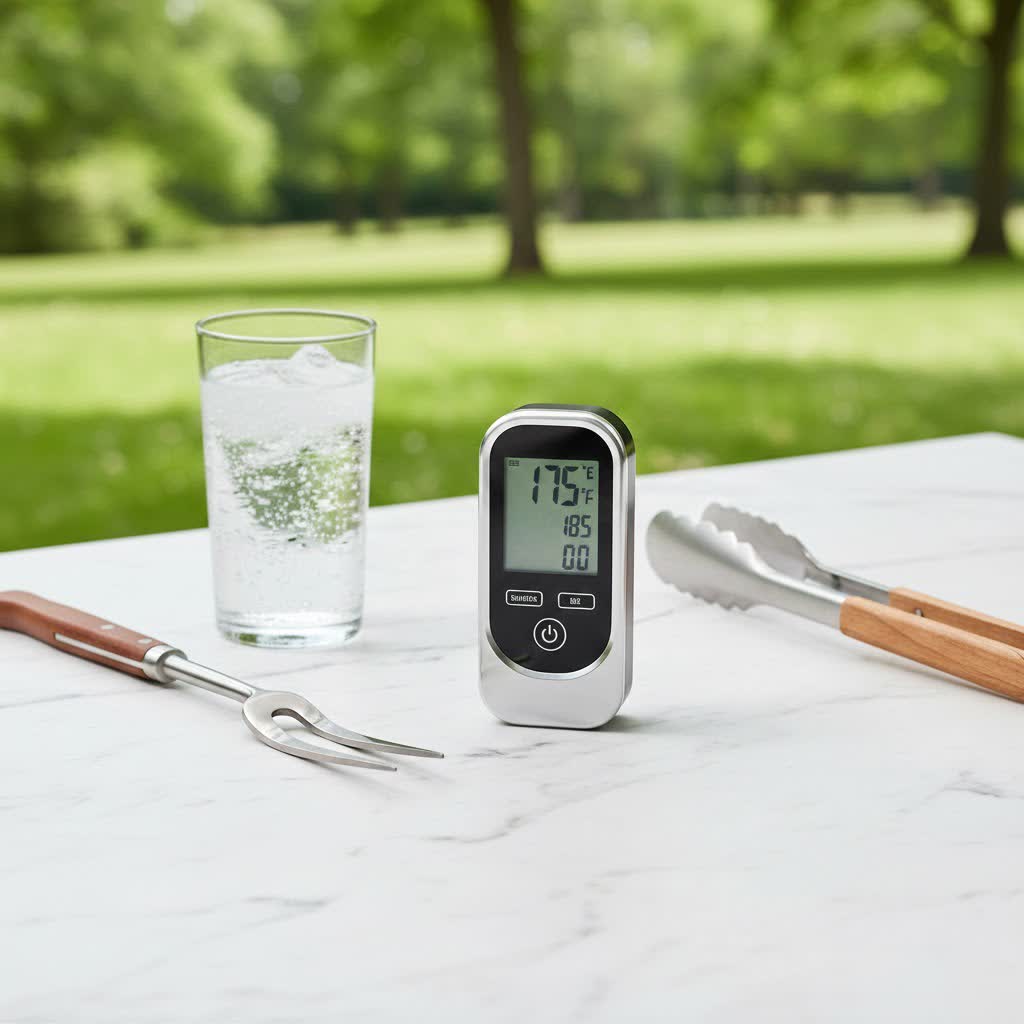
Instant Read Digital Meat Thermometers: Overview and Why You Need One
An instant read digital meat thermometer is a handheld device designed to quickly measure the internal temperature of food, displaying the reading on a clear digital screen. Unlike traditional methods that rely on visual cues or touch, this tool provides an objective, accurate temperature reading within seconds. Its primary purpose is to eliminate uncertainty in cooking, ensuring your meats are cooked to perfection and, more importantly, to safe internal temperatures, preventing foodborne illnesses.
The importance of using a meat thermometer cannot be overstated. Undercooked meat poses health risks, while overcooked meat becomes dry, tough, and lacks flavor. An instant read digital thermometer allows you to hit that sweet spot of doneness, preserving juices and tenderness for an exceptional dining experience. It’s a versatile gadget suitable for a wide range of cooking applications, from grilling steaks and roasting turkeys to pan-searing fish and even checking the temperature of baked goods or deep-frying oil.
Types of Meat Thermometers: Pros and Cons
While the focus here is on instant-read digital models, understanding other types of meat thermometers helps highlight their distinct advantages. Different cooking tasks may call for different tools, but the instant-read digital often stands out for its versatility and speed.
Analog Meat Thermometer
Analog thermometers, often featuring a dial or a traditional mercury column, are the most basic and typically the least expensive option.
- Pros: They are generally inexpensive, easy to use without batteries, and can be left in food during cooking (if designed as a leave-in type).
- Cons: Analog thermometers are significantly slower to register temperatures, often taking a minute or more for a stable reading. Their accuracy can be lower, and the small dial can be difficult to read precisely, especially in low light or at awkward angles.
|
Our Picks for the Best Meat Thermometer in 2026
As an Amazon Associate I earn from qualifying purchases.
|
||
| Num | Product | Action |
|---|---|---|
| 1 | 2 Pack Stainless Steel Meat Thermometer, Safe Leave in Oven, 2.5-in Extra-Large Dial Food Thermometer for Cooking, Temperature Probe for Baking, Steak, Turkey - Kitchen Gadgets - Silver |

|
| 2 | Meat Thermometer Digital - Instant Read Waterproof Food Thermometer with Backlight for Cooking, Grill, Candy, Kitchen & Stocking Stuffers for Men - Red |
|
| 3 | ThermoPro TP19H Digital Meat Thermometer for Cooking with Ambidextrous Backlit and Motion Sensing Kitchen Cooking Food Thermometer for BBQ Grill Smoker Oil Fry Candy Instant Read Thermometer |
|
| 4 | Meat Thermometer Digital, Instant Read Meat ThermometerI for Grill and Cooking, Waterproof Food Thermometer for Kitchen and Outside, BBQ, Turkey, Candy, Liquids, Beef |
|
| 5 | Meat Thermometer Digital for Grilling and Cooking - ANDAXIN Waterproof Ultra-Fast Instant Read Food thermometers with Backlight & Calibration for Kitchen, Deep Fry, BBQ, Grill(Red/Black), LCD |
|
| 6 | 0.5 Sec Instant Read Meat Thermometer Digital with ±0.5℉ Precision, Food Thermometer for Cooking Kitchen Gadgets, Oven Grill Candy BBQ Essentials Accessories, Gifts for Him Dad Men Birthday, Red |
|
| 7 | ThermoPro TP16 Large LCD Digital Cooking Food Meat Thermometer for Smoker Oven Kitchen BBQ Grill Thermometer Clock Timer with Stainless Steel Temperature Probe |
|
| 8 | Alpha Grillers Meat Thermometer Digital - Instant Read Food Thermometer for Cooking and Grilling Gifts for Men Valentines Day Gifts for Him Her Mom Dad |
|
| 9 | Escali AH1 Stainless Steel Oven Safe Meat Thermometer, Extra Large 2.5-inches Dial, Temperature Labeled for Beef, Poultry, Pork, and Veal Silver NSF Certified |
|
| 10 | Instant Read Meat Thermometer, Fast & Accurate Digital Food Thermometer with Backlight, Waterproof & Magnet for Grilling, Cooking, BBQ, Smoker, Baking, and Candy Making Blue |
|
Digital Meat Thermometer (General)
Digital thermometers represent a broad category that uses electronic sensors to provide temperature readings on a digital display. They offer a significant upgrade in accuracy and readability compared to analog models. This category includes both instant-read and leave-in probe thermometers.
- Pros: Generally offer higher accuracy and are easier to read with clear digital displays. Many come with additional features like backlights, hold functions, and temperature alarms.
- Cons: Require batteries and are typically more expensive than analog options.
Probe Meat Thermometer (Leave-in)
Probe thermometers, sometimes called leave-in thermometers, are designed to remain in the meat throughout the cooking process. They usually consist of a probe connected by a heat-resistant wire to an external display unit, which can be monitored outside the oven or grill.
- Pros: Ideal for monitoring internal temperatures over long cooking periods, such as roasting or smoking. They often include programmable alarms and wireless connectivity (Bluetooth or Wi-Fi) to your phone.
- Cons: Not suitable for quick, spot-checking of multiple items. The probe needs to be carefully placed and can be damaged if mishandled in high heat.
Instant Read Digital Meat Thermometer
This is where speed meets precision. Instant read digital meat thermometers are designed for quick, accurate temperature checks in a matter of seconds. They are handheld and feature a thin, pointed probe that is inserted into the thickest part of the food for a momentary reading.
- Pros: Unmatched speed (often 1-5 seconds for a stable reading), high accuracy (typically within ±1°F or better), easy-to-read digital displays, and portable design. Many feature auto-rotating screens, backlights, and ergonomic grips. Essential for ensuring food safety and perfect doneness without losing heat from your oven or grill.
- Cons: Generally not designed to be left in the oven or grill during cooking, as their plastic components can melt. They require batteries.
Comparative Table: Digital Meat Thermometer Types
To further illustrate the differences and help you identify the best fit for your needs, here’s a comparison focusing on common digital thermometer variations, with a nod to analog as a baseline.
| Feature | Analog Meat Thermometer | Digital Meat Thermometer (General) | Probe Meat Thermometer (Leave-in) | Instant Read Digital Meat Thermometer |
|---|---|---|---|---|
| Accuracy | Lower (±5°F+) | High (±1-2°F) | High (±1°F or better) | Very High (±0.5-1°F) |
| Read Time | Slow (30-60+ seconds) | Moderate (5-10 seconds) | Continuous monitoring | Very Fast (1-5 seconds) |
| Use Case | Basic, budget | General cooking | Roasting, Smoking, Grilling | Grilling, Searing, Quick Checks |
| Leave-in | Yes (if designed for it) | No (typically) | Yes | No |
| Display | Dial | Digital LCD | Digital LCD (remote) | Digital LCD (backlit, auto-rotating) |
| Power | None | Batteries | Batteries | Batteries |
| Portability | High | Moderate | Low (has base unit) | High |
| Cost | Low | Moderate | High | Moderate to High |
| Key Benefit | Simplicity | Improved readability | Hands-free monitoring | Speed, Precision, Versatility |
How to Choose the Right Instant Read Digital Meat Thermometer
Selecting the ideal instant read digital meat thermometer involves considering several factors tailored to your specific cooking habits and preferences.
Determine Your Cooking Needs
First, think about the types of cooking you do most often.
- What kind of meat do you usually cook? For thick cuts like roasts or whole poultry, a longer probe might be beneficial. For thin cuts like fish fillets or pork chops, a very thin probe tip ensures less damage to the meat.
- How much accuracy do you need? While most digital instant-read thermometers are highly accurate, some models offer precision down to a tenth of a degree, which can be crucial for delicate tasks like tempering chocolate or making candy (though a dedicated candy thermometer might be better for continuous monitoring).
- Do you need special features? Consider features like:
- Backlight: Essential for grilling at dusk or checking food in a dim oven.
- Auto-rotating display: Makes reading easy from any angle.
- Magnetic backing: Convenient for storage on a fridge or grill.
- Waterproof/Water-resistant rating: Important for easy cleaning and durability in a busy kitchen. An IP67 rating means it can withstand immersion.
- Ergonomics: How comfortable it is to hold, especially when reaching over hot surfaces.
Your Budget
Instant read digital meat thermometers come in a wide range of prices.
- Entry-level models can be found for under $20-$30, offering basic functionality and decent speed.
- Mid-range options ($30-$70) provide better speed, accuracy, and more advanced features like brighter backlights, magnetic backs, and improved durability.
- Premium models ($70-$125+) offer professional-grade speed (1-second readings), superior accuracy, robust construction, and extensive warranties. Invest in a higher-priced model if you cook frequently, prioritize extreme precision, and value long-term reliability.
Brands and Reviews
Always opt for reputable brands known for quality and customer support. Popular and highly-rated brands in the instant read digital meat thermometer market include ThermoWorks, Lavatools, ThermoPro, ChefsTemp, and OXO. Reading user reviews and professional tests can provide invaluable insights into real-world performance, durability, and user experience. Pay attention to feedback regarding accuracy consistency, read time, and display clarity.
Using Your Instant Read Digital Meat Thermometer Correctly
To get the most accurate readings and ensure food safety, proper usage of your instant read digital meat thermometer is critical.
- Probe Placement: Always insert the probe into the thickest part of the meat, avoiding bones, fat, or gristle, as these can give inaccurate readings. For whole poultry, check the deepest part of the thigh without touching bone. For roasts, insert it into the center. For thinner cuts like burgers or steaks, insert the probe from the side into the center.
- Wait for Stability: Even “instant read” thermometers need a few seconds for the temperature to stabilize. Wait until the display stops changing before noting the final temperature.
- USDA Safe Internal Temperatures: Always adhere to USDA guidelines for safe internal temperatures to prevent foodborne illness.
- Poultry (whole, ground, pieces): 165°F (74°C)
- Ground Meat (beef, pork, lamb, veal): 160°F (71°C)
- Beef, Pork, Veal, Lamb (steaks, roasts, chops):
- Medium-Rare: 145°F (63°C) (then rest for 3 minutes)
- Medium: 160°F (71°C)
- Well-Done: 170°F (77°C)
- Fish: 145°F (63°C)
- Leftovers & Casseroles: 165°F (74°C)
Remember that carry-over cooking will slightly increase the temperature after removal from heat, so you might pull meat a few degrees before the target.
- Cleaning and Maintenance: After each use, wipe the probe clean with hot, soapy water or an antibacterial wipe. If your thermometer is waterproof (e.g., IP67 rated), you can rinse the entire probe under a faucet. Never immerse non-waterproof units in water. Store the thermometer in its protective sleeve or a safe drawer to prevent damage to the probe.
Top 5 Instant Read Digital Meat Thermometers for Culinary Perfection
Based on extensive testing and user reviews, these five instant read digital meat thermometers consistently rise to the top for their accuracy, speed, and overall performance.
1. ThermoWorks Thermapen ONE
Often considered the “gold standard,” the Thermapen ONE is a favorite among professional chefs and serious home cooks alike.
- Pros: Delivers lightning-fast readings in 1-2 seconds, boasts exceptional accuracy (±0.5°F), features an auto-rotating, backlit display for easy reading at any angle, and has a robust, waterproof (IP67) construction. Its thin probe minimizes juice loss.
- Cons: It comes with a premium price tag, which can be a significant investment for some.
2. Lavatools Javelin Pro Duo
A fantastic mid-priced alternative, the Javelin Pro Duo offers excellent value for its performance.
- Pros: Provides fast and accurate readings (2-3 seconds, ±0.9°F), features a large, bright, auto-rotating display, and includes a convenient magnetic backing for storage. It’s also water-resistant (IP65).
- Cons: Not as fast or accurate as the Thermapen ONE, and its temperature range is slightly narrower.
3. ThermoWorks ThermoPop 2
For those on a budget who still demand reliability and speed, the ThermoPop 2 is an outstanding choice.
- Pros: Very affordable, yet offers impressive speed (3-4 seconds) and good accuracy (±1°F). Features a large, easy-to-read display with a backlight and 360° rotating capabilities. It’s also splash-proof.
- Cons: Its probe is stationary rather than folding, and the precision is to whole degrees, not tenths.
4. ThermoPro TP19H Digital Meat Thermometer
ThermoPro offers a range of popular and affordable thermometers, with the TP19H being a standout for its balance of features and cost.
- Pros: Delivers quick readings (3-5 seconds) with good accuracy, features a large backlit display, and includes a magnetic back and hanging hole for storage. It’s also IP65 water-resistant.
- Cons: While good for the price, its read time and accuracy might not match the top-tier models.
5. ChefsTemp Finaltouch X10 Instant Read Digital Meat Thermometer
The Finaltouch X10 is a strong contender known for its speed and design.
- Pros: Offers rapid 1-second readings with high accuracy (±0.7°F). It has a large, clear, auto-rotating display, a magnetic back, and a sturdy build. It’s also waterproof (IP67).
- Cons: Similar to the Thermapen ONE, it can be on the higher end of the price spectrum.
Conclusion
An instant read digital meat thermometer is more than just a kitchen gadget; it’s a game-changer for anyone who cooks meat, ensuring every meal is both safe and exquisitely prepared. By investing in a quality thermometer and using it correctly, you eliminate guesswork, prevent over or undercooking, and consistently achieve perfect results that will impress family and friends. From the professional-grade speed of the ThermoWorks Thermapen ONE to the excellent value of the ThermoPop 2, there’s a perfect instant read digital meat thermometer out there to suit every cook and every budget. Embrace this essential tool and elevate your culinary skills to a new level of confidence and precision. What delicious dish will you master next with the help of your new instant read digital meat thermometer?
Frequently Asked Questions
Why is an instant read digital meat thermometer better than an analog one?
Instant read digital thermometers offer superior accuracy and significantly faster readings compared to analog models, typically providing a stable temperature in 1-5 seconds versus 30-60 seconds or more. This speed is crucial for preventing heat loss and ensuring precise doneness.
Can I leave my instant read digital meat thermometer in the oven or grill?
No, instant read digital meat thermometers are designed for quick spot-checks and should not be left in hot ovens or grills. Their plastic components can melt and damage the device. For continuous temperature monitoring in high-heat environments, a dedicated leave-in probe thermometer is recommended.
How do I calibrate an instant read digital meat thermometer?
While some advanced instant read digital thermometers offer user-calibration features (often through an ice-water bath method), many do not. Check your thermometer’s manual for specific instructions. If it cannot be calibrated at home and you suspect inaccuracy, contact the manufacturer for service or consider a replacement.
What’s the difference between water-resistant and waterproof meat thermometers?
A water-resistant thermometer (e.g., IP65) can withstand splashes and light rain, making it safe for quick rinsing. A waterproof thermometer (e.g., IP67) can be fully submerged in water for a short period (typically 30 minutes at a certain depth), making it more durable and easier to clean thoroughly under a faucet.
How often should I replace my instant read digital meat thermometer?
With proper care, a good quality instant read digital meat thermometer can last for many years. Factors like physical damage, consistent inaccurate readings, or a significantly slow response time might indicate it’s time for a replacement. Warranties often range from 2 to 5 years, which can be a good indicator of expected lifespan.
