Imagine slicing into a perfectly cooked roast, tender and juicy, with every bite a testament to culinary precision. Achieving such mastery in the kitchen often feels like a secret held by professional chefs, but the truth is, anyone can master perfect doneness with the right tools. The unsung hero in this quest for culinary excellence? The oven meat thermometer. This simple yet sophisticated device removes the guesswork, ensuring your dishes are not only incredibly delicious but also safely cooked. If you’ve ever worried about undercooked poultry or dried-out beef, a dedicated oven meat thermometer is about to become your new best friend. It’s the key to unlocking consistent, mouth-watering results for every meal you prepare, transforming you into a more confident and skilled home chef.
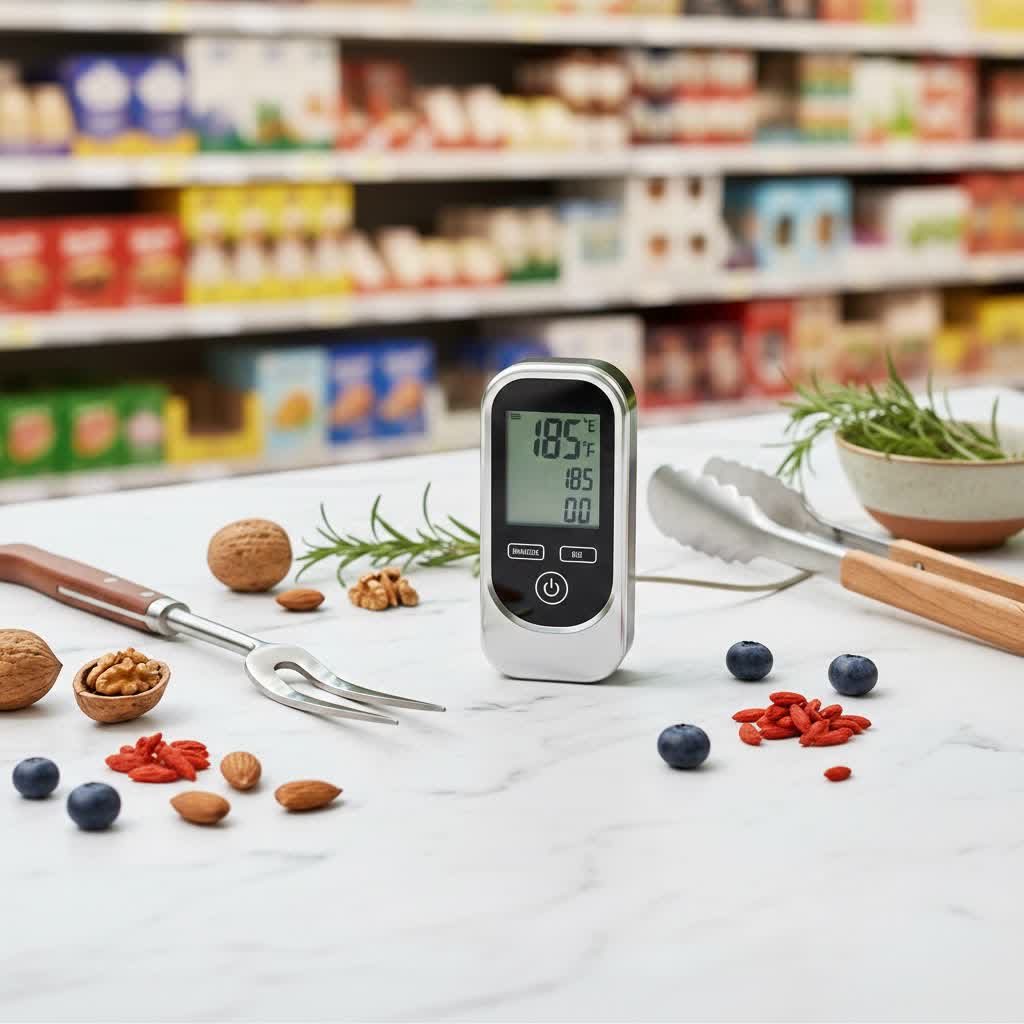
Oven Meat Thermometers: Overview and Why You Need One
An oven meat thermometer is a specialized device designed to measure the internal temperature of food, primarily meat, while it cooks inside an oven, grill, or smoker. Unlike instant-read thermometers that are used for quick spot-checks after food is removed from the heat, oven-safe thermometers are built to endure prolonged exposure to high temperatures. They typically feature a metal probe that is inserted into the thickest part of the meat and remains there throughout the cooking process, providing continuous temperature monitoring.
The importance of using a meat thermometer, especially an oven-safe one, cannot be overstated. Firstly, it’s crucial for food safety. Cooking meat to the correct internal temperature kills harmful bacteria, preventing foodborne illnesses. Guessing doneness by color or texture is unreliable and can put your health at risk. Secondly, a meat thermometer ensures perfect doneness and flavor. Overcooking meat leads to dry, tough results, while undercooking can be unsafe and unappetizing. With precise temperature readings, you can remove your roast or poultry at the exact moment it reaches its peak tenderness and juiciness, guaranteeing a delicious outcome every time. This precision elevates your cooking, transforming good meals into truly exceptional ones.
Today’s market offers a variety of oven-safe meat thermometers, primarily falling into digital probe categories, often with wired or wireless capabilities. These provide convenience and accuracy, making them indispensable tools for any serious home cook aiming for consistent, high-quality results.
Popular Meat Thermometer Types: Pros and Cons
When it comes to selecting an oven meat thermometer, understanding the different types available is crucial. Each offers unique advantages and disadvantages, catering to various cooking styles and budgets.
Analog Meat Thermometer
Analog meat thermometers, often featuring a classic dial face, are the most traditional and straightforward option for oven use.
- Pros:
- Affordable: They are generally the least expensive type of meat thermometer.
- Easy to Use: No batteries required; simply insert the probe into the meat.
- Oven-Safe: Designed to remain in the oven for the entire cooking duration.
- Cons:
- Lower Accuracy: Tend to be less precise than digital models.
- Hard to Read: The dial can be difficult to read, especially through a steamy oven door or from a distance.
- Slower Readings: Takes longer for the needle to stabilize and display the temperature.
- Limited Features: Lack alarms, timers, or remote monitoring capabilities.
|
Our Picks for the Best Meat Thermometer in 2026
As an Amazon Associate I earn from qualifying purchases.
|
||
| Num | Product | Action |
|---|---|---|
| 1 | Escali AH1 Stainless Steel Oven Safe Meat Thermometer, Extra Large 2.5-inches Dial, Temperature Labeled for Beef, Poultry, Pork, and Veal Silver NSF Certified |

|
| 2 | Meat Thermometer Digital - Instant Read Waterproof Food Thermometer with Backlight for Cooking, Grill, Candy, Kitchen & Stocking Stuffers for Men - Red |
|
| 3 | ThermoPro TP19H Digital Meat Thermometer for Cooking with Ambidextrous Backlit and Motion Sensing Kitchen Cooking Food Thermometer for BBQ Grill Smoker Oil Fry Candy Instant Read Thermometer |
|
| 4 | Instant Read Meat Thermometer, Fast & Accurate Digital Food Thermometer with Backlight, Waterproof & Magnet for Grilling, Cooking, BBQ, Smoker, Baking, and Candy Making Blue |
|
| 5 | Alpha Grillers Meat Thermometer Digital - Instant Read Food Thermometer for Cooking and Grilling Gifts for Men Valentines Day Gifts for Him Her Mom Dad |
|
| 6 | Meat Thermometer Digital, Instant Read Meat ThermometerI for Grill and Cooking, Waterproof Food Thermometer for Kitchen and Outside, BBQ, Turkey, Candy, Liquids, Beef |
|
| 7 | 0.5 Sec Instant Read Meat Thermometer Digital with ±0.5℉ Precision, Food Thermometer for Cooking Kitchen Gadgets, Oven Grill Candy BBQ Essentials Accessories, Gifts for Him Dad Men Birthday, Red |
|
| 8 | Meat Thermometer Digital for Grilling and Cooking - ANDAXIN Waterproof Ultra-Fast Instant Read Food thermometers with Backlight & Calibration for Kitchen, Deep Fry, BBQ, Grill(Red/Black), LCD |
|
| 9 | 2 Pack Stainless Steel Meat Thermometer, Safe Leave in Oven, 2.5-in Extra-Large Dial Food Thermometer for Cooking, Temperature Probe for Baking, Steak, Turkey - Kitchen Gadgets - Silver |
|
| 10 | ThermoPro TP16 Large LCD Digital Cooking Food Meat Thermometer for Smoker Oven Kitchen BBQ Grill Thermometer Clock Timer with Stainless Steel Temperature Probe |
|
Digital Probe Meat Thermometer (Wired)
Digital probe thermometers with a wire are a popular choice for oven cooking, offering a significant upgrade in accuracy and convenience over analog versions.
- Pros:
- High Accuracy: Provides precise digital temperature readings.
- Easy to Read: Features a clear, often backlit digital display.
- Continuous Monitoring: The probe stays in the meat, while a thin, heat-resistant wire connects to a display unit outside the oven, allowing you to monitor temperature without opening the door.
- Advanced Features: Many models include programmable alarms (to alert you when target temperature is reached), timers, and preset temperatures for various meats.
- Cons:
- Requires Batteries: Needs batteries to operate.
- Wire Management: The wire can sometimes be cumbersome and needs to be handled carefully to avoid pinching or damage by high heat elements.
- Higher Price: Generally more expensive than analog thermometers.
Wireless/Bluetooth Meat Thermometer
Representing the cutting edge of meat thermometer technology, wireless and Bluetooth models offer unparalleled convenience and advanced features for oven cooking.
- Pros:
- Ultimate Convenience: No wires mean less clutter and complete freedom of movement. Monitor temperatures from your smartphone or a dedicated remote unit from anywhere within range.
- Dual Sensors: Many wireless probes feature sensors to measure both the internal meat temperature and the ambient oven temperature, providing a comprehensive view of your cooking environment.
- Smart Features: Companion apps often offer estimated cooking times, temperature graphs, custom alerts, and USDA-recommended doneness levels.
- Portability: Ideal for use with ovens, grills, smokers, and even rotisseries.
- Cons:
- Higher Price: These are typically the most expensive option.
- Reliance on Connectivity: Requires a stable Bluetooth or Wi-Fi connection, which can sometimes be an issue in larger homes or with interference.
- Battery Life: Probes and base units require charging or batteries, which need to be managed.
Instant-Read Meat Thermometer (Not for Oven Use)
While not an oven meat thermometer, it’s important to mention instant-read thermometers to clarify their distinct purpose. These are designed for quick temperature checks after food has been removed from the heat. They are not oven-safe and should never be left in the oven during cooking, as their electronic components or plastic parts can be damaged by high temperatures. Their value lies in confirming doneness quickly and accurately once the food is off the heat.
Comparison Table of Meat Thermometer Types
To help you visualize the differences, here’s a detailed comparison of the primary types of oven-safe meat thermometers, along with the instant-read type for contrast.
| Feature | Analog (Oven-Safe) | Digital Wired Probe | Wireless/Bluetooth Probe | Instant-Read (Not Oven-Safe) |
|---|---|---|---|---|
| Oven Safety | Yes | Yes | Yes | No |
| Accuracy | Moderate | High | Very High | Very High |
| Ease of Reading | Low (small dial) | High (digital display) | Very High (remote/app) | High (digital display) |
| Continuous Monitoring | Yes (visually in oven) | Yes (remote display outside oven) | Yes (remote/app) | No (spot-check only) |
| Features | Basic temperature | Alarms, timers, presets | Alarms, timers, presets, ambient temp, app control | Quick temp reading |
| Power | None | Batteries | Rechargeable batteries | Batteries |
| Price Range | Low | Medium | High | Low to Medium |
| Pros | Affordable, no batteries | Accurate, remote monitoring, alarms | Ultimate convenience, advanced features, dual temp sensors | Fast readings, accurate |
| Cons | Less precise, hard to read | Wire management, batteries | Expensive, connectivity reliance, battery management | Not oven-safe, no continuous monitoring |
How to Choose the Right Oven Meat Thermometer
Selecting the perfect oven meat thermometer can seem daunting with the array of options available. By considering a few key factors, you can narrow down your choices and find the best fit for your culinary needs.
Determine Your Usage Needs
Your cooking habits will heavily influence the type of thermometer that’s right for you.
- What type of meat do you usually cook? If you frequently prepare large roasts, whole turkeys, or briskets, a leave-in probe thermometer (wired or wireless) is essential for monitoring internal temperature over long cooking periods. For thinner cuts like steaks or chicken breasts that you might finish on the stovetop or grill, an instant-read thermometer would also be beneficial for quick checks, but not for oven use during cooking.
- What level of accuracy do you need? While all modern meat thermometers offer reasonable accuracy, digital and wireless models typically provide more precise readings (often to within 1 degree) compared to analog dials. For critical dishes or specific doneness levels, higher accuracy is key.
- Do you need special features? Consider if you would benefit from features like programmable alarms that alert you when your meat reaches its target temperature, preset temperature guides for different types of meat, or the ability to monitor ambient oven temperature. Wireless thermometers with smartphone apps offer the most advanced features, including cooking graphs and estimated finish times. If you often leave the kitchen while cooking, remote monitoring is invaluable.
Your Budget
Meat thermometers come in a wide price range, from basic analog models costing under $10 to sophisticated wireless systems that can exceed $100.
- Entry-level: Analog oven-safe thermometers are very inexpensive but offer minimal features and lower precision.
- Mid-range: Wired digital probe thermometers typically fall in the $20-$60 range, offering good accuracy and essential features like alarms. This is often the sweet spot for many home cooks.
- High-end: Wireless/Bluetooth smart thermometers can cost anywhere from $70 to over $150, reflecting their advanced technology, multiple sensors, and smartphone integration.
It’s wise to invest in the best quality thermometer your budget allows, as accuracy and reliability directly impact your cooking results and food safety.
Brand and Reviews
Reputation matters when it comes to kitchen tools. Opt for brands known for quality and durability in their thermometers. Companies like ThermoWorks, ThermoPro, Meater, OXO, and Taylor Precision Products are frequently cited in reviews as leaders in the field.
- Read user reviews: Look for feedback on accuracy, ease of use, durability of probes and wires, battery life, and the functionality of companion apps (for wireless models). Real-world experiences can highlight potential issues or confirm excellent performance.
- Consider expert recommendations: Culinary publications and testing sites often conduct rigorous evaluations of meat thermometers, providing trusted recommendations that can guide your purchase.
By carefully evaluating these factors, you can confidently choose an oven meat thermometer that perfectly complements your cooking style and helps you achieve consistently delicious results.
How to Use an Oven Meat Thermometer Correctly
Using an oven meat thermometer effectively is critical to ensuring food safety and achieving perfect doneness. Proper placement and understanding temperature guidelines are key.
Correct Placement for Accurate Readings
The most crucial step is inserting the probe correctly into the meat.
- Thickest Part: Always insert the probe into the thickest part of the meat. This is typically the last part to reach the desired temperature, ensuring that the entire cut is safely cooked.
- Avoid Bone, Fat, and Gristle: Make sure the probe tip does not touch any bone, large pockets of fat, or gristle. These areas conduct heat differently than muscle tissue and can lead to inaccurate readings. For bone-in cuts, insert the probe parallel to the bone.
- Sufficient Depth: For analog dial thermometers, insert the stem at least two to 2.5 inches deep. For digital probe thermometers, a depth of about 0.5 inches (or 0.25 inches for very thin thermocouples) is usually sufficient to get an accurate reading. Ensure the sensor at the tip is fully embedded in the meat.
- Angle for Thinner Cuts: For thinner items like burgers or pork chops, insert the thermometer horizontally through the side to ensure the tip reaches the center.
For wired or wireless probe thermometers, once inserted, position the wire to avoid direct contact with heating elements. The main unit or remote display should remain outside the oven, allowing you to monitor the temperature without opening the door and losing heat.
Safe Internal Temperatures for Different Meats (USDA Guidelines)
Following USDA (United States Department of Agriculture) guidelines is essential for food safety. The internal temperature for doneness can vary based on the type of meat.
| Meat Type | Minimum Internal Temperature |
|---|---|
| Beef, Pork, Veal, Lamb (steaks, chops, roasts) | 145°F (63°C) with a 3-minute rest |
| Ground Meats (beef, pork, veal, lamb) | 160°F (71°C) |
| Poultry (whole, parts, ground) | 165°F (74°C) |
| Fish | 145°F (63°C) |
| Egg Dishes | 160°F (71°C) |
| Leftovers and Casseroles | 165°F (74°C) |
Note: For beef, lamb, and veal roasts, some cooks prefer lower temperatures for rare (125-130°F) or medium-rare (130-135°F), but the USDA recommends 145°F for safety with a resting period.
The Importance of Carryover Cooking
Meat continues to cook after it’s removed from the oven, a phenomenon known as “carryover cooking.” The internal temperature can rise by 5 to 10 degrees Fahrenheit (or even more for larger roasts) during this resting period.
- Remove Early: To account for carryover cooking, remove your meat from the oven when its internal temperature is about 5-10°F below your desired final temperature.
- Resting Period: Always let meat rest for at least 10-15 minutes (longer for very large cuts) after removing it from the oven. This allows the juices to redistribute throughout the meat, resulting in a more tender and flavorful product. Tent it loosely with foil to keep it warm during this time.
Cleaning and Storage
Proper cleaning and storage will extend the life of your meat thermometer.
- Cleaning: Hand wash the probe with hot, soapy water immediately after use. Avoid submerging the electronic display unit (for digital and wireless models) in water. Use a damp cloth to wipe down the main unit. Ensure the probe is thoroughly dry before storage.
- Storage: Store your thermometer in a clean, dry place, ideally in its original packaging or a protective sleeve to prevent damage to the probe or wire.
Top Oven Meat Thermometers: Detailed Insights
While specific models can vary in availability and features, several types and brands consistently receive high praise for their performance as oven meat thermometers. Instead of listing individual products, we’ll delve into the characteristics that make these categories stand out, drawing from the general features of popular models like ThermoWorks ChefAlarm, ThermoPro TP series, and Meater Plus.
1. The Reliable Digital Wired Probe Thermometer
These are the workhorses of oven cooking, combining accuracy with practical features.
- Key Features: A long, thin, stainless steel probe connected by a heat-resistant wire to a digital display unit that sits outside the oven. They typically offer customizable temperature alarms, often with preset temperatures for various types of meat. Many also include timers, useful for tracking overall cooking duration.
- Why They’re Popular: The ability to continuously monitor internal temperature without opening the oven door is a game-changer. The alarms prevent overcooking, making them ideal for roasts, briskets, and poultry that require precise temperature control over several hours. Brands like ThermoWorks (e.g., ChefAlarm, DOT series) and ThermoPro excel in this category, known for their responsive probes and intuitive interfaces.
- Ideal For: Home cooks who want precise temperature control and audible alerts without a complex setup, and who prioritize reliability and value.
2. The Smart Wireless Meat Thermometer
For those seeking ultimate convenience and cutting-edge technology, wireless thermometers are the pinnacle.
- Key Features: These probes are completely wire-free and communicate via Bluetooth or Wi-Fi to a dedicated receiver or, more commonly, a smartphone app. Many feature dual temperature sensors—one at the tip for the meat’s internal temperature and another at the base for the ambient oven or grill temperature. Apps often provide estimated cooking times, historical data, and a range of custom alerts.
- Why They’re Popular: The freedom from wires allows for easy rotation of food and monitoring from anywhere in your home. The dual sensors offer comprehensive insight into your cooking environment, preventing issues like an oven running too hot or cold. Brands like Meater (e.g., Meater Plus) are highly regarded for their robust connectivity and sophisticated app features.
- Ideal For: Tech-savvy cooks, avid grillers and smokers, or anyone who wants the flexibility to step away from the kitchen while closely monitoring their food’s progress.
3. The Budget-Friendly Oven-Safe Thermometer
For those new to using an oven thermometer or on a tighter budget, simpler options still provide valuable assistance.
- Key Features: These often include basic analog dial thermometers or simpler digital wired probes with fewer advanced features. They focus on the core function: providing an internal temperature reading.
- Why They’re Popular: They offer a low-cost entry point into precise cooking. While they may not have all the bells and whistles, they still help ensure food safety and prevent significant overcooking. Taylor Precision Products offers reliable, affordable options in this segment.
- Ideal For: Beginners, occasional cooks, or those who simply need a basic, reliable temperature check without extensive features.
> “Investing in a quality oven meat thermometer is the single best way to elevate your roasting and baking. It takes away the stress of guessing and gives you confidence in every dish.” – Chef Maria Rodriguez, Culinary Instructor & Food Safety Expert
The choice between these categories often boils down to balancing desired features, budget, and the level of convenience you prefer. Regardless of the type, integrating an oven meat thermometer into your cooking routine is a step towards more delicious and safer meals.
Conclusion
Mastering the art of cooking perfectly tender and safely done meat is within reach for every home chef, and the oven meat thermometer is your indispensable partner in this journey. We’ve explored how these vital kitchen tools eliminate guesswork, ensuring your dishes are consistently juicy, flavorful, and safe to eat. From the straightforward reliability of wired digital probes to the advanced connectivity of wireless smart thermometers, there’s a perfect solution for every cooking style and budget.
By understanding the types available, knowing how to choose one based on your specific needs, and following proper usage techniques—like correct probe placement and adhering to USDA temperature guidelines—you can transform your cooking results. Say goodbye to dry roasts and undercooked poultry, and embrace the confidence that comes with precise temperature control.
Ready to elevate your culinary creations? Which type of oven meat thermometer will you add to your kitchen arsenal to achieve your next perfectly cooked meal?
Frequently Asked Questions
Can I use an instant-read thermometer in the oven?
No, instant-read thermometers are not designed to be left in the oven. Their electronic components or plastic parts can be severely damaged by the sustained high temperatures inside an oven. They are meant for quick, momentary temperature checks after food is removed from the heat.
How does a wireless meat thermometer work?
Wireless meat thermometers typically consist of a probe and a base unit or a smartphone app. The probe is inserted into the meat and wirelessly transmits temperature data (via Bluetooth or Wi-Fi) to the base unit or your phone. This allows you to monitor your food’s internal temperature from a distance without opening the oven door.
What is “carryover cooking” and why is it important?
Carryover cooking is the phenomenon where food continues to cook and its internal temperature rises even after it has been removed from the heat source. It’s important because you should remove meat from the oven 5-10°F below your desired final temperature to prevent overcooking during this resting phase.
How do I ensure my oven meat thermometer is accurate?
Most quality digital meat thermometers are factory-calibrated and highly accurate. You can perform a simple ice-water test (it should read 32°F / 0°C) or boiling-water test (it should read 212°F / 100°C at sea level) to check its accuracy. If it’s off, some digital models allow for recalibration; check your manufacturer’s instructions.
What are the USDA safe cooking temperatures for common meats?
The USDA recommends cooking whole poultry to 165°F (74°C), ground meats to 160°F (71°C), and fresh beef, pork, veal, and lamb steaks, chops, and roasts to 145°F (63°C) with a three-minute rest. Always consult the latest USDA guidelines for specific recommendations.
