Imagine slicing into a perfectly cooked steak, tender and juicy, or carving a roast chicken with golden-brown skin and succulent, safely cooked meat. This isn’t just a dream for professional chefs; it’s a reality for any home cook armed with the right meat thermometer. This indispensable kitchen tool takes the guesswork out of cooking, ensuring both delicious results and critical food safety. In this comprehensive guide, we’ll explore everything you need to know about meat thermometers, from understanding their different types and how to choose one, to mastering their use and discovering the top models on the market.
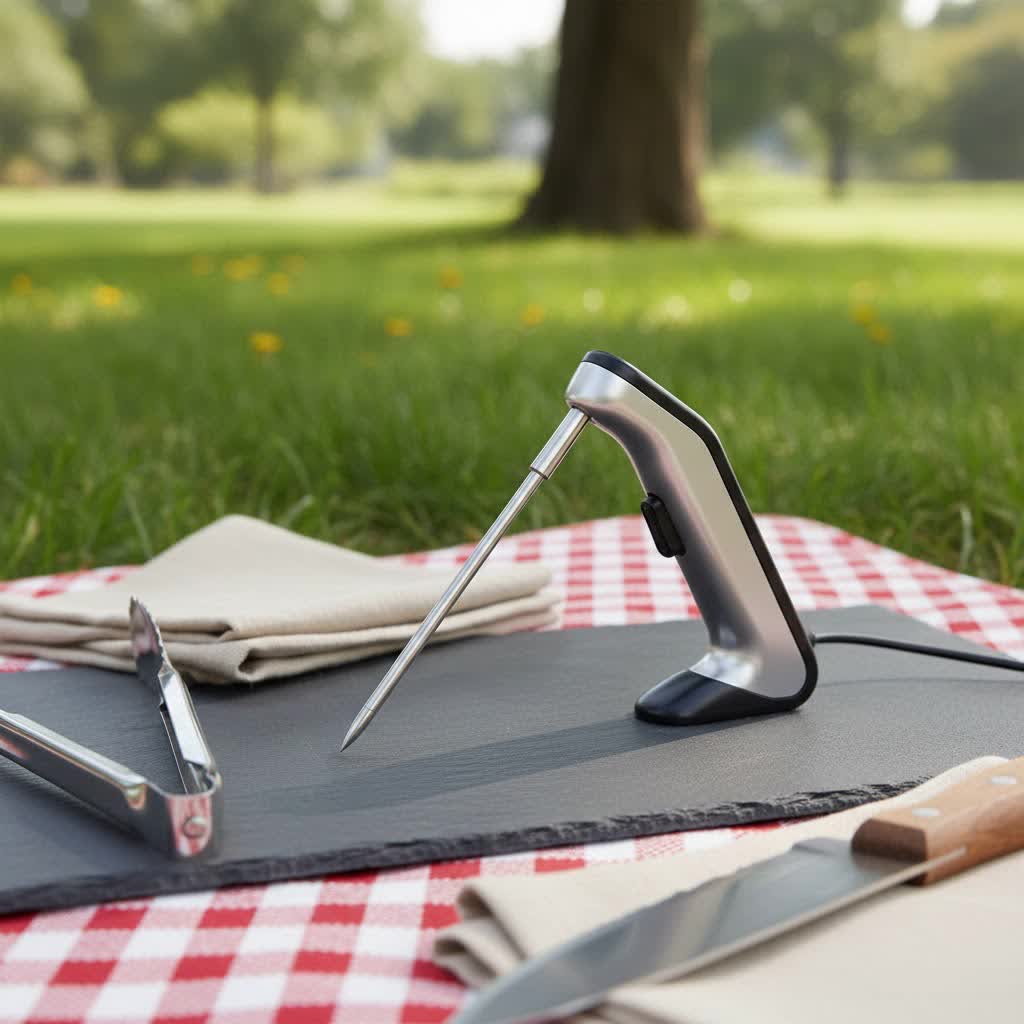
Meat Thermometer: Overview and Why You Need One
A meat thermometer is a device designed to measure the internal temperature of food, typically meat, poultry, and fish. Its primary function is to indicate when food has reached a safe minimum internal temperature, preventing foodborne illnesses. Beyond safety, a meat thermometer is your secret weapon for achieving culinary perfection, consistently delivering optimal texture, flavor, and juiciness by avoiding overcooking.
Using a meat thermometer is paramount for several reasons:
- Food Safety: The most crucial aspect. Many harmful bacteria are killed at specific temperatures. Relying on visual cues alone can be dangerous, especially with poultry or ground meats, where undercooking can lead to severe health risks. A thermometer ensures you reach the USDA recommended safe internal temperatures.
- Perfect Doneness: Whether you prefer your beef rare or well-done, a meat thermometer provides the precision needed to hit your desired level of doneness every single time. It eliminates the frustration of dry, tough meat.
- Enhanced Flavor and Texture: Overcooking meat causes it to lose moisture, becoming dry and bland. By monitoring the internal temperature, you can remove meat from the heat at precisely the right moment, preserving its natural juices and maximizing its flavor and tenderness.
The market offers a variety of meat thermometers, each suited for different cooking styles and needs. These generally fall into categories such as analog, digital, probe, and instant-read, though many modern options combine features across these types.
Popular Types of Meat Thermometers: Pros and Cons
Understanding the different types of meat thermometers available will help you select the best tool for your cooking adventures.
Analog Meat Thermometer
Analog thermometers, often recognized by their dial face, are a traditional choice. They typically feature a bimetallic coil that expands and contracts with temperature changes, moving a needle across a calibrated display.
- Pros:
- Affordable: Generally the least expensive option.
- Easy to Use: No batteries required, simple design.
- Durable: Often robust and can withstand high oven temperatures.
- Cons:
- Lower Accuracy: Can be less precise than digital models.
- Slower Readings: Takes longer to register an accurate temperature, typically 15-20 seconds or more.
- Hard to Read: The dial can be difficult to read quickly or in low light.
- Limited Features: Lacks advanced features like alarms or backlights.
|
Our Picks for the Best Meat Thermometer in 2026
As an Amazon Associate I earn from qualifying purchases.
|
||
| Num | Product | Action |
|---|---|---|
| 1 | Meat Thermometer Digital for Grilling and Cooking - ANDAXIN Waterproof Ultra-Fast Instant Read Food thermometers with Backlight & Calibration for Kitchen, Deep Fry, BBQ, Grill(Red/Black), LCD |

|
| 2 | Instant Read Meat Thermometer, Fast & Accurate Digital Food Thermometer with Backlight, Waterproof & Magnet for Grilling, Cooking, BBQ, Smoker, Baking, and Candy Making Blue |
|
| 3 | 0.5 Sec Instant Read Meat Thermometer Digital with ±0.5℉ Precision, Food Thermometer for Cooking Kitchen Gadgets, Oven Grill Candy BBQ Essentials Accessories, Gifts for Him Dad Men Birthday, Red |
|
| 4 | Alpha Grillers Meat Thermometer Digital - Instant Read Food Thermometer for Cooking and Grilling Gifts for Men Valentines Day Gifts for Him Her Mom Dad |
|
| 5 | Meat Thermometer Digital - Instant Read Waterproof Food Thermometer with Backlight for Cooking, Grill, Candy, Kitchen & Stocking Stuffers for Men - Red |
|
| 6 | Escali AH1 Stainless Steel Oven Safe Meat Thermometer, Extra Large 2.5-inches Dial, Temperature Labeled for Beef, Poultry, Pork, and Veal Silver NSF Certified |
|
| 7 | ThermoPro TP16 Large LCD Digital Cooking Food Meat Thermometer for Smoker Oven Kitchen BBQ Grill Thermometer Clock Timer with Stainless Steel Temperature Probe |
|
| 8 | Meat Thermometer Digital, Instant Read Meat ThermometerI for Grill and Cooking, Waterproof Food Thermometer for Kitchen and Outside, BBQ, Turkey, Candy, Liquids, Beef |
|
| 9 | 2 Pack Stainless Steel Meat Thermometer, Safe Leave in Oven, 2.5-in Extra-Large Dial Food Thermometer for Cooking, Temperature Probe for Baking, Steak, Turkey - Kitchen Gadgets - Silver |
|
| 10 | ThermoPro TP19H Digital Meat Thermometer for Cooking with Ambidextrous Backlit and Motion Sensing Kitchen Cooking Food Thermometer for BBQ Grill Smoker Oil Fry Candy Instant Read Thermometer |
|
Digital Meat Thermometer
Digital meat thermometers provide a clear, numerical temperature display, making them very popular among home cooks and professionals alike.
- Pros:
- High Accuracy: Offers precise temperature readings, often within 1-2 degrees Fahrenheit.
- Easy to Read: Digital displays are clear and quick to interpret, often with backlights.
- Fast Readings: Many digital models provide readings in just a few seconds.
- Feature-Rich: Can include features like alarms, programmable settings, hold functions, and readouts in both Fahrenheit and Celsius.
- Cons:
- Requires Batteries: Dependent on battery power, which can run out.
- Higher Price: Generally more expensive than analog thermometers.
Probe Meat Thermometer
Probe thermometers are designed to stay in the meat during the entire cooking process, continuously monitoring the internal temperature. They consist of a probe inserted into the meat, connected by a heat-resistant wire to a base unit that displays the temperature outside the oven, grill, or smoker.
- Pros:
- Continuous Monitoring: Allows you to track temperature progress without opening the oven or grill, preserving heat.
- Ideal for Long Cooks: Perfect for roasts, briskets, and other dishes requiring extended cooking times.
- Remote Monitoring: Many come with wireless capabilities (Bluetooth or Wi-Fi) or remote receivers, allowing you to monitor from a distance.
- Cons:
- Wire Management: Wired probes require careful placement to avoid pinching or damage.
- Potential Connectivity Issues: Wireless models can sometimes experience signal drops depending on range and obstacles.
- Not for Instant Checks: While they monitor continuously, they aren’t designed for quick, spot checks of various items.
Instant-Read Meat Thermometer
An instant-read meat thermometer is a type of digital thermometer optimized for speed. It’s handheld and used to quickly check the temperature of food at various points during or after cooking.
- Pros:
- Extremely Fast: Provides accurate readings in as little as 1-3 seconds.
- Portable: Compact and easy to store or carry in an apron pocket.
- Versatile: Excellent for quick spot checks on multiple pieces of meat, checking liquids, candy, or baked goods.
- Cons:
- Not Oven-Safe: Cannot be left in the oven or grill during cooking, as the electronics are not designed for sustained high heat.
- Requires Manual Checks: You need to open the oven/grill lid to take a reading, which can cause heat loss.
Comparative Table of Meat Thermometers
| Type | Accuracy | Read Speed | Features | Price Range | Pros | Cons |
|---|---|---|---|---|---|---|
| Analog | Moderate | Slow (15-20s) | Basic dial display | Low | Affordable, no batteries, durable. | Less precise, slow, hard to read, no advanced features. |
| Digital | High | Fast (2-10s) | Digital display, backlight, auto-off | Medium | Precise, easy to read, quick, often portable. | Requires batteries, not always oven-safe (unless specifically designed as a probe). |
| Probe (Wired) | High | Continuous | Alarms, timer, remote base | Medium-High | Continuous monitoring, oven/grill safe, hands-free. | Wired connection can be cumbersome, limited portability of base. |
| Probe (Wireless) | High | Continuous | Bluetooth/Wi-Fi, app monitoring, alarms | High | Ultimate convenience, fully wireless, track on phone, multi-probe options. | Higher cost, potential connectivity issues, battery life management. |
| Instant-Read | Very High | Very Fast (1-3s) | Digital display, hold function, auto-off | Medium-High | Extremely quick, highly accurate, versatile for spot checks. | Not for continuous use in oven/grill, requires opening oven/grill for each check. |
Guide to Choosing the Right Meat Thermometer
Selecting the ideal meat thermometer involves considering your cooking habits, priorities, and budget. Here’s how to make an informed decision:
Determine Your Needs
Consider what you cook most often and how you cook it.
- Type of Meat: Are you primarily grilling steaks, roasting whole turkeys, or slow-smoking brisket?
- For grilling thin cuts like steaks or chicken breasts, an instant-read thermometer is excellent for quick checks.
- For large roasts or smoking, a leave-in probe thermometer (wired or wireless) is invaluable for continuous monitoring without opening the oven or smoker.
- For deep-frying or candy-making, instant-read or certain digital probe thermometers are also useful.
- Required Accuracy: Most home cooks benefit from high accuracy, which digital and instant-read thermometers provide. Analog thermometers, while simple, might not offer the precision needed for sensitive dishes or strict food safety.
- Special Features: Do you need an alarm to alert you when your meat reaches temperature? Is remote monitoring via Bluetooth or Wi-Fi important for you while entertaining or multi-tasking? A backlight for easy reading in low light conditions (like inside an oven or grill at night) can also be a valuable feature.
Your Budget
Meat thermometers vary significantly in price, from under $20 for basic models to over $100 for advanced wireless systems.
- Entry-Level (Under $30): You can find reliable digital instant-read or basic wired probe thermometers that offer good value.
- Mid-Range ($30-$70): This category offers faster, more accurate instant-read thermometers and more robust wired probe models with additional features.
- High-End ($70+): Here you’ll find top-tier instant-read thermometers (like the Thermapen ONE) and advanced wireless smart thermometers (like Meater), often with multi-probe capabilities and sophisticated app integration. Choose a model that aligns with your frequency of use and the importance of specific features.
Brand and Reviews
Investing in a reputable brand often translates to better quality, accuracy, and customer support.
- Trusted Brands: Companies like ThermoWorks, Meater, ThermoPro, and OXO are consistently rated highly by experts and users.
- Read Reviews: Always check user reviews and expert comparisons. They provide real-world insights into a thermometer’s performance, durability, and ease of use. Pay attention to comments regarding accuracy, speed, and any common issues.
How to Use a Meat Thermometer Correctly
Even the best meat thermometer won’t give you accurate results if not used correctly. Precision in placement and understanding carryover cooking are key.
Proper Insertion for Accurate Reading
- Thickest Part: Always insert the thermometer probe into the thickest part of the meat. This is typically the last part to reach the target temperature.
- Avoid Bones and Fat: Bones conduct heat at a different rate than meat, and fat pockets can also give misleading readings. Ensure your probe is inserted directly into the muscle tissue, away from bone, gristle, or large fat deposits.
- Sufficient Depth: For instant-read thermometers, insert the probe to the indicated mark, usually about 1/2 to 2 inches deep, or until the sensor reaches the center of the thickest part. For probe thermometers, ensure the entire sensing tip is within the meat.
- Thin Cuts: For thinner cuts like burgers or chicken cutlets, insert the probe horizontally from the side to reach the center of the patty or cut.
- Multiple Readings: For large cuts of meat or whole poultry (like a turkey), take readings in several different spots to confirm even cooking and ensure the lowest temperature has reached the safe zone.
- Stabilize: Allow the thermometer’s reading to stabilize. This usually takes just 1-3 seconds for instant-read models, but a few seconds more for some digital probes.
Safe Temperatures (USDA Guidelines)
Always refer to USDA guidelines for safe internal temperatures to prevent foodborne illness. Here are some common examples:
- Poultry (whole, ground, or parts): 165°F (74°C)
- Ground Meats (beef, pork, lamb): 160°F (71°C)
- Beef, Pork, Veal, and Lamb (steaks, roasts, chops): 145°F (63°C), followed by a 3-minute rest time.
- Fish: 145°F (63°C)
- Leftovers & Casseroles: 165°F (74°C)
Remember that for beef, pork, veal, and lamb, the 3-minute rest time is crucial, as the temperature will continue to rise slightly (known as “carryover cooking”) during this period, enhancing juiciness and completing the cooking process. For this reason, it’s often recommended to remove meat from the heat a few degrees before it reaches its final target temperature.
Cleaning and Maintenance
Proper cleaning and maintenance extend the life of your thermometer and prevent cross-contamination.
- Clean After Each Use: Wash the probe with hot, soapy water immediately after use. Some probes are dishwasher-safe, but always check manufacturer instructions. Avoid submerging the entire unit unless it’s explicitly waterproof.
- Sanitize: For extra safety, wipe the probe with an antibacterial wipe or a solution of water and bleach (e.g., 1 teaspoon bleach per quart of water).
- Storage: Store your thermometer in a clean, dry place, ideally in its protective sheath or case.
- Calibration: Periodically check your thermometer’s accuracy. The ice bath method is simple: fill a glass with crushed ice and cold water, insert the probe (without touching the bottom or sides), and it should read 32°F (0°C). If it’s off, follow manufacturer instructions for calibration or note the discrepancy.
Top 5 Most Popular Meat Thermometers Today (Detailed Review)
Based on extensive testing and user reviews, these five meat thermometers consistently rank among the best for their accuracy, speed, features, and overall value.
1. ThermoWorks Thermapen ONE
Widely regarded as the gold standard for instant-read thermometers, the Thermapen ONE is a favorite among professional chefs and serious home cooks.
- Features: Ultra-fast 1-second readings, auto-rotating display, high accuracy (±0.5°F), waterproof, long battery life.
- Pros: Unmatched speed and precision, durable construction, intuitive to use.
- Cons: Premium price point, not a leave-in thermometer.
2. Meater Plus Bluetooth Meat Thermometer
For those who love smart kitchen gadgets and remote monitoring, the Meater Plus offers unparalleled convenience. It’s a fully wireless, leave-in probe thermometer.
- Features: Dual sensors (internal meat temp and ambient temp), guided cook system via app, Bluetooth range extender, dishwasher-safe probe.
- Pros: Completely wireless, excellent app integration, perfect for long cooks and smoking, monitors ambient temperature.
- Cons: Higher price, relies on Bluetooth range (though the Plus has an extender), app-dependent for full functionality.
3. ThermoPro TP19H Digital Instant Read Meat Thermometer
A fantastic budget-friendly option, the ThermoPro TP19H delivers excellent performance for its price.
- Features: Fast 2-3 second readings, large backlit LCD, foldable probe, auto-off, magnetic back.
- Pros: Great value, very quick and accurate for an affordable model, easy to store, user-friendly.
- Cons: Not waterproof, less robust than higher-end models.
4. ThermoWorks ThermoPop 2
A more affordable instant-read option from the highly respected ThermoWorks brand, the ThermoPop 2 offers great accuracy and speed in a compact design.
- Features: 2-3 second readings, rotating display, waterproof (IP67), high accuracy.
- Pros: Excellent accuracy for the price, durable and waterproof, easy to read at any angle.
- Cons: Not as fast as the Thermapen ONE, lacks some advanced features of pricier models.
5. Polder Digital In-Oven Thermometer
This wired probe thermometer is a reliable workhorse for roasts and oven cooking, offering a balance of features and affordability.
- Features: Programmable alarm, preset temperature settings, heat-resistant probe wire, magnetic back.
- Pros: Affordable leave-in option, continuous monitoring in the oven, simple alarm function.
- Cons: Wired connection, not as fast for spot checks, basic display compared to smart thermometers.
Conclusion
A meat thermometer is more than just a kitchen gadget; it’s an essential tool for culinary success and food safety. From ensuring your holiday roast is perfectly done to guaranteeing your grilled chicken is safe to eat, a reliable meat thermometer provides confidence and precision in every dish. By understanding the different types—analog, digital, probe, and instant-read—and how to use them correctly, you can elevate your cooking to a professional level. Whether you opt for a lightning-fast instant-read or a smart wireless probe, making a meat thermometer a staple in your kitchen will transform your cooking. Which type of meat thermometer will you add to your arsenal to master perfect doneness every time?
Frequently Asked Questions
What is the ideal internal temperature for medium-rare beef?
For a medium-rare beef steak or roast, aim for an internal temperature of 130-135°F (54-57°C). Remember to remove the meat from the heat a few degrees lower than your target and let it rest for at least 3 minutes, as its temperature will continue to rise.
Can I leave an instant-read meat thermometer in the oven while cooking?
No, instant-read meat thermometers are not designed to be left in the oven, grill, or smoker during cooking. Their electronic components can be damaged by sustained high heat. Use them for quick spot checks.
How do I know if my meat thermometer is accurate?
You can test your meat thermometer’s accuracy using an ice bath. Fill a glass with crushed ice and water, stir, then insert the thermometer probe without touching the sides or bottom. A properly calibrated thermometer should read 32°F (0°C).
What’s the difference between a probe thermometer and a smart thermometer?
A probe thermometer typically refers to any thermometer with a probe that stays in the meat during cooking, connected by a wire to a display unit. A smart thermometer is usually a type of probe thermometer (often wireless) that connects to a smartphone app via Bluetooth or Wi-Fi, offering advanced features like guided cooking, multi-probe monitoring, and remote alerts.
How deep should I insert the meat thermometer?
Insert the probe into the thickest part of the meat, ensuring the sensing tip reaches the center, but avoid touching any bones, gristle, or large pockets of fat, as these can give inaccurate readings. For thinner cuts, insert horizontally from the side.
