Imagine this: a perfectly seared steak, a tender, smoky brisket, or a juicy roasted chicken, all cooked to absolute perfection. The secret to consistently achieving these culinary triumphs, especially on the grill or smoker, isn’t just about technique or experience; it’s about precision. A reliable BBQ meat thermometer is the unsung hero of outdoor cooking, transforming guesswork into gastronomic glory. Whether you’re a seasoned pitmaster or a weekend grilling enthusiast, choosing the right meat thermometer is crucial for food safety, optimal flavor, and achieving that ideal doneness every time. This comprehensive guide will walk you through everything you need to know to select, use, and master the best BBQ meat thermometer for your cooking style.
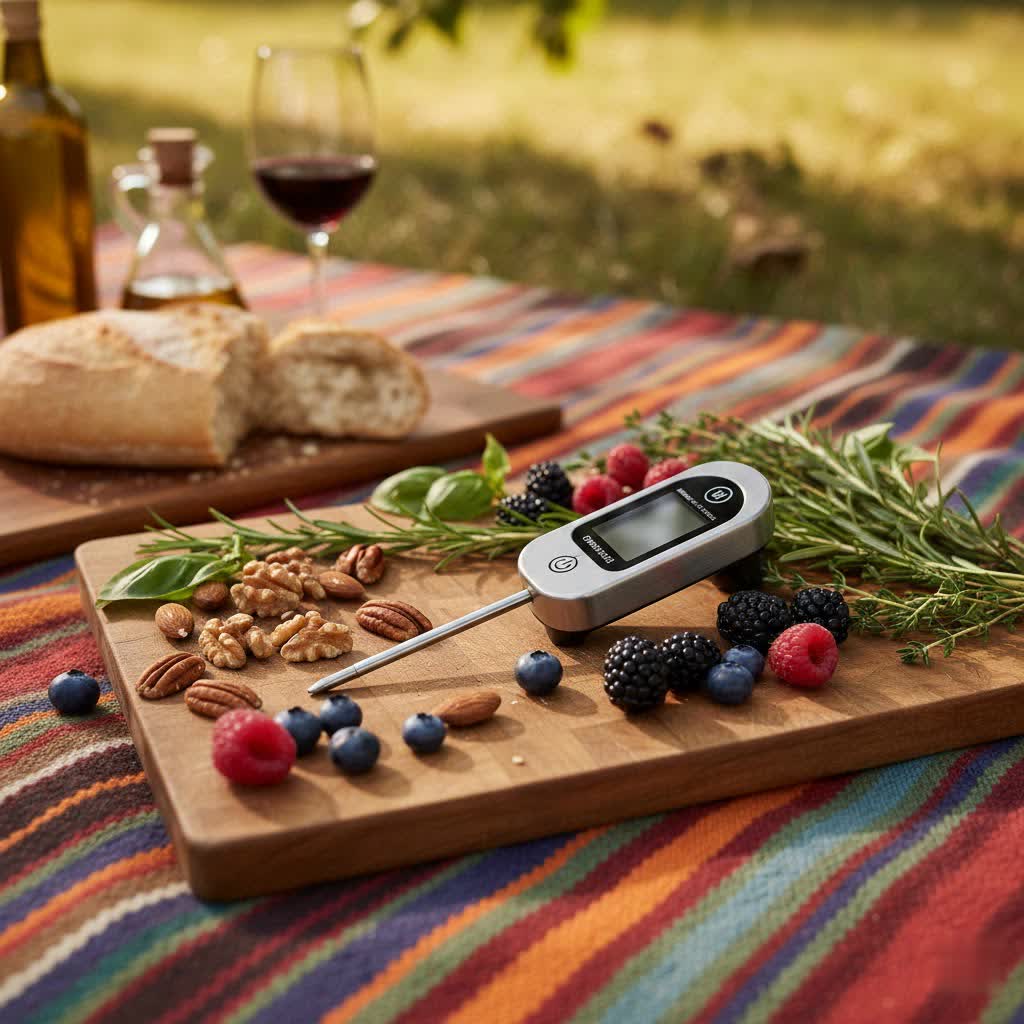
Meat Thermometer: Overview and Why You Need One
A meat thermometer is a vital kitchen tool designed to measure the internal temperature of food, ensuring it reaches safe and desired levels. For BBQ and grilling, these devices are indispensable, moving beyond simple kitchen gadgets to become essential partners in your culinary journey.
Why is a meat thermometer so crucial for BBQ? Firstly, food safety is paramount. Cooking meats to their recommended internal temperatures destroys harmful bacteria, preventing foodborne illnesses. Visual cues like meat color or juice clarity can be misleading; a thermometer provides an accurate, verifiable reading. Secondly, a thermometer guarantees perfect doneness. Overcooked meat becomes dry and tough, while undercooked meat is unsafe and unappetizing. With a precise temperature reading, you can consistently hit that ideal medium-rare steak, fall-off-the-bone ribs, or succulent pulled pork. Finally, it enhances flavor and texture. Knowing the exact temperature allows you to pull your meat at its peak, preserving juices and tenderness for an unmatched eating experience. Relying on the often-inaccurate built-in thermometers on grills or smokers is a common mistake that can lead to disappointing results.
The market offers a diverse range of meat thermometers, each suited for different cooking scenarios. These generally fall into categories like analog, digital, instant-read, and probe thermometers, with modern variations incorporating wireless technologies like Bluetooth and Wi-Fi for enhanced convenience and control during your BBQ sessions.
Common Types of Meat Thermometers: Pros and Cons
Understanding the different types of meat thermometers available is the first step in finding the perfect match for your BBQ needs. Each type offers distinct advantages and disadvantages.
Analog Meat Thermometer
Analog thermometers are the traditional, dial-faced devices.
- Pros: They are typically inexpensive, don’t require batteries, and are simple to operate.
- Cons: Their major drawbacks include lower accuracy compared to digital models, often taking a long time to register a stable reading, and can be difficult to read precisely due to their small dial and needle. They are generally not recommended for critical BBQ temperature monitoring.
|
Our Picks for the Best Meat Thermometer in 2026
As an Amazon Associate I earn from qualifying purchases.
|
||
| Num | Product | Action |
|---|---|---|
| 1 | Meat Thermometer Digital for Grilling and Cooking - ANDAXIN Waterproof Ultra-Fast Instant Read Food thermometers with Backlight & Calibration for Kitchen, Deep Fry, BBQ, Grill(Red/Black), LCD |

|
| 2 | Alpha Grillers Meat Thermometer Digital - Instant Read Food Thermometer for Cooking and Grilling Gifts for Men Valentines Day Gifts for Him Her Mom Dad |
|
| 3 | ThermoPro TP16 Large LCD Digital Cooking Food Meat Thermometer for Smoker Oven Kitchen BBQ Grill Thermometer Clock Timer with Stainless Steel Temperature Probe |
|
| 4 | 0.5 Sec Instant Read Meat Thermometer Digital with ±0.5℉ Precision, Food Thermometer for Cooking Kitchen Gadgets, Oven Grill Candy BBQ Essentials Accessories, Gifts for Him Dad Men Birthday, Red |
|
| 5 | 2 Pack Stainless Steel Meat Thermometer, Safe Leave in Oven, 2.5-in Extra-Large Dial Food Thermometer for Cooking, Temperature Probe for Baking, Steak, Turkey - Kitchen Gadgets - Silver |
|
| 6 | Meat Thermometer Digital, Instant Read Meat ThermometerI for Grill and Cooking, Waterproof Food Thermometer for Kitchen and Outside, BBQ, Turkey, Candy, Liquids, Beef |
|
| 7 | Instant Read Meat Thermometer, Fast & Accurate Digital Food Thermometer with Backlight, Waterproof & Magnet for Grilling, Cooking, BBQ, Smoker, Baking, and Candy Making Blue |
|
| 8 | ThermoPro TP19H Digital Meat Thermometer for Cooking with Ambidextrous Backlit and Motion Sensing Kitchen Cooking Food Thermometer for BBQ Grill Smoker Oil Fry Candy Instant Read Thermometer |
|
| 9 | Meat Thermometer Digital - Instant Read Waterproof Food Thermometer with Backlight for Cooking, Grill, Candy, Kitchen & Stocking Stuffers for Men - Red |
|
| 10 | Escali AH1 Stainless Steel Oven Safe Meat Thermometer, Extra Large 2.5-inches Dial, Temperature Labeled for Beef, Poultry, Pork, and Veal Silver NSF Certified |
|
Digital Meat Thermometer
Digital thermometers represent a significant upgrade from analog versions, offering clear, numerical displays.
- Pros: They boast high accuracy (often within a degree or less), are much easier to read thanks to large, backlit LCD screens, and often come with additional features like alarms, timers, and auto-shutoff.
- Cons: Digital thermometers require batteries and tend to be more expensive than basic analog models.
Probe Meat Thermometer (Wired and Wireless)
Probe thermometers are designed for continuous monitoring of meat or ambient grill temperatures, making them ideal for long cooks like smoking and roasting. They consist of a probe connected by a heat-resistant wire to a base unit (wired) or communicate wirelessly (Bluetooth/Wi-Fi).
- Pros: They allow you to monitor temperatures without opening the grill lid, preserving heat and smoke. Many come with multiple probes to track several cuts of meat or the ambient grill temperature simultaneously. Wireless models offer the freedom to monitor your cook from a distance via a receiver or smartphone app. They are generally oven and grill-safe.
- Cons: Wired probes can be cumbersome with wires that might get tangled or pinched. Wireless probes can sometimes experience connectivity issues depending on distance or grill material. High-temperature searing can damage some probes if not specifically designed for it, and they are typically more expensive.
Instant-Read Meat Thermometer
Instant-read thermometers are handheld devices designed for quick, on-the-spot temperature checks.
- Pros: As their name suggests, they provide incredibly fast and accurate readings (often in 1-3 seconds), making them perfect for quickly checking doneness of steaks, burgers, or chicken breasts without losing much heat. They are portable, easy to use, and versatile for various cooking tasks.
- Cons: They are not designed to be left in the meat during cooking. You must open the grill lid to use them, which can disrupt temperature stability during longer cooks.
Comparison Table of Meat Thermometers
| Feature | Analog | Digital Instant-Read | Wired Probe | Wireless Probe (Bluetooth/Wi-Fi) |
|---|---|---|---|---|
| Accuracy | Low to Moderate | High (±1°F) | High (±1°F) | High (±1°F) |
| Speed | Slow (15-30+ seconds) | Very Fast (1-5 seconds) | Moderate (few seconds to stabilize) | Moderate (few seconds to stabilize) |
| Usage | Basic roasts, infrequent checks | Quick checks for grilling/frying | Continuous monitoring in oven/grill | Continuous monitoring, remote |
| Leave-in? | Yes (some oven-safe models) | No | Yes | Yes |
| Display | Dial with needle | Digital LCD (often backlit) | Digital LCD (base unit) | Digital LCD (base unit/app) |
| Power | None | Battery (AAA/button cell) | Battery (AAA/AA) | Rechargeable battery |
| Price | Low | Moderate | Moderate to High | High |
| Portability | High | Very High | Low (base unit needs placement) | High (probes are wire-free) |
| Special Features | None | Auto-off, hold function, backlight | Alarms, timers, pre-set temps | Alarms, graphs, multi-probe, cloud connectivity, predictive cooking |
| Pros | Cheap, no batteries | Fast, accurate, easy to read, versatile | Continuous monitoring, oven/grill safe | Remote monitoring, no wires (probe), smart features |
| Cons | Inaccurate, slow, hard to read | Not for continuous monitoring, opens lid | Wires can be cumbersome, base unit placement | Connectivity issues, higher cost, battery charging |
How to Choose the Right BBQ Meat Thermometer
Selecting the ideal BBQ meat thermometer depends heavily on your specific cooking habits and preferences. Consider these factors to make an informed decision:
Determine Your Usage Needs
- What kind of BBQ do you do most often? If you primarily grill quick-cooking items like steaks, burgers, chicken breasts, or fish, an instant-read thermometer is your best friend for quick, precise checks. For longer cooks such as briskets, pork butts, or whole chickens on a smoker or indirect grill, a probe thermometer (wired or wireless) is essential for continuous monitoring without opening the lid.
- How many items do you typically cook at once? If you often cook multiple cuts of meat or need to monitor both meat and ambient grill temperatures, look for models with multiple probes.
- Do you need remote monitoring? If you enjoy socializing or doing other tasks while your BBQ cooks, a wireless (Bluetooth or Wi-Fi) probe thermometer with a good range and a user-friendly app is invaluable.
- What level of accuracy do you require? For critical applications, opt for thermometers with high accuracy ratings (typically ±1°F or better) and fast response times.
Your Budget
Meat thermometers vary significantly in price. Basic instant-read models can be found for under $20, while advanced multi-probe Wi-Fi systems can range from $100 to $300+. Determine how much you’re willing to invest based on your usage frequency and desired features. Remember, a reliable thermometer is an investment in consistently delicious and safe food.
Brands and Reviews
Researching reputable brands and reading user reviews can provide valuable insights. Brands like ThermoWorks, MEATER, and ThermoPro consistently receive high praise for their accuracy, durability, and feature sets. Look for consensus on product performance, ease of use, and customer support.
How to Use a Meat Thermometer Correctly
Even the best BBQ meat thermometer won’t give you accurate results if not used correctly. Proper technique is key to perfect doneness and food safety.
- Insertion Technique: Always insert the probe into the thickest part of the meat, avoiding bones, gristle, or fat pockets, as these can give inaccurate readings. For thinner cuts like chicken breasts or steaks, insert the probe horizontally from the side. For roasts or whole poultry, insert it deep into the center. For continuous monitoring with a leave-in probe, ensure the probe tip is fully embedded in the meat and the wire (if applicable) is safely away from direct flame or extreme heat.
- Safe Internal Temperatures: Refer to USDA guidelines for safe cooking temperatures for different types of meat:
- Poultry (whole, ground, parts): 165°F (74°C)
- Ground Meats (beef, pork, lamb): 160°F (71°C)
- Beef, Pork, Veal, Lamb (steaks, roasts, chops):
- Medium-Rare: 135-140°F (57-60°C)
- Medium: 140-145°F (60-63°C)
- Medium-Well: 145-150°F (63-66°C)
- Well-Done: 155°F+ (68°C+)
- Fish: 145°F (63°C)
- Note: Always allow for resting time after cooking, during which the internal temperature may rise a few degrees (carryover cooking).
- Cleaning and Storage: After each use, immediately clean your thermometer probe with hot, soapy water. Many probes are waterproof or water-resistant, but always check manufacturer instructions for cleaning the main unit. Store your thermometer in a clean, dry place, protecting the probe tip to maintain its accuracy. For wireless probes, ensure they are properly charged and stored in their charging dock.
Top 5 Best BBQ Meat Thermometers
Based on extensive testing and user reviews, these are some of the best BBQ meat thermometers highly recommended for their performance, features, and reliability.
-
ThermoWorks Thermapen One (Instant-Read)
- Key Features: Unrivaled speed (1 second), pinpoint accuracy (±0.5°F), waterproof, auto-rotating display, motion-sensing sleep/wake mode.
- Why it’s great for BBQ: This is the gold standard for quick, precise checks on fast-cooking items like steaks, burgers, or chicken. Its speed means less heat loss from the grill and instant feedback on doneness. Durable construction stands up to outdoor use.
- Considerations: Not a leave-in thermometer; requires opening the grill lid.
-
MEATER Plus (Wireless Probe)
- Key Features: Truly wireless (no cables), dual sensors (internal meat temp and ambient pit temp), Bluetooth range extender built into the charger, intuitive smartphone app with guided cooks and estimated finish times.
- Why it’s great for BBQ: Perfect for long, slow cooks like smoking brisket or pork shoulder. The wire-free design offers incredible freedom, allowing you to monitor your cook from a distance via your phone. The app’s predictive algorithm is a game-changer for timing.
- Considerations: Can have range limitations in complex environments (e.g., thick grill walls). Wider probe might not be ideal for very delicate cuts.
-
ThermoWorks Signals (Multi-Probe Wi-Fi/Bluetooth)
- Key Features: Four probe channels (three for meat, one for ambient), Wi-Fi and Bluetooth connectivity for unlimited range via cloud, large backlit display, customizable alarms, rugged splash-proof housing.
- Why it’s great for BBQ: Designed for serious pitmasters who need to monitor multiple items or the grill’s ambient temperature alongside meat. The combination of Wi-Fi and Bluetooth provides robust connectivity, and the app offers comprehensive data logging and control. Can be paired with a fan controller for precise pit temperature management.
- Considerations: Higher price point. Wired probes, though heat-resistant, require careful routing.
-
FireBoard 2 (Advanced Wi-Fi Thermometer with Thermostatic Control)
- Key Features: Six probe inputs, Wi-Fi connectivity for remote monitoring, integrated fan control (for FB2DX model), large LCD display, robust app with extensive logging and graphing capabilities.
- Why it’s great for BBQ: This is a command center for advanced BBQ and smoking. With six probes, you can track an entire cookout. The optional fan control transforms your smoker into a set-it-and-forget-it machine, maintaining precise pit temperatures automatically.
- Considerations: Significant investment. Requires a learning curve for its advanced features.
-
ThermoPro TempSpike Pro (Smart Wireless Grill Thermometer)
- Key Features: Wire-free smart probes (often multiple), Bluetooth/Wi-Fi connectivity, dual sensors (internal and ambient), magnetic charging dock/signal booster, user-friendly app, good value.
- Why it’s great for BBQ: Offers a compelling balance of features and affordability for those seeking wireless monitoring without the premium price tag. The magnetic base is convenient, and the app provides essential alerts and temperature tracking for both grilling and smoking.
- Considerations: Range might not be as extensive as higher-end Wi-Fi-only systems.
Conclusion
Mastering the art of BBQ and grilling is a journey, and a high-quality meat thermometer is your most reliable companion. From ensuring food safety to achieving that coveted perfect doneness, investing in the right tool transforms your outdoor cooking from an educated guess to a confident culinary art. Whether you prioritize lightning-fast instant reads, the convenience of wireless monitoring for long smokes, or a comprehensive system with multiple probes, there’s a perfect BBQ meat thermometer out there for you. Choose wisely, practice good technique, and get ready to impress with consistently delicious results. What culinary masterpiece will you create next with your newfound temperature precision?
Frequently Asked Questions
Should I trust my grill’s built-in thermometer?
No, most built-in grill thermometers are notoriously inaccurate and often only measure the temperature near the lid, not at grate level where your food cooks. It’s highly recommended to use a dedicated, accurate meat thermometer to ensure precise temperature monitoring for both food safety and optimal doneness.
How often should I calibrate my meat thermometer?
While many modern digital thermometers come pre-calibrated and maintain accuracy well, it’s a good practice to check its calibration periodically, especially if you suspect inaccurate readings or after a significant drop. The ice-water bath method (should read 32°F or 0°C) is a simple way to test and recalibrate if your model allows.
