Imagine perfectly cooked meat every single time, without constantly hovering over your grill or oven. A wireless meat thermometer is more than just a gadget; it’s a culinary game-changer that brings precision, convenience, and confidence to your cooking. From juicy steaks to fall-off-the-bone ribs, achieving ideal doneness reliably requires accurate temperature monitoring. This comprehensive guide will delve into everything you need to know about wireless meat thermometers, helping you select and use the perfect one to elevate your home cooking to professional levels.
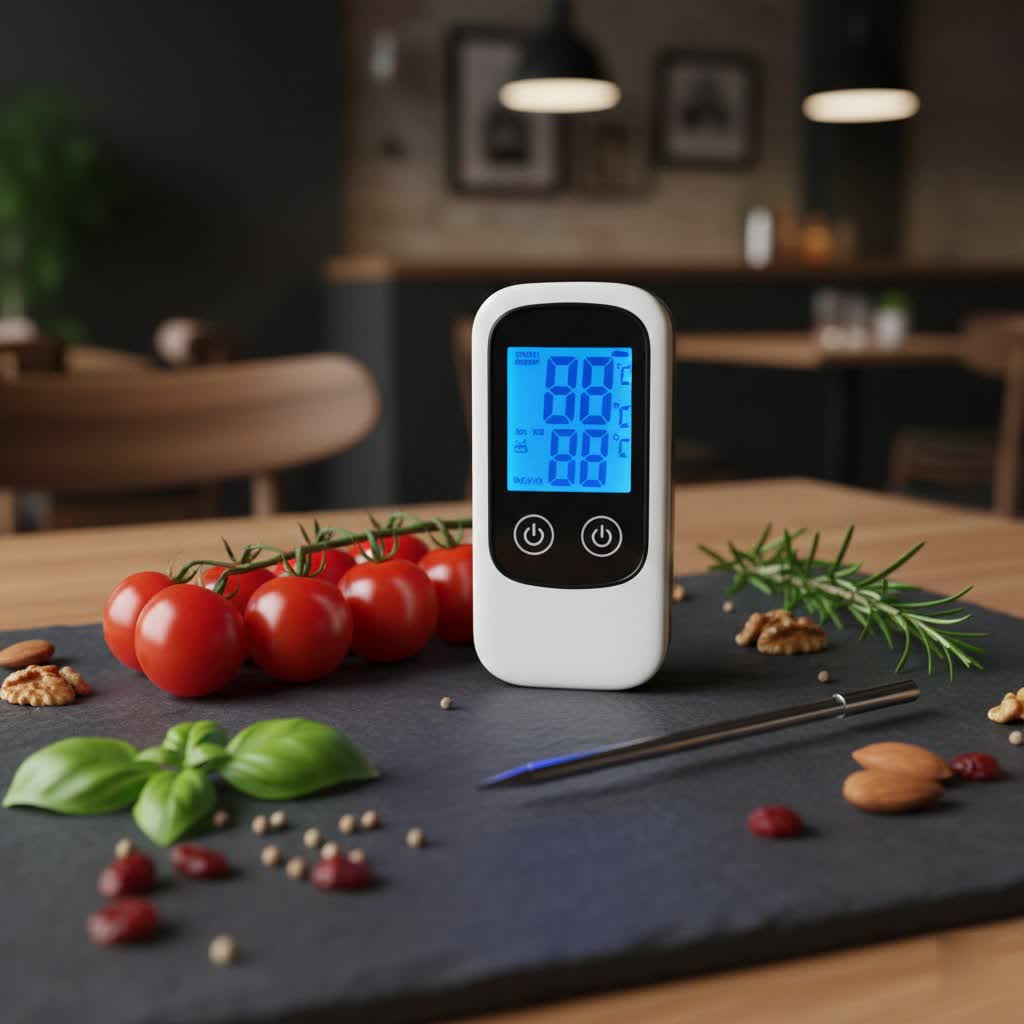
Wireless Meat Thermometers: An Overview and Why They’re Essential
A wireless meat thermometer is a sophisticated device designed to measure the internal temperature of food while it cooks, transmitting that data wirelessly to a receiver or smartphone app. This eliminates the need for opening oven doors or grill lids, which can cause significant heat loss and prolong cooking times. By providing real-time temperature updates, these thermometers ensure that your meat reaches the precise internal temperature required for both food safety and optimal taste and texture.
The importance of using a meat thermometer cannot be overstated. Relying on cooking time alone is unreliable due to variations in meat thickness, starting temperature, and cooking equipment. An accurate temperature reading guarantees that harmful bacteria are eliminated, preventing foodborne illnesses. Beyond safety, achieving the perfect doneness—whether rare, medium, or well-done—results in a more tender, juicy, and flavorful product, transforming your culinary results. Wireless models take this convenience further, allowing you to monitor progress from a distance, freeing you to prepare sides, socialize with guests, or simply relax.
Types of Wireless Meat Thermometers: Pros and Cons
While all wireless meat thermometers are inherently digital and probe-style, their primary distinguishing factor lies in their connectivity technology: Bluetooth, Wi-Fi, or RF (Radio Frequency). Each type offers distinct advantages and caters to different cooking styles and ranges.
Bluetooth Wireless Meat Thermometers
These thermometers connect directly to your smartphone or tablet via Bluetooth. They are typically straightforward to set up and use, often pairing quickly with a dedicated app.
- Pros: Generally more affordable, easy to connect to most smartphones, ideal for monitoring cooks within a moderate range (e.g., while in the kitchen or close to the grill).
- Cons: Limited range (usually up to 150-300 feet, often less with obstructions), connection can be spotty through walls or multiple barriers, requires your smartphone to be within range. Examples include the Meater Plus and ThermoWorks BlueDOT.
|
Our Picks for the Best Meat Thermometer in 2026
As an Amazon Associate I earn from qualifying purchases.
|
||
| Num | Product | Action |
|---|---|---|
| 1 | ThermoPro TP16 Large LCD Digital Cooking Food Meat Thermometer for Smoker Oven Kitchen BBQ Grill Thermometer Clock Timer with Stainless Steel Temperature Probe |

|
| 2 | Meat Thermometer Digital for Grilling and Cooking - ANDAXIN Waterproof Ultra-Fast Instant Read Food thermometers with Backlight & Calibration for Kitchen, Deep Fry, BBQ, Grill(Red/Black), LCD |
|
| 3 | Instant Read Meat Thermometer, Fast & Accurate Digital Food Thermometer with Backlight, Waterproof & Magnet for Grilling, Cooking, BBQ, Smoker, Baking, and Candy Making Blue |
|
| 4 | ThermoPro TP19H Digital Meat Thermometer for Cooking with Ambidextrous Backlit and Motion Sensing Kitchen Cooking Food Thermometer for BBQ Grill Smoker Oil Fry Candy Instant Read Thermometer |
|
| 5 | Alpha Grillers Meat Thermometer Digital - Instant Read Food Thermometer for Cooking and Grilling Gifts for Men Valentines Day Gifts for Him Her Mom Dad |
|
| 6 | 2 Pack Stainless Steel Meat Thermometer, Safe Leave in Oven, 2.5-in Extra-Large Dial Food Thermometer for Cooking, Temperature Probe for Baking, Steak, Turkey - Kitchen Gadgets - Silver |
|
| 7 | Meat Thermometer Digital, Instant Read Meat ThermometerI for Grill and Cooking, Waterproof Food Thermometer for Kitchen and Outside, BBQ, Turkey, Candy, Liquids, Beef |
|
| 8 | 0.5 Sec Instant Read Meat Thermometer Digital with ±0.5℉ Precision, Food Thermometer for Cooking Kitchen Gadgets, Oven Grill Candy BBQ Essentials Accessories, Gifts for Him Dad Men Birthday, Red |
|
| 9 | Meat Thermometer Digital - Instant Read Waterproof Food Thermometer with Backlight for Cooking, Grill, Candy, Kitchen & Stocking Stuffers for Men - Red |
|
| 10 | Escali AH1 Stainless Steel Oven Safe Meat Thermometer, Extra Large 2.5-inches Dial, Temperature Labeled for Beef, Poultry, Pork, and Veal Silver NSF Certified |
|
Wi-Fi Wireless Meat Thermometers
Wi-Fi thermometers connect to your home Wi-Fi network, allowing for significantly extended range and often cloud connectivity.
- Pros: Longest range, enabling monitoring from virtually anywhere with internet access, often feature robust apps with advanced data tracking and cook predictions, can support multiple probes.
- Cons: Typically more expensive, requires a stable Wi-Fi network, initial setup might be more complex. The ThermoWorks RFX Wireless Probe Starter Kit with its Gateway and the FireBoard FBX2 are prime examples, offering extensive range and comprehensive app features.
RF (Radio Frequency) Wireless Meat Thermometers
RF thermometers use radio frequencies to transmit data to a dedicated receiver, often independent of a smartphone.
- Pros: Provide a stable and reliable connection, less prone to interference from obstructions compared to Bluetooth, good for users who prefer an app-free experience or a dedicated display.
- Cons: May have slightly slower response times, usually lack the advanced smart features and data logging found in app-driven Wi-Fi models. The ThermoPro TP20 uses RF technology, offering a robust connection without relying on internet or Bluetooth.
Comparing Wireless Meat Thermometers: A Quick Glance
To help illustrate the differences, here’s a comparison of the main types of wireless meat thermometers:
| Feature | Bluetooth | Wi-Fi | RF (Radio Frequency) |
|---|---|---|---|
| Connectivity | Direct to smartphone/tablet | Connects to home Wi-Fi network (often via gateway) | Dedicated receiver |
| Wireless Range | Moderate (up to 300 ft, affected by walls) | Longest (anywhere with internet via cloud) | Good (often 300+ ft, less affected by walls than BT) |
| App Required? | Yes | Usually (for full features), some have base displays | Optional (some), often dedicated receiver display |
| Key Benefits | Easy to use, portable, generally affordable | Long-distance monitoring, advanced apps, multi-probe support | Stable connection, reliable, dedicated display |
| Drawbacks | Limited range, susceptible to obstructions | Higher cost, requires Wi-Fi network | Fewer smart features, slower response time (sometimes) |
| Price Range | Low to Mid | Mid to High | Low to Mid |
How to Choose the Right Wireless Meat Thermometer
Selecting the ideal wireless meat thermometer depends heavily on your cooking habits and specific needs. Here’s a breakdown of factors to consider:
Assess Your Cooking Needs
- Type of Cooking: Are you primarily grilling steaks, slow-smoking brisket, roasting a turkey, or even deep-frying? Some probes are designed to withstand very high ambient temperatures (up to 1,000°F), crucial for searing or smoking, while others have lower limits.
- Number of Meats: If you frequently cook multiple cuts of meat or large roasts, a multi-probe system (e.g., FireBoard FBX2 with six probes or Meater Pro XL with four probes) will be invaluable. For simple cooks, a single-probe thermometer like the ThermoWorks BlueDOT might suffice.
- Ambient Temperature Monitoring: For smoking or roasting, monitoring the temperature of your cooking environment (grill or oven) is as crucial as monitoring the meat. Many wireless thermometers include an ambient sensor or offer dedicated ambient probes.
- Accuracy: While most reputable brands offer sufficient accuracy for home cooking, some models boast NIST-certified accuracy for those who demand ultimate precision.
Connectivity & Range
Consider where you typically cook and how far you’ll be from your cooking appliance.
- Bluetooth: Suitable if you plan to stay relatively close to your grill or oven (e.g., in the backyard or adjacent kitchen). Be aware that physical barriers like walls can significantly reduce range.
- Wi-Fi: Ideal for those who want to monitor their cook from anywhere in their home, or even remotely via the cloud. This is particularly useful for long smoking sessions where you might leave the house.
- RF: A good middle-ground for stable, dedicated local monitoring without relying solely on your phone’s Bluetooth or a Wi-Fi network.
App Features & User Experience
Modern wireless thermometers often come with feature-rich apps that enhance the cooking experience.
- Ease of Use: Look for intuitive interfaces, easy setup, and clear readouts.
- Data-Rich Apps: Features like real-time temperature graphs, estimated cook times, customizable alarms, and USDA-recommended presets can be incredibly helpful.
- Alerts and Notifications: Ensure the app provides clear, audible alerts when target temperatures are reached or if the connection is lost. Some models, like the Chef IQ, even offer verbal alerts.
- Standalone Display vs. App-Only: Decide if you prefer a physical display on the base unit for quick glances or if you’re comfortable relying solely on your smartphone app. Devices like the ThermoPro TempSpike Pro offer a removable display for added flexibility.
Budget & Brand Reputation
Wireless meat thermometers vary widely in price, from budget-friendly options to high-end professional-grade systems.
- Price Point: Determine your budget and look for the best features within that range.
- Reputation: Prioritize brands known for accuracy, durability, and reliable customer support. Reading user reviews is crucial for understanding real-world performance and potential issues. Brands like ThermoWorks, Meater, ThermoPro, Typhur, and FireBoard are consistently rated highly by experts and users.
Mastering Your Cook: Using a Wireless Meat Thermometer Correctly
To get the most accurate readings and perfectly cooked results, proper usage of your wireless meat thermometer is key.
- Probe Placement: Always insert the probe into the thickest part of the meat, avoiding bones, fat, or gristle. Bones and fat can conduct heat differently, leading to inaccurate readings. For poultry, ensure the probe avoids cavities and rests securely in the breast or thigh.
- USDA Guidelines: Familiarize yourself with the USDA’s safe minimum internal temperatures for various meats. For example, poultry should reach 165°F (74°C), ground meats 160°F (71°C), and fresh beef, pork, veal, and lamb roasts, steaks, and chops 145°F (63°C) with a three-minute rest time. Your thermometer’s app will often include these presets, making it easier to ensure food safety.
- Cleaning and Maintenance: After each use, clean the probe thoroughly with hot, soapy water. Most probes are waterproof and some are even dishwasher-safe (like the RFX MEAT probe). Ensure the probe is completely dry before storing. Proper cleaning prevents cross-contamination and prolongs the life of your device. Store the base unit and probes in a cool, dry place.
Top Wireless Meat Thermometers Reviewed
Based on extensive testing and user feedback, several models consistently stand out for their performance and features. Here are some of the most popular and highly-rated wireless meat thermometers:
- Meater Plus/Pro Series: Known for its completely wire-free design, sleek aesthetics, and comprehensive app. The Meater probes feature multiple internal sensors and an ambient sensor, offering highly accurate readings and estimated cook times. The Meater Plus uses Bluetooth with an extended range repeater in its charging block, while the Pro series offers Wi-Fi-enabled charging cradles for cloud access and even longer range. It’s excellent for those who love data and a minimalist design, though it relies entirely on the app for monitoring.
- ThermoWorks RFX Wireless Probe Starter Kit: Praised for its astonishingly stable and long-range connectivity, utilizing a proprietary radio frequency technology combined with Wi-Fi via a Gateway receiver. The RFX MEAT probes are incredibly durable and accurate, with multiple internal sensors. This system is ideal for serious grillers and smokers who need reliable, long-distance monitoring, even through walls, and appreciate a professional-grade tool.
- ThermoPro TempSpike Pro Wi-Fi Meat Thermometer: This model offers a blend of convenience and affordability. It’s a truly wireless probe with a standalone display base that also acts as a signal booster, relaying information to a smartphone app. It’s praised for its ease of use and often comes with customizable features, making it a strong contender for beginners and experienced cooks alike looking for a reliable, app-driven option without a premium price tag.
- Typhur Sync Gold Dual/Quad: Featuring advanced Sub-1G technology, Typhur thermometers offer extended range and stable transmission, even in challenging environments. The Sync Gold models come with multiple sensors (typically five internal and one ambient) and robust apps that provide both “smart” cook predictions and detailed raw data. They often include a standalone base display, offering flexibility whether you prefer phone monitoring or a dedicated unit.
- FireBoard FBX2 Leave-In Probe Thermometer: This system is a powerhouse for serious grillers and pitmasters. With six probe ports and included probes, it’s designed for monitoring multiple meats and ambient temperatures simultaneously. Its app is data-rich, allowing for detailed analysis of cooking sessions, and it even offers a port to control a fan for precise temperature regulation in smokers. While on the higher end of the price spectrum, its capabilities are unmatched for complex cooks.
Each of these thermometers brings unique strengths, catering to different preferences for connectivity, features, and budget, but all aim to deliver perfectly cooked results.
Conclusion
A wireless meat thermometer is an indispensable tool for any home cook looking to achieve consistent, perfectly cooked meat while enjoying greater freedom and less stress. By understanding the different types of connectivity—Bluetooth, Wi-Fi, and RF—and considering factors like probe count, app features, and desired range, you can choose a device that perfectly aligns with your culinary ambitions. From ensuring food safety to unlocking peak flavor and tenderness, embracing this technology will undoubtedly transform your cooking experience. So, are you ready to take the guesswork out of your next meal and truly master your grill or oven?
Frequently Asked Questions
How does a wireless meat thermometer improve food safety?
A wireless meat thermometer significantly enhances food safety by providing accurate, real-time internal temperature readings. This allows you to ensure that meats reach the USDA-recommended safe minimum internal temperatures, effectively eliminating harmful bacteria and preventing foodborne illnesses. Monitoring remotely means less temptation to guess if the meat is done, leading to safer consumption.
Can I use a wireless meat thermometer in a deep fryer or for searing?
Many wireless meat thermometer probes are designed to withstand high temperatures, making them suitable for deep frying or searing. However, it is crucial to check the manufacturer’s specifications for the probe’s maximum temperature tolerance for both the meat sensor and the ambient sensor (often in the handle). Some probes, like those from ThermoWorks RFX and Meater, can handle ambient temperatures up to 1000°F, making them safe for high-heat cooking.
