Are you tired of constantly hovering over your grill or oven, guessing if your meat is perfectly cooked? Achieving that ideal juicy steak or tender roast can often feel like a culinary gamble, leading to frustration and, sometimes, overcooked or undercooked meals. This is where a Thermopro Wireless Meat Thermometer becomes your ultimate kitchen companion, transforming your cooking experience from guesswork to gourmet. In this comprehensive guide, we’ll delve into everything you need to know about these innovative devices, helping you cook with confidence and precision.
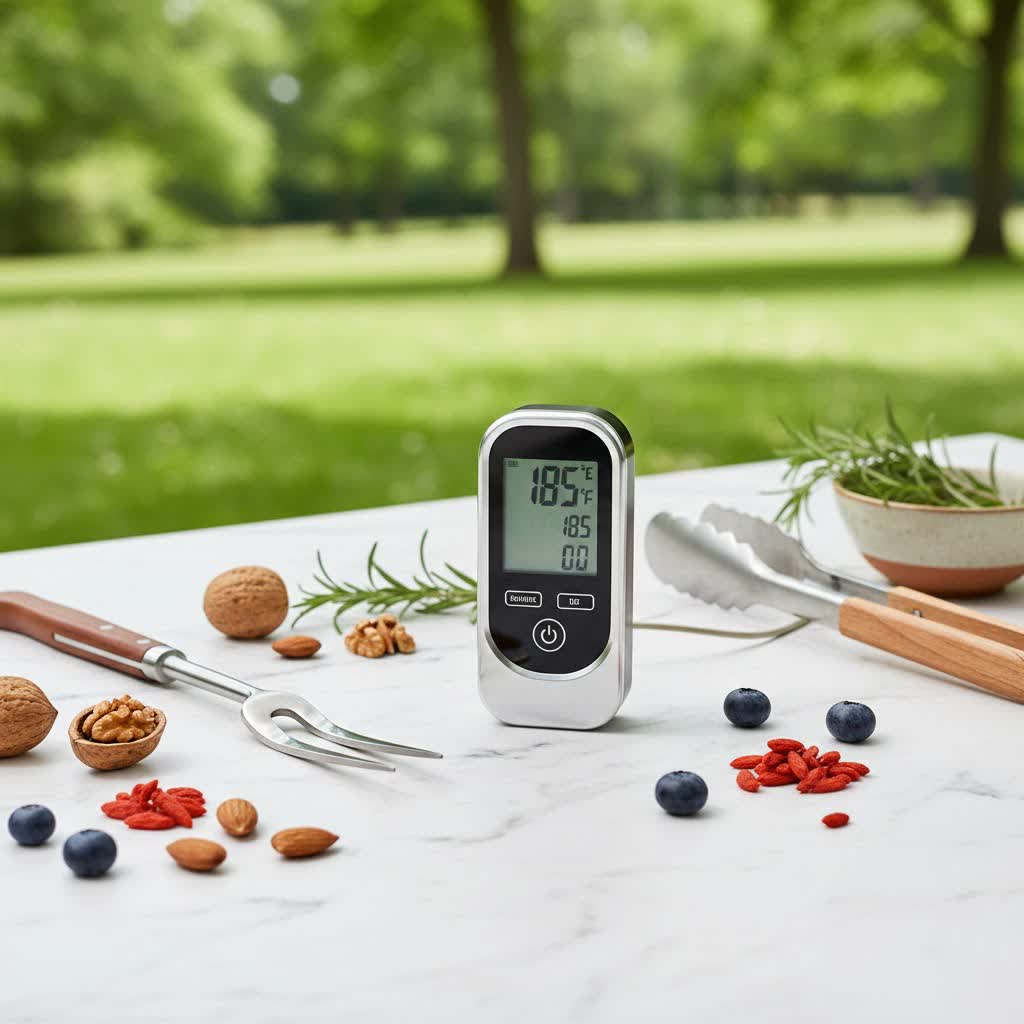
Meat Thermometer: An Overview and Why It’s Essential
A meat thermometer is a crucial kitchen tool designed to measure the internal temperature of cooked foods, particularly meats. Its primary purpose is to ensure both food safety and optimal doneness. Without one, you’re relying on visual cues or cook times, which can be notoriously unreliable, risking either serving unsafe, undercooked food or dry, overcooked results.
Using a meat thermometer is paramount for several reasons. Firstly, it guarantees food safety by ensuring meats reach the minimum internal temperatures recommended by food safety authorities, eliminating harmful bacteria. Secondly, it helps achieve perfect flavor and texture. Whether you desire a rare steak, a medium-rare roast, or perfectly done poultry, a thermometer allows you to hit that sweet spot every time. For slow-cooking, smoking, or grilling, where consistent temperature monitoring is key, a wireless meat thermometer offers unparalleled convenience, freeing you from constant supervision.
Common Types of Meat Thermometers: Pros and Cons
The world of meat thermometers offers a variety of options, each with its own advantages and disadvantages. Understanding these can help you appreciate the specific benefits of wireless models, especially those from ThermoPro.
Analog Meat Thermometer
Analog thermometers are typically older models, often featuring a dial with a needle.
- Pros: Generally inexpensive, easy to use (no batteries required), and durable.
- Cons: Tend to be less accurate than digital models, can be difficult to read precisely, and have a slower response time, meaning they take longer to display the temperature.
|
Our Picks for the Best Meat Thermometer in 2026
As an Amazon Associate I earn from qualifying purchases.
|
||
| Num | Product | Action |
|---|---|---|
| 1 | Instant Read Meat Thermometer, Fast & Accurate Digital Food Thermometer with Backlight, Waterproof & Magnet for Grilling, Cooking, BBQ, Smoker, Baking, and Candy Making Blue |

|
| 2 | ThermoPro TP16 Large LCD Digital Cooking Food Meat Thermometer for Smoker Oven Kitchen BBQ Grill Thermometer Clock Timer with Stainless Steel Temperature Probe |
|
| 3 | 0.5 Sec Instant Read Meat Thermometer Digital with ±0.5℉ Precision, Food Thermometer for Cooking Kitchen Gadgets, Oven Grill Candy BBQ Essentials Accessories, Gifts for Him Dad Men Birthday, Red |
|
| 4 | ThermoPro TP19H Digital Meat Thermometer for Cooking with Ambidextrous Backlit and Motion Sensing Kitchen Cooking Food Thermometer for BBQ Grill Smoker Oil Fry Candy Instant Read Thermometer |
|
| 5 | Meat Thermometer Digital for Grilling and Cooking - ANDAXIN Waterproof Ultra-Fast Instant Read Food thermometers with Backlight & Calibration for Kitchen, Deep Fry, BBQ, Grill(Red/Black), LCD |
|
| 6 | Meat Thermometer Digital - Instant Read Waterproof Food Thermometer with Backlight for Cooking, Grill, Candy, Kitchen & Stocking Stuffers for Men - Red |
|
| 7 | Meat Thermometer Digital, Instant Read Meat ThermometerI for Grill and Cooking, Waterproof Food Thermometer for Kitchen and Outside, BBQ, Turkey, Candy, Liquids, Beef |
|
| 8 | Escali AH1 Stainless Steel Oven Safe Meat Thermometer, Extra Large 2.5-inches Dial, Temperature Labeled for Beef, Poultry, Pork, and Veal Silver NSF Certified |
|
| 9 | Alpha Grillers Meat Thermometer Digital - Instant Read Food Thermometer for Cooking and Grilling Gifts for Men Valentines Day Gifts for Him Her Mom Dad |
|
| 10 | 2 Pack Stainless Steel Meat Thermometer, Safe Leave in Oven, 2.5-in Extra-Large Dial Food Thermometer for Cooking, Temperature Probe for Baking, Steak, Turkey - Kitchen Gadgets - Silver |
|
Digital Meat Thermometer
Digital thermometers use electronic sensors and display temperatures on an LCD screen. They can be wired or wireless.
- Pros: Offer high accuracy, are easy to read with clear digital displays, and often feature faster readings. Many come with additional functionalities like alarms and preset temperatures.
- Cons: Require batteries, and some advanced models can be pricier.
Wireless Meat Thermometer (Probe & Fully Wireless)
Wireless meat thermometers represent the pinnacle of convenience, allowing you to monitor temperatures remotely without being tethered to your cooking appliance.
- Probe Wireless Thermometers (e.g., ThermoPro TP20, TP25, TP27, TP826): These consist of a base unit with probes that stay in the meat, and a separate receiver (or smartphone app) that displays the temperature remotely.
- Pros: Excellent for long cooks like roasting, smoking, and grilling, as they provide continuous monitoring. They offer impressive range, allowing you to move freely. Many models feature multiple probes for monitoring different cuts or ambient temperatures.
- Cons: Probes are connected by wires to a base unit, which can sometimes be a minor inconvenience for placement or cleaning.
- Fully Wireless Thermometers (e.g., ThermoPro TempSpike): These probes are entirely wire-free and transmit data directly to a booster or smartphone app.
- Pros: Offer ultimate freedom of placement and no wires to manage, making them ideal for rotisserie or crowded grills.
- Cons: Can be more expensive, and the entire probe is exposed to heat, requiring robust design.
Popular ThermoPro Wireless Meat Thermometers: Features & Comparisons
ThermoPro stands out in the market for its diverse range of reliable and user-friendly wireless meat thermometers. Here’s a closer look at some of their most popular models and what makes them unique.
ThermoPro TP20: The Classic Wireless Remote
The ThermoPro TP20 is a beloved budget-friendly option, praised for its straightforward functionality. It operates via a radio frequency (RF) remote receiver, eliminating the need for a smartphone app.
- Key Features: Dual probes, a substantial 500-foot RF range, clear backlit display on both the transmitter and receiver, and a loud alarm with a flashing screen for visual alerts. It’s designed for simple, reliable temperature tracking.
- Pros: Impressively accurate and fast (readings within 6-7 seconds), extremely easy to operate with large, clearly labeled buttons, and very affordable, especially on sale. Its RF connection is often more stable than Bluetooth over long distances, even through walls.
- Cons: No smartphone app integration, and some users might find the controls less intuitive initially without consulting the manual.
ThermoPro TP25: Bluetooth Smart Thermometer
For those seeking more advanced features and smartphone integration, the ThermoPro TP25 is an excellent choice. It’s a four-probe system that connects via Bluetooth.
- Key Features: Four color-coded probes for simultaneous monitoring of multiple meats or ambient temperatures, Bluetooth 5.0 technology offering up to a 650-foot wireless range, a rechargeable battery, and a backlit LCD display. Its dedicated app provides USDA preset temperatures (customizable), pre-alarm notifications (5/10/15 degrees before target), ambient temperature alarms, and estimates the remaining cook time.
- Pros: Highly accurate readings (±1°C), intuitive app control with a wealth of features for both beginners and experienced cooks, and the rechargeable battery adds convenience. The pre-alarm is particularly useful for precise timing.
- Cons: Relies on Bluetooth, which can sometimes be more susceptible to interference than RF in certain environments. The app is required for full functionality.
ThermoPro TempSpike: The Fully Wireless Innovation
The ThermoPro TempSpike offers a completely wire-free probing experience, making it a strong contender against premium fully wireless thermometers.
- Key Features: A single, truly wireless probe (no cables to the base unit), Bluetooth connectivity to a booster/charger, and a dedicated smartphone app (different from other ThermoPro apps). It boasts a 500-foot range and allows for setting minimum and maximum ambient temperatures.
- Pros: Unmatched freedom with no wires, dual sensors (internal meat temperature and ambient temperature), and robust connectivity. It’s a great budget-friendly alternative to more expensive fully wireless options.
- Cons: Requires a separate app download if you already use other ThermoPro wired models, which can be slightly inconvenient.
ThermoPro TP27 / TP826: Enhanced Remote Monitoring
The TP27 and TP826 models fall into the category of multi-probe wireless thermometers with a dedicated remote receiver, similar to the TP20 but often with more probes or enhanced features.
- TP27: Features four probes and a 500-foot range. It introduces a silent vibration and alarm, an improvement over simpler audible-only alarms. Reports indicate it might be more accurate and faster at displaying readings than the TP20.
- TP826: An app-free option with a base unit and a receiver, providing accurate internal temperature readings and strong connectivity over 500 feet. Ideal for users who prefer simplicity without smartphone apps.
- Pros: Multiple probes for comprehensive monitoring, solid range for outdoor cooking, and some models offer silent alarms. The app-free design of the TP826 appeals to minimalists.
- Cons: The TP27’s signal loss alarm can be delayed (up to 30 minutes in some reports), which is a significant drawback. Cable length on some multi-probe models can be a bit short for large outdoor setups.
Comparison of ThermoPro Wireless Meat Thermometers
To help you decide, here’s a detailed comparison of key ThermoPro wireless models:
| Feature | ThermoPro TP20 | ThermoPro TP25 | ThermoPro TempSpike | ThermoPro TP27/TP826 |
|---|---|---|---|---|
| Type | Wired Probe, RF Remote | Wired Probe, Bluetooth | Fully Wireless Probe | Wired Probe, RF Remote |
| Probes | 2 | 4 | 1 (dual sensor) | 4 (TP27), 2 (TP826) |
| Connectivity | Radio Frequency (RF) | Bluetooth 5.0 | Bluetooth | Radio Frequency (RF) |
| Range | 500 ft | Up to 650 ft | 500 ft | 500 ft |
| Display | Backlit LCD (Transmitter & Receiver) | Backlit LCD (Base Unit) & App | App (Booster has basic temp) | Backlit LCD (Transmitter & Receiver) |
| App Control | No | Yes | Yes | No |
| Battery | AAA | Rechargeable (18650) | Rechargeable | AAA |
| Key Features | Easy to use, fast, accurate, preset temps | Multi-probe, estimated cook time, pre-alarms, customizable temps, ambient alarm | Wire-free, dual temp sensors, min/max ambient temps | Multi-probe, silent alarm (TP27), simple (TP826) |
| Pros | Stable RF, excellent budget pick, no app needed | Feature-rich app, multiple probes, precise control, rechargeable | Utmost freedom, dual temp monitoring, great Meater alternative | Reliable RF, multiple probes, enhanced features (TP27) |
| Cons | No app, basic features | Relies on Bluetooth, app required for full features | Dedicated app needed, entire probe is hot | Signal loss delay (TP27), cable length (TP27) |
| Best For | Simple, reliable grilling/roasting without a smartphone | Advanced multi-meat cooking with full app control | Rotisserie, smoking, or crowded cooking surfaces where wires are an issue | Versatile multi-probe monitoring with remote display, no app preference |
Guide to Choosing Your Ideal ThermoPro Wireless Meat Thermometer
Selecting the perfect ThermoPro wireless meat thermometer depends heavily on your specific cooking habits, preferences, and budget.
1. Identify Your Cooking Needs
- What type of cooking do you do most often? For simple roasts or grilling one piece of meat, a dual-probe RF model like the TP20 or TP826 might suffice. For smoking, BBQ, or cooking multiple items (e.g., Thanksgiving turkey with sides), a multi-probe unit like the TP25 or TP27 is invaluable.
- Do you need to monitor ambient temperature? Smokers and slow roasters benefit greatly from an ambient probe. Models like the TP25 and TempSpike offer this capability.
- How precise do you need to be? All ThermoPro models are generally accurate, but some offer finer control through app customization and pre-alarms (TP25).
- Do you prefer an app or a dedicated remote? If you like checking temperatures on your phone from anywhere in your house or yard, app-controlled models (TP25, TempSpike) are best. If you prefer a simple, reliable handheld remote, the TP20, TP27, or TP826 are excellent choices.
2. Consider Your Budget
ThermoPro offers options across various price points.
- Entry-level models like the TP20 provide great value for basic wireless monitoring.
- Mid-range options such as the TP25 or TempSpike offer more advanced features and app integration for a reasonable price.
Investing in a slightly more expensive model might save you money in the long run by preventing ruined meals.
3. Evaluate Features and Connectivity
- Number of Probes: How many items do you typically cook simultaneously? Two or four probes offer greater flexibility.
- Range: While many ThermoPro models boast 500-650 feet, actual range can vary depending on obstructions. Consider your typical cooking setup and how far you’ll be from your cooker.
- Power Source: Do you prefer rechargeable batteries (TP25, TempSpike) or easily replaceable AAA batteries (TP20, TP27, TP826)?
- Additional Features: Look for features like preset temperatures, customizable alarms, estimated cook time, or high/low ambient temperature alarms if these enhance your cooking style.
Maximizing Your ThermoPro’s Performance: Usage and Care
Getting the most out of your ThermoPro wireless meat thermometer involves proper usage and diligent care.
Correct Probe Placement
For accurate readings, insert the probe into the thickest part of the meat, avoiding bone, fat, or gristle. These can give false readings. For whole poultry, aim for the thickest part of the thigh or breast. For roasts, insert it horizontally into the center. When using multiple probes, ensure each is in the center of its respective cut.
Understanding Temperature Guidelines
Always refer to USDA guidelines for safe internal temperatures for various meats. For example:
- Poultry (whole or ground): 165°F (74°C)
- Ground Meats (beef, pork, lamb): 160°F (71°C)
- Fresh Beef, Veal, Lamb (steaks, roasts, chops):
- Medium Rare: 145°F (63°C) with a 3-minute rest
- Medium: 160°F (71°C)
- Well Done: 170°F (77°C)
- Fresh Pork (chops, roasts): 145°F (63°C) with a 3-minute rest
- Fish: 145°F (63°C)
Remember that meat will continue to cook for a few degrees after being removed from the heat (carryover cooking), so it’s often best to pull it slightly before your target temperature.
Cleaning and Storage
After each use, clean the probes thoroughly with warm, soapy water. Avoid submerging the entire probe or any wired connections in water unless specifically stated as waterproof. Wipe the base unit and receiver with a damp cloth. Always ensure probes are completely dry before storing. Store your thermometer in a clean, dry place, ideally in its original packaging or a designated drawer to protect probes and wires from damage.
“A reliable meat thermometer is the secret weapon of every confident cook, taking the guesswork out of achieving culinary perfection. ThermoPro offers robust solutions for every type of cook.” – Admin, Reviewedia.com
Conclusion
A ThermoPro wireless meat thermometer is an indispensable tool for any home chef looking to elevate their cooking. By offering unparalleled accuracy, convenience, and a range of features, these devices ensure your meats are always cooked to perfection, both safely and deliciously. Whether you prefer the simplicity of an RF remote or the advanced control of a Bluetooth-enabled app, ThermoPro has a model designed to meet your needs. Invest in a ThermoPro wireless meat thermometer today, and transform your kitchen into a hub of culinary precision and enjoyment. What delicious meal will you master with your new ThermoPro thermometer?
Frequently Asked Questions
What is the typical range of a ThermoPro wireless meat thermometer?
ThermoPro wireless meat thermometers typically offer ranges between 500 to 650 feet, depending on the model and whether it uses radio frequency (RF) or Bluetooth connectivity. This allows for significant freedom to move away from your grill or oven while monitoring temperatures.
Can ThermoPro wireless thermometers be used in a smoker or grill?
Yes, most ThermoPro wireless meat thermometers are designed for use in smokers, grills, and ovens. Their probes and cables are built to withstand high temperatures, allowing for continuous monitoring during long cooking processes without damaging the device.
Do all ThermoPro wireless meat thermometers require a smartphone app?
No, not all ThermoPro wireless meat thermometers require a smartphone app. Models like the TP20, TP27, and TP826 use a dedicated remote receiver unit for monitoring temperatures, making them ideal for users who prefer an app-free experience. Other models, such as the TP25 and TempSpike, utilize Bluetooth connectivity and a smartphone app for advanced features.
How many probes do ThermoPro wireless meat thermometers usually come with?
ThermoPro wireless meat thermometers come with varying numbers of probes. Some models, like the TP20, feature two probes, while others, such as the TP25 and TP27, offer four probes, allowing you to monitor multiple food items or ambient temperatures simultaneously. The TempSpike features a single, fully wireless probe with dual sensors.
What’s the difference between RF and Bluetooth connectivity in ThermoPro thermometers?
RF (Radio Frequency) connectivity, often found in models like the TP20, typically offers a more stable and longer range, especially through obstructions like walls, without needing a smartphone. Bluetooth connectivity, used in models like the TP25 and TempSpike, pairs with a smartphone app, providing advanced features like customizable presets, graphs, and estimated cook times, but its range can sometimes be more affected by obstacles.
