Are you tired of constantly checking your grill or oven, guessing if your meat is perfectly cooked? Do you worry about undercooked poultry or overcooked steaks, compromising both safety and flavor? A wireless meat probe thermometer is the modern chef’s secret weapon, transforming guesswork into culinary precision. This innovative tool frees you from the kitchen, allowing you to monitor your food’s internal temperature remotely, ensuring every dish is cooked to perfection and safe to enjoy.
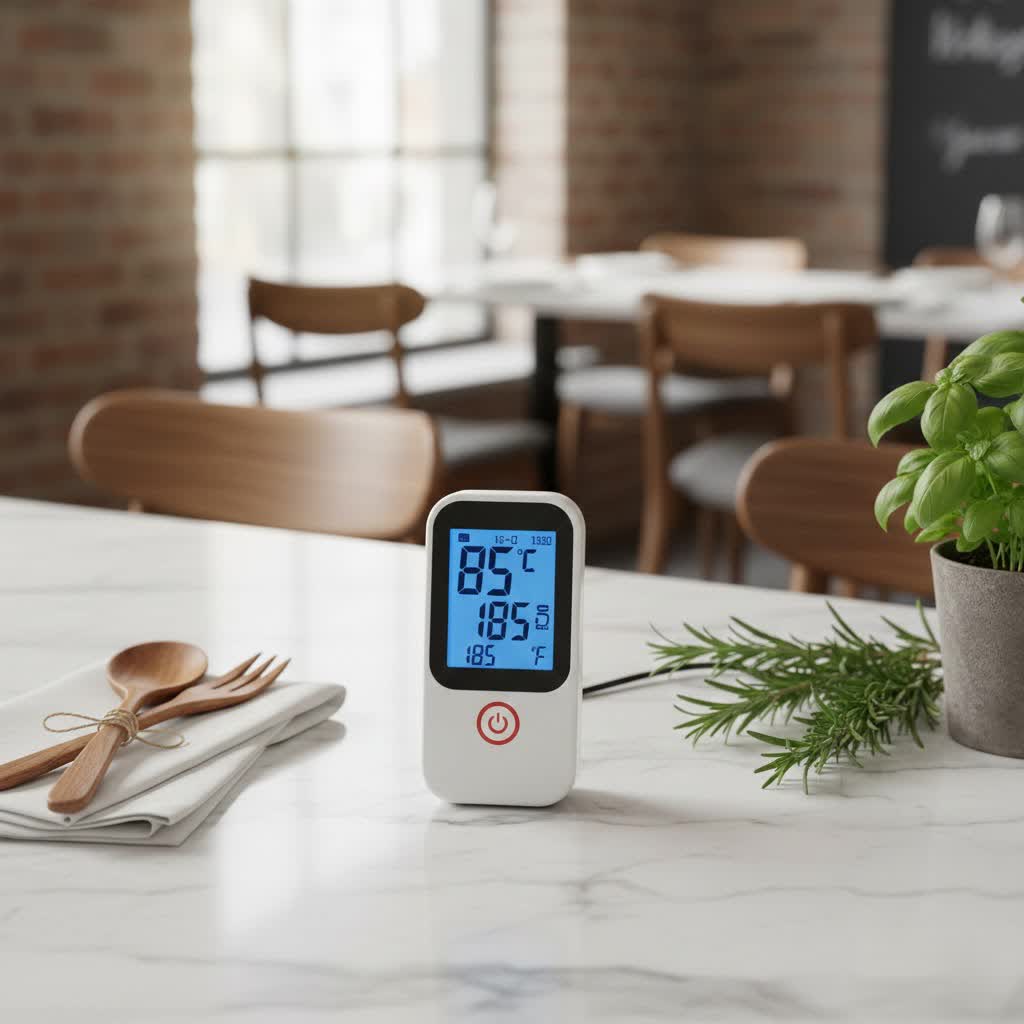
Wireless Meat Thermometers: Overview and Why You Need One
A wireless meat thermometer is a sophisticated cooking gadget designed to continuously monitor the internal temperature of your food, transmitting that data to a separate receiver or a smartphone app. Unlike traditional thermometers that require you to open the oven or grill repeatedly (losing heat and extending cooking times), these devices allow for hands-free, remote monitoring. This convenience, combined with unparalleled accuracy, makes them an indispensable tool for any home cook or grilling enthusiast.
The importance of precise temperature control in cooking cannot be overstated. Visual cues alone can be misleading, leading to inconsistent results. An undercooked meal poses significant food safety risks, potentially harboring harmful bacteria like salmonella or trichinosis, while overcooking can result in dry, tough, and flavorless food. By providing real-time, accurate temperature readings, a wireless meat thermometer ensures your meat reaches safe internal temperatures, preserves juiciness, and guarantees consistent, restaurant-quality results every time. It supports optimal timing, removing guesswork and notifying you precisely when your food is ready.
These devices typically consist of a heat-resistant probe inserted into the meat, a base or transmitter that sends the temperature data, and a receiver or smartphone app that displays the readings. Many probes feature dual sensors, measuring both the internal meat temperature and the ambient temperature of your cooking environment, offering a comprehensive view of your cook.
Types of Wireless Meat Thermometers: Pros and Cons
Wireless meat thermometers primarily differ in their connectivity technology, each offering distinct advantages and limitations regarding range and functionality.
Bluetooth Wireless Meat Thermometers
Bluetooth thermometers connect directly to your smartphone or tablet via a dedicated app. They are generally user-friendly and widely available.
- Pros:
- App-Controlled Convenience: Offer comprehensive control through a smartphone app, including preset temperatures, custom alarms, timers, and cooking history.
- Portability: Often compact and easy to take on the go.
- Cost-Effective: Typically more affordable than Wi-Fi models.
- Cons:
- Limited Range: Standard Bluetooth ranges from 50-100 feet, which can be affected by walls and obstructions. Some advanced models claim up to 1000 feet in open areas.
- Connectivity Issues: Can lose connection if you move too far from the base unit or if there are too many obstructions.
|
Our Picks for the Best Meat Thermometer in 2026
As an Amazon Associate I earn from qualifying purchases.
|
||
| Num | Product | Action |
|---|---|---|
| 1 | 2 Pack Stainless Steel Meat Thermometer, Safe Leave in Oven, 2.5-in Extra-Large Dial Food Thermometer for Cooking, Temperature Probe for Baking, Steak, Turkey - Kitchen Gadgets - Silver |

|
| 2 | Meat Thermometer Digital for Grilling and Cooking - ANDAXIN Waterproof Ultra-Fast Instant Read Food thermometers with Backlight & Calibration for Kitchen, Deep Fry, BBQ, Grill(Red/Black), LCD |
|
| 3 | Meat Thermometer Digital - Instant Read Waterproof Food Thermometer with Backlight for Cooking, Grill, Candy, Kitchen & Stocking Stuffers for Men - Red |
|
| 4 | ThermoPro TP19H Digital Meat Thermometer for Cooking with Ambidextrous Backlit and Motion Sensing Kitchen Cooking Food Thermometer for BBQ Grill Smoker Oil Fry Candy Instant Read Thermometer |
|
| 5 | Alpha Grillers Meat Thermometer Digital - Instant Read Food Thermometer for Cooking and Grilling Gifts for Men Valentines Day Gifts for Him Her Mom Dad |
|
| 6 | Instant Read Meat Thermometer, Fast & Accurate Digital Food Thermometer with Backlight, Waterproof & Magnet for Grilling, Cooking, BBQ, Smoker, Baking, and Candy Making Blue |
|
| 7 | 0.5 Sec Instant Read Meat Thermometer Digital with ±0.5℉ Precision, Food Thermometer for Cooking Kitchen Gadgets, Oven Grill Candy BBQ Essentials Accessories, Gifts for Him Dad Men Birthday, Red |
|
| 8 | Escali AH1 Stainless Steel Oven Safe Meat Thermometer, Extra Large 2.5-inches Dial, Temperature Labeled for Beef, Poultry, Pork, and Veal Silver NSF Certified |
|
| 9 | Meat Thermometer Digital, Instant Read Meat ThermometerI for Grill and Cooking, Waterproof Food Thermometer for Kitchen and Outside, BBQ, Turkey, Candy, Liquids, Beef |
|
| 10 | ThermoPro TP16 Large LCD Digital Cooking Food Meat Thermometer for Smoker Oven Kitchen BBQ Grill Thermometer Clock Timer with Stainless Steel Temperature Probe |
|
Wi-Fi Wireless Meat Thermometers
Wi-Fi models leverage your home network, offering extended range and enhanced features.
- Pros:
- Extended Range: Provides significantly greater range than Bluetooth, often allowing you to monitor your cook from anywhere within your Wi-Fi network, or even outside your home via cloud integration.
- Multi-Device Connectivity: Can often support multiple probes and allow several users to monitor simultaneously.
- Advanced Features: May offer data logging, complex programming, and integration with smart home systems.
- Cons:
- Setup Complexity: Can sometimes require a more involved setup process to connect to your home Wi-Fi network.
- Reliance on Wi-Fi: Requires a stable Wi-Fi signal to function, which might be an issue in some outdoor or remote cooking scenarios.
- Higher Price Point: Generally more expensive than Bluetooth-only models.
RF (Radio Frequency) Wireless Meat Thermometers
RF thermometers utilize radio frequency signals to transmit data to a dedicated handheld receiver, typically bypassing the need for a smartphone app or Wi-Fi.
- Pros:
- Very Long Range: Some RF models can transmit signals up to 2,000 feet in open areas, making them ideal for large properties or situations where Wi-Fi/Bluetooth signals struggle.
- Simplicity and Reliability: Often favored by non-tech-savvy users due to their “plug-and-play” nature; no apps, no Wi-Fi, just turn on and use.
- Dedicated Receiver: A standalone receiver means you don’t need your phone, reducing distractions and phone battery drain.
- Cons:
- Fewer Advanced Features: Typically lack the extensive smart features found in app-driven Bluetooth or Wi-Fi models (e.g., data graphs, recipe presets).
- Dedicated Device: Requires carrying an extra receiver unit instead of just using your smartphone.
Key Features to Look for in a Wireless Meat Thermometer
Choosing the right wireless meat thermometer involves considering several key features that impact performance, convenience, and durability.
Accuracy and Response Time
The primary function of any meat thermometer is to provide accurate temperature readings. Look for models with high accuracy, typically within ±1-2°F. While most wireless probes offer continuous monitoring, a faster response time means you get real-time data quickly, allowing for immediate adjustments to your cooking process.
Range and Connectivity
Consider your typical cooking environment. If you’re primarily cooking indoors or staying close to your grill, a Bluetooth thermometer might suffice. For extensive outdoor grilling, smoking sessions, or if you plan to move freely around a large home, a Wi-Fi or long-range RF model would be more appropriate. Wi-Fi offers unlimited range within your network, while RF can provide exceptional distances without network reliance.
Number of Probes and Sensor Types
Many wireless thermometers come with multiple probes (dual, quad, etc.), allowing you to monitor different cuts of meat simultaneously or track both the internal meat temperature and the ambient temperature of your smoker or oven. Probes often have dual sensors to provide both readings from a single probe.
Durability and Heat Resistance
Cooking environments can be harsh. Ensure the probes are made from high-quality stainless steel and are heat-resistant enough for your intended use (e.g., high-heat searing, long smoking sessions). Many probes are also waterproof for easy cleaning, some even dishwasher safe. Thin probes are desirable as they minimize juice loss from the meat.
App Functionality and User Interface
For Bluetooth and Wi-Fi models, the accompanying app is crucial. Look for an intuitive, easy-to-use app that offers:
- Preset Temperatures: For various meats and desired doneness levels.
- Custom Alarms and Timers: Notifications when target temperatures are reached or for specific cooking intervals.
- Estimated Cook Times: Helpful for planning your meal.
- Data Logging and Graphs: To track cooking progress over time.
- Flip and Rest Reminders: Additional guidance for perfect results.
Battery Life and Charging
Wireless thermometers need power. Check the advertised battery life, especially if you plan for long smoking sessions (some offer 40+ hours). Consider the charging method – USB charging docks are common, and some offer quick-charge capabilities for hours of use from minutes of charging.
Wireless Meat Thermometer Comparison Table
| Feature | Bluetooth Wireless Thermometer | Wi-Fi Wireless Thermometer | RF Wireless Thermometer |
|---|---|---|---|
| Connectivity | Bluetooth to smartphone/tablet | Wi-Fi to router/cloud | Radio Frequency to dedicated receiver |
| Typical Range | 50-100 ft (some up to 1000 ft) | Unlimited within Wi-Fi network (or globally) | Up to 2,000+ ft in open areas |
| Requires App | Yes | Yes (for full features) | No (uses dedicated receiver) |
| Setup Complexity | Easy pairing | Moderate (connect to home network) | Very Easy (turn on & use) |
| Real-time Monitoring | Yes | Yes | Yes |
| Multi-probe Support | Common | Common | Common |
| Ideal Use Case | Home cooking, closer range grilling | Long-range smoking, large homes, remote access | Maximum range, simplicity, non-tech-savvy users |
| Price Point | Moderate | Higher | Moderate |
How to Use Your Wireless Meat Thermometer for Perfect Results
Using a wireless meat thermometer correctly is key to unlocking its full potential and achieving consistently delicious and safe meals.
Preparation
Before your first cook, ensure your device is fully charged, including probes and the base unit. Read the user manual, as each model might have unique features. Always clean the probes with warm, soapy water and dry them thoroughly before and after each use to ensure food safety and prevent cross-contamination.
Probe Insertion
Correct probe placement is critical for accurate readings. Insert the probe into the thickest part of the meat, making sure the tip does not touch any bone, gristle, or large pockets of fat, as these can skew temperature readings.
- Whole Poultry (Chicken/Turkey): Insert into the thickest part of the breast or the innermost portion of the thigh, avoiding bones.
- Steaks/Chops: For thinner cuts, insert the probe sideways into the center, parallel to the cutting board.
- Large Roasts/Briskets: Carefully insert into the center of the thickest portion, about 1-2 inches from fat deposits or bones.
Pairing and Setting Target Temperatures
Turn on your transmitter and receiver (for RF models) or open the companion app on your smartphone (for Bluetooth/Wi-Fi models). Follow the instructions to pair your probes. Most apps or receivers offer preset temperatures for various types of meat (beef, pork, poultry, lamb, fish) and desired doneness levels (rare, medium-rare, well-done). Select the appropriate preset or manually set your target temperature.
Monitoring and Alerts
Once the probe is in place and the target temperature is set, you are free to step away. Monitor the temperature readings on your receiver or smartphone app. The app will send you notifications or an audible alarm when your meat is approaching or has reached its target temperature. This eliminates the need to constantly check, allowing you to focus on other tasks or enjoy your guests. Avoid opening your oven or grill frequently, as this causes heat loss and prolongs cooking time.
Care and Maintenance
After each use, clean the probes carefully. Many are waterproof and can be washed with warm, soapy water. Always refer to your product manual for specific cleaning instructions. Proper cleaning and storage will prolong the life and accuracy of your wireless meat thermometer. Some models may require periodic calibration to maintain accuracy.
Top Wireless Meat Thermometers: A Closer Look
The market offers a wide array of wireless meat thermometers, each with unique strengths. Brands like Meater, ThermoPro, Typhur, and ThermoWorks are highly regarded for their innovation and reliability.
-
Meater: Often credited with introducing the first truly wireless meat thermometer, Meater probes are completely wire-free and typically feature dual sensors (internal meat and ambient). Their app provides advanced features like estimated cook times, rest periods, and guided cooks. Meater offers various models, including single-probe options and multi-probe systems like the Meater Plus or Meater Block for extended range and multiple cooks.
-
ThermoPro TempSpike: ThermoPro offers robust wireless options, including both Bluetooth and long-range RF models. Their TempSpike series, for example, is known for its dual probes and impressive range, making it suitable for both casual home use and serious BBQ enthusiasts. Their RF models are particularly appealing for those seeking simplicity and long-distance monitoring without app dependency.
-
Typhur Sync: Typhur Sync thermometers leverage advanced technology like Sub-1G for extended range and stable transmission. Many of their models offer multiple ultra-thin probes and an intuitive app interface, providing detailed insights and precise control for complex cooks. They often focus on high accuracy and durability for diverse cooking methods.
-
ThermoWorks RFX Series: While ThermoWorks is renowned for its instant-read thermometers like the Thermapen, their RFX series combines wired components with wireless capabilities to offer exceptional accuracy and range, often connecting to a gateway that communicates with a smartphone app via Bluetooth or Wi-Fi. This hybrid approach caters to professionals and serious home cooks demanding robust performance.
These leading brands continually push the boundaries of wireless cooking technology, offering features that cater to every cooking style and need.
“A wireless meat thermometer isn’t just a gadget; it’s an investment in culinary confidence, turning every meal into a masterpiece.”
Conclusion
A wireless meat probe thermometer is more than just a kitchen tool; it’s a game-changer for anyone passionate about cooking. By providing unparalleled accuracy, remote monitoring capabilities, and essential food safety assurances, it liberates you from constant vigilance, allowing you to enjoy the cooking process and your guests. Whether you’re a seasoned pitmaster or a home cook aspiring to culinary perfection, integrating a wireless meat thermometer into your routine will elevate your dishes, ensuring perfect doneness, preserved juiciness, and peace of mind with every bite. Isn’t it time to take the guesswork out of your kitchen and embrace the future of precision cooking?
Frequently Asked Questions
What is the difference between Bluetooth and Wi-Fi wireless meat thermometers?
Bluetooth thermometers connect directly to your smartphone over a shorter range, typically 50-100 feet. Wi-Fi thermometers connect to your home network, offering a much greater range, potentially allowing you to monitor from anywhere with internet access.
How accurate are wireless meat thermometers?
Most high-quality wireless meat thermometers are highly accurate, typically providing temperature readings within ±1-2°F. This level of precision is more than adequate for ensuring perfectly cooked and safe meals at home.
Can I use a wireless meat thermometer in an oven or smoker?
Yes, wireless meat thermometers are designed for versatility and can be safely used in ovens, smokers, grills, and even on stovetops or in deep fryers (ensure the probe’s heat resistance matches the cooking method). Their heat-resistant probes allow them to remain in the meat throughout the entire cooking process.
How do I clean and maintain my wireless meat thermometer probes?
After each use, clean the probes with warm, soapy water and dry them thoroughly. Many probes are waterproof and durable, but always check your specific model’s instructions for any special care requirements or recommendations for periodic calibration.
Do I need a smartphone to use a wireless meat thermometer?
It depends on the type. Bluetooth and Wi-Fi models typically require a smartphone app for full functionality and monitoring. However, RF (Radio Frequency) wireless meat thermometers often come with a dedicated receiver, allowing you to monitor temperatures without needing a smartphone or Wi-Fi.
