Achieving perfectly cooked meat, whether a succulent roast, a juicy steak, or a tender chicken, often feels like a culinary mystery. The truth is, guesswork frequently leads to dry, overcooked results or, worse, dangerously undercooked food. Enter the Meat Cooking Thermometer, your secret weapon for consistently delicious and safe meals. This indispensable kitchen tool eliminates uncertainty, transforming you from an anxious cook into a confident culinary artist. We’ll explore why a meat thermometer is crucial, delve into the various types available, guide you on selecting the best one for your needs, and show you how to use it like a pro.
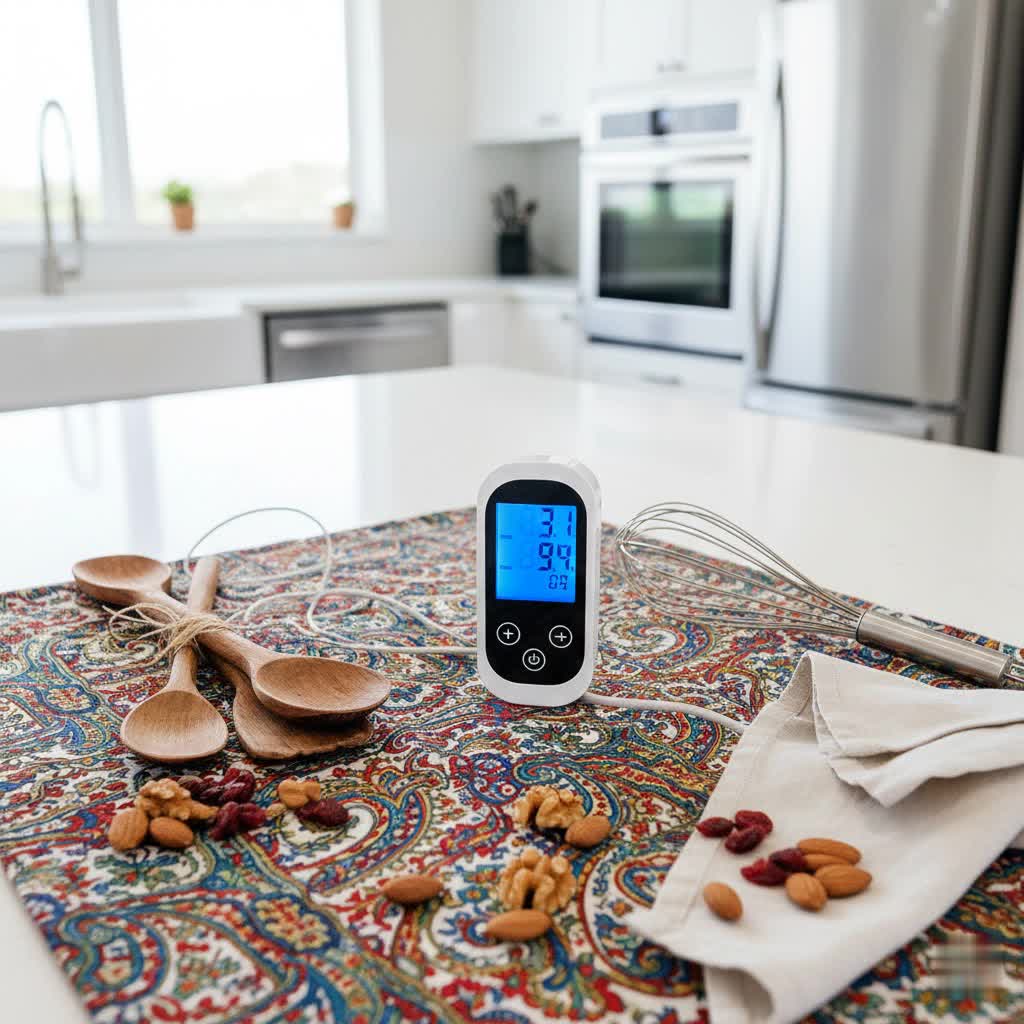
Meat Cooking Thermometers: Overview and Why You Need One
A meat cooking thermometer is a device designed to measure the internal temperature of food, primarily meat, poultry, and fish. Its primary purpose is twofold: ensuring food safety and achieving optimal doneness for taste and texture. Relying on visual cues or cooking time alone can be misleading, as factors like meat thickness, starting temperature, and oven calibration all influence the cooking process.
The importance of using a meat thermometer cannot be overstated. From a food safety perspective, consuming undercooked meat can lead to foodborne illnesses caused by harmful bacteria like Salmonella or E. coli. A thermometer verifies that your food has reached the minimum internal temperature required to destroy these pathogens. Beyond safety, precise temperature control guarantees a superior eating experience. Imagine a steak cooked to your exact preference – medium-rare, medium, or well-done – every single time. A meat thermometer makes this possible, preventing dry, tough, or bland results. It’s the ultimate tool for culinary consistency and peace of mind in the kitchen.
Popular Types of Meat Cooking Thermometers: Pros and Cons
The market offers a wide array of meat cooking thermometers, each suited for different cooking styles and preferences. Understanding their unique features, advantages, and limitations will help you make an informed choice.
Analog Meat Thermometers
Analog thermometers, often recognized by their classic dial face, have been a kitchen staple for decades. They typically feature a metal stem inserted into the food, with a bimetallic coil inside that expands or contracts with temperature changes, moving the needle on the display.
- Pros: Analog thermometers are generally inexpensive and do not require batteries, making them a low-maintenance option. They can also be left in the oven for continuous monitoring during roasting, provided they are oven-safe.
- Cons: Their most significant drawbacks include slower response times, lower accuracy compared to digital models, and often hard-to-read dials, especially in low light. They also typically lack advanced features like alarms or programmable settings.
|
Our Picks for the Best Meat Thermometer in 2026
As an Amazon Associate I earn from qualifying purchases.
|
||
| Num | Product | Action |
|---|---|---|
| 1 | 0.5 Sec Instant Read Meat Thermometer Digital with ±0.5℉ Precision, Food Thermometer for Cooking Kitchen Gadgets, Oven Grill Candy BBQ Essentials Accessories, Gifts for Him Dad Men Birthday, Red |

|
| 2 | ThermoPro TP19H Digital Meat Thermometer for Cooking with Ambidextrous Backlit and Motion Sensing Kitchen Cooking Food Thermometer for BBQ Grill Smoker Oil Fry Candy Instant Read Thermometer |
|
| 3 | Meat Thermometer Digital, Instant Read Meat ThermometerI for Grill and Cooking, Waterproof Food Thermometer for Kitchen and Outside, BBQ, Turkey, Candy, Liquids, Beef |
|
| 4 | Meat Thermometer Digital - Instant Read Waterproof Food Thermometer with Backlight for Cooking, Grill, Candy, Kitchen & Stocking Stuffers for Men - Red |
|
| 5 | Escali AH1 Stainless Steel Oven Safe Meat Thermometer, Extra Large 2.5-inches Dial, Temperature Labeled for Beef, Poultry, Pork, and Veal Silver NSF Certified |
|
| 6 | Instant Read Meat Thermometer, Fast & Accurate Digital Food Thermometer with Backlight, Waterproof & Magnet for Grilling, Cooking, BBQ, Smoker, Baking, and Candy Making Blue |
|
| 7 | 2 Pack Stainless Steel Meat Thermometer, Safe Leave in Oven, 2.5-in Extra-Large Dial Food Thermometer for Cooking, Temperature Probe for Baking, Steak, Turkey - Kitchen Gadgets - Silver |
|
| 8 | Alpha Grillers Meat Thermometer Digital - Instant Read Food Thermometer for Cooking and Grilling Gifts for Men Valentines Day Gifts for Him Her Mom Dad |
|
| 9 | Meat Thermometer Digital for Grilling and Cooking - ANDAXIN Waterproof Ultra-Fast Instant Read Food thermometers with Backlight & Calibration for Kitchen, Deep Fry, BBQ, Grill(Red/Black), LCD |
|
| 10 | ThermoPro TP16 Large LCD Digital Cooking Food Meat Thermometer for Smoker Oven Kitchen BBQ Grill Thermometer Clock Timer with Stainless Steel Temperature Probe |
|
Digital Meat Thermometers
Digital meat thermometers have revolutionized home cooking with their speed and precision. These devices use electronic sensors to measure temperature and display the reading on a clear LCD screen.
- Pros: They offer high accuracy (often within ±1°F or less) and fast readings, sometimes in just a few seconds. Digital displays are easy to read, and many models come with backlights, programmable alarms, and temperature hold functions.
- Cons: Digital thermometers require batteries to operate, and higher-end models can be more expensive than their analog counterparts.
Instant-Read Meat Thermometers
Instant-read thermometers, predominantly digital, are designed for quick spot-checks of food temperature. They are not meant to be left in food during cooking.
- Pros: Their defining feature is speed, providing temperature readings in as little as 1-5 seconds. They are also highly portable and versatile, ideal for grilling steaks, checking burgers, or verifying doneness in roasts or poultry after removal from heat.
- Cons: Since they are not leave-in devices, you must open the oven or grill lid to take a reading, which can cause heat loss. They also don’t offer continuous temperature monitoring.
Probe (Leave-in) Meat Thermometers
Probe thermometers, often digital, are designed for continuous temperature monitoring throughout the cooking process. They consist of a long, heat-resistant probe connected by a wire to a base unit that displays the temperature, often with a remote receiver or app for wireless monitoring.
- Pros: Perfect for long cooking sessions like roasting, smoking, or barbecuing, as they allow you to monitor internal temperature without opening the oven or grill, preserving heat. Many come with programmable alarms that alert you when the target temperature is reached, and wireless models (Bluetooth or Wi-Fi) allow remote monitoring from your phone.
- Cons: Wired probes can sometimes get in the way, and care must be taken to ensure the wire is not exposed to extreme heat. Wireless models rely on batteries for both the probe and the base unit, and app connectivity might not always be seamless. They are generally more expensive due to advanced features.
Comparing Meat Cooking Thermometers: A Quick Guide
Choosing the right meat thermometer depends heavily on your cooking habits and priorities. Here’s a comparative overview to help you weigh your options:
| Type | Accuracy | Speed | Features | Price Range | Best For | Pros | Cons |
|---|---|---|---|---|---|---|---|
| Analog | Moderate | Slow (15-20s) | Basic dial display | Low | Roasts, traditional cooking | Inexpensive, no batteries | Less accurate, hard to read, slow, limited features |
| Digital (Instant) | High | Very Fast (1-5s) | Backlight, hold function | Mid | Grilling, pan-frying, quick checks | Quick, precise readings, easy to read, portable | Not for leave-in use, requires opening oven/grill |
| Digital (Probe) | High | Continuous | Alarms, remote monitoring, app | Mid-High | Roasting, smoking, slow cooking, BBQ | Continuous monitoring, preserves heat, remote alerts | Higher cost, wire management (for wired), app dependency & battery (for wireless) |
How to Choose the Right Meat Cooking Thermometer
Selecting the ideal meat cooking thermometer involves understanding your specific culinary needs and balancing them with practical considerations.
Assess Your Cooking Needs
Consider what kind of cooking you do most often. Do you frequently grill thin steaks and burgers? An instant-read thermometer will be your best friend. Are you a fan of slow-cooked roasts, briskets, or smoking? A probe thermometer, especially a wireless one, will provide continuous monitoring without needing to open your cooker. For delicate items like fish or chicken breasts, high accuracy and speed are paramount. Think about whether you need features like preset temperatures, alarms, or Bluetooth/Wi-Fi connectivity to monitor your cook from another room.
Consider Your Budget
Meat thermometers vary significantly in price, from under $20 for basic models to over $100 for advanced wireless systems. While budget-friendly options can be perfectly functional, investing a bit more often brings enhanced accuracy, speed, durability, and additional smart features that can significantly improve your cooking experience. Determine what you’re willing to spend based on how often you’ll use the thermometer and the importance of its features to you.
Brand Reputation and Reviews
Just like any kitchen appliance, some brands are renowned for their quality and reliability in the meat thermometer market. Brands like ThermoWorks, Meater, ThermoPro, and OXO are frequently praised by culinary professionals and home cooks alike. Always read recent user reviews and expert comparisons to gauge real-world performance, durability, and customer satisfaction before making a purchase. Look for mentions of accuracy, ease of use, and battery life.
Using Your Meat Cooking Thermometer Correctly
Even the best meat thermometer is only as good as its user. Proper technique ensures accurate readings and ultimately, perfectly cooked, safe food.
The key to an accurate reading is correct probe placement. Always insert the thermometer into the thickest part of the meat, ensuring it avoids any bones, gristle, or large pockets of fat. Bones and fat conduct heat differently and can lead to misleading temperature readings. For thinner cuts like burgers, pork chops, or chicken cutlets, insert the probe horizontally from the side, aiming for the center of the patty or cut. For whole birds, target the thickest part of the thigh or breast. Once inserted, wait for the temperature reading to stabilize, which can take a few seconds for instant-read models or be continuous for probe thermometers. For larger roasts or whole poultry, taking multiple readings in different spots can provide a more comprehensive picture of doneness.
Understanding USDA safe internal cooking temperatures is crucial for food safety:
- Whole Cuts of Beef, Pork, Veal, Lamb: 145°F (63°C) with a 3-minute rest time.
- Ground Meats (Beef, Pork, Lamb, Veal): 160°F (71°C). No rest time needed.
- All Poultry (Whole, Parts, Ground): 165°F (74°C).
- Fish and Shellfish: 145°F (63°C).
Remember that meat continues to cook even after being removed from the heat source due to carryover cooking. Remove your meat a few degrees below the target temperature and allow it to rest. This resting period is vital not only for carryover cooking to finish, but also for juices to redistribute, resulting in a more tender and flavorful product.
After each use, clean your thermometer probe thoroughly with hot, soapy water and sanitize it to prevent cross-contamination. Most digital probes are waterproof or water-resistant, but always check the manufacturer’s instructions for cleaning and storage to ensure longevity.
Top 5 Meat Cooking Thermometers for Every Home Chef
With so many options available, choosing can be tough. Here are five top-rated meat cooking thermometers that consistently impress with their performance and features, catering to various cooking styles and budgets.
1. ThermoWorks Thermapen ONE (Instant-Read)
Renowned among professional chefs and home cooks, the Thermapen ONE is the gold standard for instant-read thermometers. It delivers incredibly fast and accurate readings in under a second, with a large, auto-rotating display for easy viewing from any angle. Its robust, waterproof design ensures durability. While it’s a premium investment, its unparalleled speed and precision make it a top choice for quick temperature checks.
2. Meater Pro / 2 Plus (Wireless Smart Probe)
For those who love low-and-slow cooking, smoking, or grilling with maximum freedom, the Meater Pro / 2 Plus is a game-changer. This entirely wireless smart thermometer uses Bluetooth to connect to an app on your smartphone, allowing you to monitor internal meat temperature and ambient cooking temperature from afar. The app also provides guided cooks, estimated finish times, and resting recommendations. It’s perfect for hands-off monitoring.
3. ThermoPro TP19H (Value Digital Instant-Read)
Offering excellent performance without breaking the bank, the ThermoPro TP19H is a fantastic value option. It provides fast (2-3 second) and accurate readings, boasts a large backlit display, and is waterproof for easy cleaning. Its foldable probe ensures safe storage, and features like auto-off and calibration enhance its user-friendliness, making it a reliable choice for everyday cooking.
4. ThermoWorks ChefAlarm (Wired Probe Thermometer)
If you need continuous monitoring for oven roasting or stovetop simmering but prefer a dedicated unit over a smartphone app, the ThermoWorks ChefAlarm is an exceptional wired probe thermometer. It features a robust, high-temperature probe, a clear display with programmable high/low alarms, and a timer function. Its magnetic backing allows it to attach conveniently to your oven or grill, providing constant oversight.
5. OXO Good Grips Chef’s Precision Digital Instant-Read Thermometer (Basic & Reliable)
For a straightforward, dependable, and affordable instant-read option, the OXO Good Grips Chef’s Precision is a solid contender. It’s easy to use, provides quick readings, and has a thin probe ideal for various cuts of meat. While it may not have all the bells and whistles of higher-end models, its ergonomic design and consistent performance make it a great entry-level or backup thermometer for any kitchen.
Conclusion
A meat cooking thermometer is far more than just a gadget; it’s a fundamental tool for culinary success, ensuring both the safety and deliciousness of your meals. From the quick precision of an instant-read model to the continuous monitoring of a smart probe, there’s a perfect thermometer out there to match every cooking style and budget. By understanding the types available, making an informed choice, and mastering proper usage, you unlock the ability to consistently create perfectly cooked dishes that impress every time.
Are you ready to elevate your cooking and say goodbye to overcooked or undercooked meat forever?
Frequently Asked Questions
What is the “Danger Zone” for food temperature?
The “Danger Zone” refers to the temperature range between 40°F (4°C) and 140°F (60°C), where bacteria multiply rapidly. It’s crucial to minimize the time food spends in this zone to prevent foodborne illnesses. Use your meat thermometer to ensure food quickly passes through this range during cooking and is chilled properly afterwards.
Can I leave an instant-read meat thermometer in the oven while cooking?
No, instant-read thermometers are not designed to be left in the oven, grill, or smoker during the entire cooking process. Their components are typically not built to withstand prolonged high heat, and doing so can damage the thermometer or lead to inaccurate readings. Use them for quick spot-checks after you’ve pulled the meat from the heat.
How often should I calibrate my meat thermometer?
While high-quality digital thermometers often hold their calibration well, it’s good practice to check your thermometer’s accuracy periodically, especially if you suspect it’s off or after it’s been dropped. You can do this with an ice bath test (should read 32°F / 0°C) or a boiling water test (should read 212°F / 100°C at sea level). Refer to your thermometer’s manual for specific calibration instructions if adjustments are needed.
