Cooking meat to perfection is an art, but even the most seasoned chefs rely on precise tools to achieve consistent, delicious results. A Kitchen Meat Thermometer isn’t just a gadget; it’s a vital instrument that ensures your dishes are cooked to the ideal doneness while guaranteeing food safety. Say goodbye to guesswork and hello to juicy, flavorful meals every time you step into your kitchen.
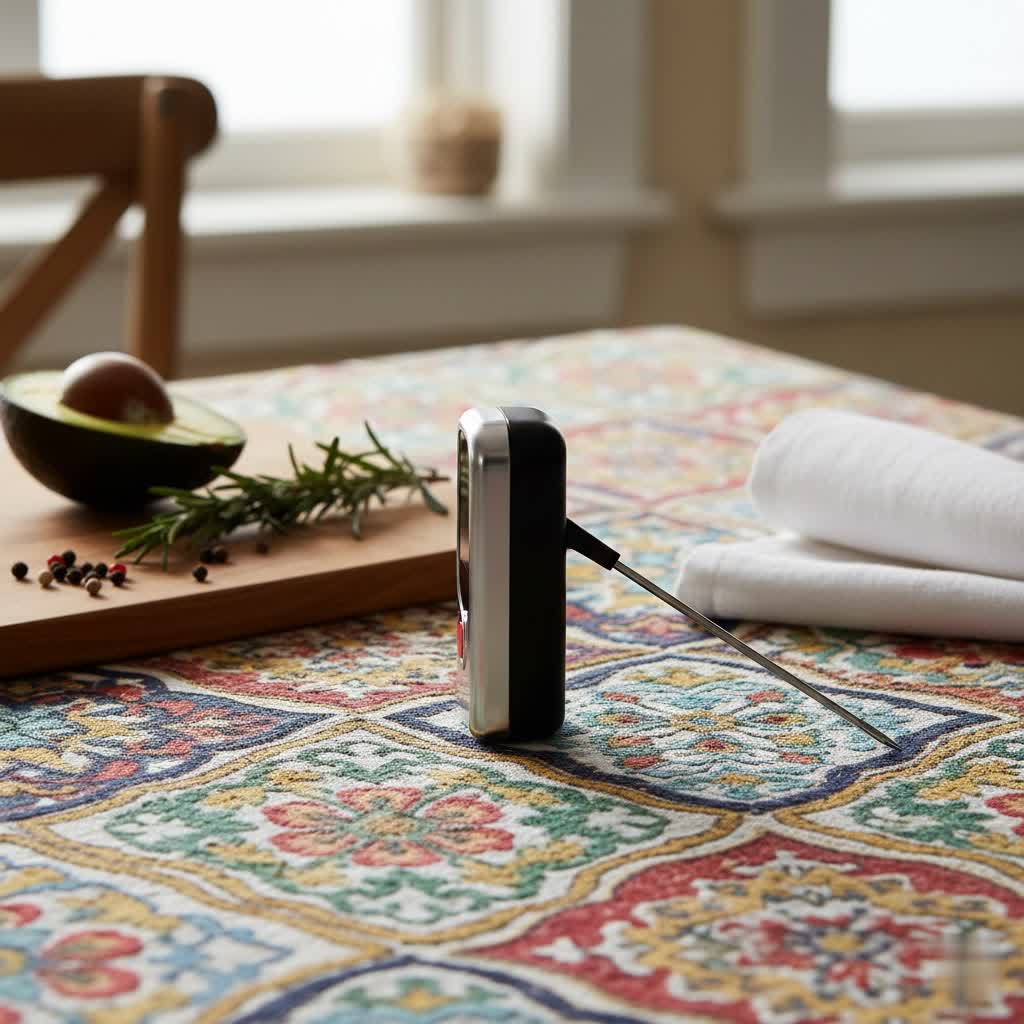
Kitchen Meat Thermometer: Overview and Why You Need One
A kitchen meat thermometer is a device designed to measure the internal temperature of food, primarily meat, poultry, and fish, to ensure it reaches a safe cooking temperature and your desired level of doneness. It eliminates the uncertainty often associated with traditional cooking methods, preventing both undercooked, potentially hazardous meals and overcooked, dry ones.
The importance of using a meat thermometer cannot be overstated. Firstly, it’s crucial for food safety. Harmful bacteria can thrive in undercooked meats, leading to foodborne illnesses. By verifying the internal temperature, you can be confident that pathogens have been destroyed. Secondly, it guarantees perfect flavor and texture. Whether you prefer a rare steak, a medium-well roast, or succulent chicken, a thermometer provides the precision needed to hit that sweet spot, preserving juiciness and enhancing taste. Finally, it promotes cooking confidence, allowing you to experiment with new recipes and larger cuts of meat without fear of failure.
Today’s market offers a variety of meat thermometers, each suited for different cooking styles and preferences. The most common types include traditional analog thermometers, versatile digital thermometers (often categorized as instant-read, leave-in probe, and wireless/smart), and specialized options like thermometer forks or single-use indicators.
Popular Meat Thermometer Types: Pros and Cons
Understanding the different types of meat thermometers available will help you choose the best tool for your culinary adventures. Each type comes with its own set of advantages and limitations.
Analog Meat Thermometer
Analog meat thermometers are the simplest and often the most budget-friendly option, featuring a dial face with a needle that indicates temperature.
- Pros: They are generally inexpensive and do not require batteries, making them a low-maintenance choice.
- Cons: Analog thermometers tend to have lower accuracy compared to digital models, making them less reliable for precise cooking. They can also be challenging to read quickly and typically take longer to register a stable temperature.
|
Our Picks for the Best Meat Thermometer in 2026
As an Amazon Associate I earn from qualifying purchases.
|
||
| Num | Product | Action |
|---|---|---|
| 1 | Meat Thermometer Digital - Instant Read Waterproof Food Thermometer with Backlight for Cooking, Grill, Candy, Kitchen & Stocking Stuffers for Men - Red |

|
| 2 | Instant Read Meat Thermometer, Fast & Accurate Digital Food Thermometer with Backlight, Waterproof & Magnet for Grilling, Cooking, BBQ, Smoker, Baking, and Candy Making Blue |
|
| 3 | Alpha Grillers Meat Thermometer Digital - Instant Read Food Thermometer for Cooking and Grilling Gifts for Men Valentines Day Gifts for Him Her Mom Dad |
|
| 4 | ThermoPro TP16 Large LCD Digital Cooking Food Meat Thermometer for Smoker Oven Kitchen BBQ Grill Thermometer Clock Timer with Stainless Steel Temperature Probe |
|
| 5 | Escali AH1 Stainless Steel Oven Safe Meat Thermometer, Extra Large 2.5-inches Dial, Temperature Labeled for Beef, Poultry, Pork, and Veal Silver NSF Certified |
|
| 6 | Meat Thermometer Digital, Instant Read Meat ThermometerI for Grill and Cooking, Waterproof Food Thermometer for Kitchen and Outside, BBQ, Turkey, Candy, Liquids, Beef |
|
| 7 | Meat Thermometer Digital for Grilling and Cooking - ANDAXIN Waterproof Ultra-Fast Instant Read Food thermometers with Backlight & Calibration for Kitchen, Deep Fry, BBQ, Grill(Red/Black), LCD |
|
| 8 | ThermoPro TP19H Digital Meat Thermometer for Cooking with Ambidextrous Backlit and Motion Sensing Kitchen Cooking Food Thermometer for BBQ Grill Smoker Oil Fry Candy Instant Read Thermometer |
|
| 9 | 0.5 Sec Instant Read Meat Thermometer Digital with ±0.5℉ Precision, Food Thermometer for Cooking Kitchen Gadgets, Oven Grill Candy BBQ Essentials Accessories, Gifts for Him Dad Men Birthday, Red |
|
| 10 | 2 Pack Stainless Steel Meat Thermometer, Safe Leave in Oven, 2.5-in Extra-Large Dial Food Thermometer for Cooking, Temperature Probe for Baking, Steak, Turkey - Kitchen Gadgets - Silver |
|
Digital Meat Thermometer
Digital meat thermometers utilize electronic sensors to provide a temperature reading on a digital display, offering a significant upgrade in precision and ease of use.
- Pros: Digital models boast high accuracy and are significantly easier to read, often featuring backlit displays. Many come with advanced features like alarms, timers, and pre-set temperature guidelines for various meats.
- Cons: They require batteries, which need occasional replacement, and are generally more expensive than their analog counterparts.
Probe Meat Thermometer (Wired)
Wired probe thermometers are a subset of digital thermometers designed for continuous monitoring of internal meat temperatures while cooking in an oven, grill, or smoker.
- Pros: The main advantage is their “leave-in” capability; you insert the probe into the meat, and a heat-resistant wire connects to a display unit outside the cooking appliance. This allows for continuous temperature tracking without opening the oven door, helping to maintain consistent cooking temperatures. Many also include programmable alarms.
- Cons: The wired connection limits mobility, and the wires can be prone to kinking or damage if not handled carefully, potentially affecting accuracy over time.
Instant-Read Meat Thermometer
Instant-read thermometers are characterized by their rapid temperature readings, making them perfect for quick spot-checks.
- Pros: They provide quick and accurate temperature readings within a few seconds, making them highly portable and convenient for grilling, pan-searing, or quickly checking multiple items.
- Cons: Instant-read thermometers are not designed to be left in the oven or grill during cooking, as their electronic components can be damaged by prolonged high heat. You must insert, read, and remove the probe each time you check the temperature.
Wireless/Smart Meat Thermometer
Representing the cutting edge of meat thermometer technology, wireless or smart thermometers connect to a base unit or a smartphone app via Bluetooth or Wi-Fi.
- Pros: These offer unparalleled convenience, allowing you to monitor cooking progress remotely from another room or even while running errands. They often come with advanced app features, such as multiple probe inputs, predictive cooking timers, historical data tracking, and customizable alerts. Some models are entirely wire-free, reducing clutter.
- Cons: Wireless thermometers are typically the most expensive option. Their performance can be dependent on app functionality and connectivity, which might be spotty in some environments. Additionally, some wire-free probes can be thicker, making them less ideal for delicate or thin cuts of meat.
Meat Thermometer Comparison Table
| Type | Accuracy | Speed | Key Features | Price Range | Pros | Cons |
|---|---|---|---|---|---|---|
| Analog | Low-Moderate | Slow (1-2 min) | Dial display | $10-$20 | Inexpensive, no batteries | Less accurate, hard to read, slow, not ideal for thin cuts |
| Digital Instant-Read | High | Fast (1-5 sec) | Digital display, auto-off, backlight | $20-$80 | Highly accurate, fast, easy to read, portable | Not oven-safe, requires manual insertion, battery operated |
| Digital Wired Probe | High | Moderate (5-15 sec) | Continuous monitoring, alarms, timer | $30-$100 | Oven/grill safe (probe), remote display, great for roasts | Wired connection limits mobility, cable can be damaged, battery operated |
| Digital Wireless/Smart | High | Moderate (5-15 sec) | App integration, remote monitoring, multi-probe, predictive cooking | $80-$300+ | Ultimate convenience, advanced features, wire-free options | Most expensive, app-dependent, potential connectivity issues, probe thickness can be an issue |
How to Choose the Right Meat Thermometer
Selecting the perfect meat thermometer can seem daunting with so many options. The key is to match the thermometer’s features with your specific cooking habits and priorities.
Determine Your Usage Needs
Consider what kind of cooking you do most often. Do you frequently roast large cuts of meat in the oven or smoker, requiring continuous monitoring? A wired probe or wireless smart thermometer would be ideal, allowing you to track temperatures without constantly opening the oven. If you primarily grill steaks, pan-fry chicken breasts, or need to quickly check doneness at the end of cooking, a digital instant-read thermometer offers the speed and portability you need. Think about the types of meat you cook and the level of precision you desire; some thermometers are better suited for thick cuts, while others excel with thin patties. Features like alarms, timers, or Bluetooth connectivity can also greatly enhance your cooking experience.
Your Budget
Meat thermometers span a wide price range, from under $20 for basic analog models to over $200 for advanced wireless systems. Establish how much you’re willing to spend. While budget options can get the job done, investing in a higher-quality thermometer often means better accuracy, faster readings, and enhanced durability. Consider a mid-range digital instant-read for a good balance of performance and affordability, or a more premium wireless model if smart features are a priority and you cook frequently.
Brand and Reviews
Reputable brands often signify quality and reliability. Look for brands frequently recommended by culinary experts and consistently receiving positive user reviews. Brands like ThermoWorks, Meater, ThermoPro, and OXO Good Grips are often cited for their accuracy and performance. Reading reviews from other users can provide valuable insights into real-world performance, ease of use, and common issues, helping you make an informed decision.
How to Use Your Meat Thermometer Correctly
Achieving perfectly cooked and safe meat relies heavily on using your thermometer correctly. Proper placement and understanding safe temperatures are crucial.
To get the most accurate reading, insert the thermometer into the thickest part of the meat, avoiding any bones, fat, or gristle. These elements conduct heat differently and can lead to misleading temperature readings. For thin cuts like hamburger patties or boneless chicken breasts, it’s best to insert the probe horizontally from the side to ensure the sensing area reaches the true center of the food. Once inserted, allow the thermometer to stabilize for a few seconds (for instant-read) or continuously monitor (for probe thermometers) until it displays a steady reading.
The USDA provides essential guidelines for safe minimum internal temperatures to prevent foodborne illness:
- Ground Meats (Beef, Pork, Veal, Lamb): 160°F (71°C)
- All Poultry (whole bird, parts, ground): 165°F (74°C)
- Beef, Pork, Veal, and Lamb (steaks, chops, roasts): 145°F (63°C) with a 3-minute rest time
- Fish and Shellfish: 145°F (63°C)
- Egg Dishes and Casseroles: 160°F (71°C)
Remember that meat continues to cook even after being removed from the heat source due to “carry-over cooking.” It’s often recommended to remove meat a few degrees below your target temperature, allowing it to reach the final desired doneness during resting.
Cleaning and proper care are vital for maintaining your thermometer’s accuracy and longevity. Always clean the probe with hot, soapy water immediately after use to prevent juices from hardening, and store it in its protective sheath. Avoid immersing digital thermometers in water unless they are specifically labeled as waterproof.
Calibration is the process of checking your thermometer’s accuracy. A simple ice-water bath method can be used: fill a large glass with ice and cold water, stir well, and insert the thermometer probe at least 2 inches deep, ensuring it doesn’t touch the sides or bottom. After 30 seconds, it should read 32°F (0°C). If not, adjust according to manufacturer instructions or consider replacing it.
Top 5 Kitchen Meat Thermometers for 2026 (Detailed Review)
Choosing the right meat thermometer can elevate your cooking significantly. Here are five top-rated models that stand out for their performance, features, and reliability.
1. ThermoWorks Thermapen ONE (Best Overall Instant-Read)
The ThermoWorks Thermapen ONE is consistently lauded as the gold standard for instant-read thermometers. It delivers incredibly fast and accurate readings, often within one second. Its robust construction, large backlit display with auto-rotating digits, and waterproof design make it a favorite among home cooks and professionals alike. While it comes with a premium price tag, its speed, precision, and durability justify the investment for those who demand the best. It’s perfect for quick checks on steaks, grilled chicken, or even deep-frying oil.
2. ThermoWorks ChefAlarm (Best Wired Leave-In Probe)
For roasting, smoking, and other long-duration cooking methods, the ThermoWorks ChefAlarm is an excellent choice. This wired probe thermometer offers intuitive controls, a clear backlit display, and high/low temperature alarms, ensuring your roasts never get over or undercooked. Its versatility for various cooking tasks, along with its consistent accuracy, makes it a reliable companion for serious home cooks. The magnetic back allows it to be conveniently attached to oven doors or metal surfaces, keeping the display visible.
3. MEATER Plus (Best Wireless Smart Thermometer)
The MEATER Plus revolutionizes remote cooking with its entirely wire-free probe and sophisticated smartphone app. This smart thermometer provides real-time temperature monitoring, guided cooks, resting time calculations, and custom alerts directly to your phone. With a 165-foot Bluetooth range (extendable with a Wi-Fi bridge), it’s ideal for grilling, smoking, and roasting where you don’t want to be tethered to your cooking appliance. The MEATER Plus excels in convenience and smart features, offering a seamless cooking experience for tech-savvy home chefs.
4. ThermoWorks ThermoPop 2 (Best Value Instant-Read)
If you’re looking for a fast, accurate, and budget-friendly instant-read thermometer, the ThermoWorks ThermoPop 2 is a standout. It offers quick readings within 3-4 seconds, a large, easy-to-read auto-rotating display, and high accuracy for its price point. It’s an excellent entry-level option that provides significant performance without breaking the bank, making perfectly cooked meals accessible to everyone. Its compact size and splash-proof design add to its appeal for everyday kitchen use.
5. ThermoPro TP19H (Reliable Digital Instant-Read)
The ThermoPro TP19H is another highly-regarded instant-read digital thermometer known for its speed, accuracy, and user-friendly design. It features a foldable probe for safe storage, a large backlit display for easy reading in any light, and a waterproof rating for easy cleaning. Offering accurate readings in just a few seconds, it’s a robust and dependable tool for checking internal temperatures across a wide range of foods. It represents great value, combining essential features with solid performance for daily cooking.
Conclusion
A reliable kitchen meat thermometer is an indispensable tool for any home cook, transforming your cooking from guesswork to gourmet. It empowers you to consistently achieve perfectly cooked, juicy, and safe meals, eliminating the worry of overcooking or undercooking. From quick-read convenience to smart wireless monitoring, there’s a thermometer out there to suit every cooking style and budget. Invest in this essential kitchen device, master its use, and unlock a new level of culinary confidence. What delicious dish will you perfectly cook next with your new meat thermometer?
Frequently Asked Questions
How do I calibrate a digital meat thermometer?
Many digital thermometers can be calibrated using an ice-water bath. Fill a glass with ice and cold water, stir, then insert the probe for at least 30 seconds. It should read 32°F (0°C). If it doesn’t, check your manufacturer’s instructions for adjustment or consider replacing the thermometer if it cannot be calibrated manually.
Can I leave any meat thermometer in the oven while cooking?
Only “leave-in” probe thermometers (both wired and wireless smart probes) are designed to safely remain in food throughout the cooking process in an oven or grill. Instant-read and analog dial thermometers should be inserted, read, and then removed, as their components can be damaged by prolonged high heat.
What is the safest internal temperature for chicken?
According to USDA guidelines, all poultry, whether whole, parts, or ground, should be cooked to a safe minimum internal temperature of 165°F (74°C). Always measure the thickest part of the meat, avoiding bone, to ensure it is thoroughly cooked and safe to eat.
How do I clean my meat thermometer?
To clean your meat thermometer, wash the probe thoroughly with hot, soapy water after each use. Avoid immersing the entire digital unit in water unless it is specified as fully waterproof. Rinse the probe well and dry it before storing it in its protective sleeve to maintain hygiene and prevent damage.
Why is it important to let meat rest after cooking?
Allowing meat to rest after cooking is crucial because it enables “carry-over cooking” to complete, and the internal juices to redistribute throughout the meat. This process ensures the meat remains tender and juicy. Checking the temperature after resting confirms it has reached the final desired doneness.
