Few things are as frustrating as slicing into a beautifully grilled steak or smoked brisket, only to find it either tragically undercooked or disappointingly dry. As a seasoned technician with over a decade of hands-on experience evaluating hundreds of meat thermometers, I understand the science and art behind achieving culinary perfection. A reliable Bbq Meat Thermometer isn’t just a gadget; it’s your most trusted ally in the quest for safe, flavorful, and perfectly cooked meals, transforming you into a more confident home chef.
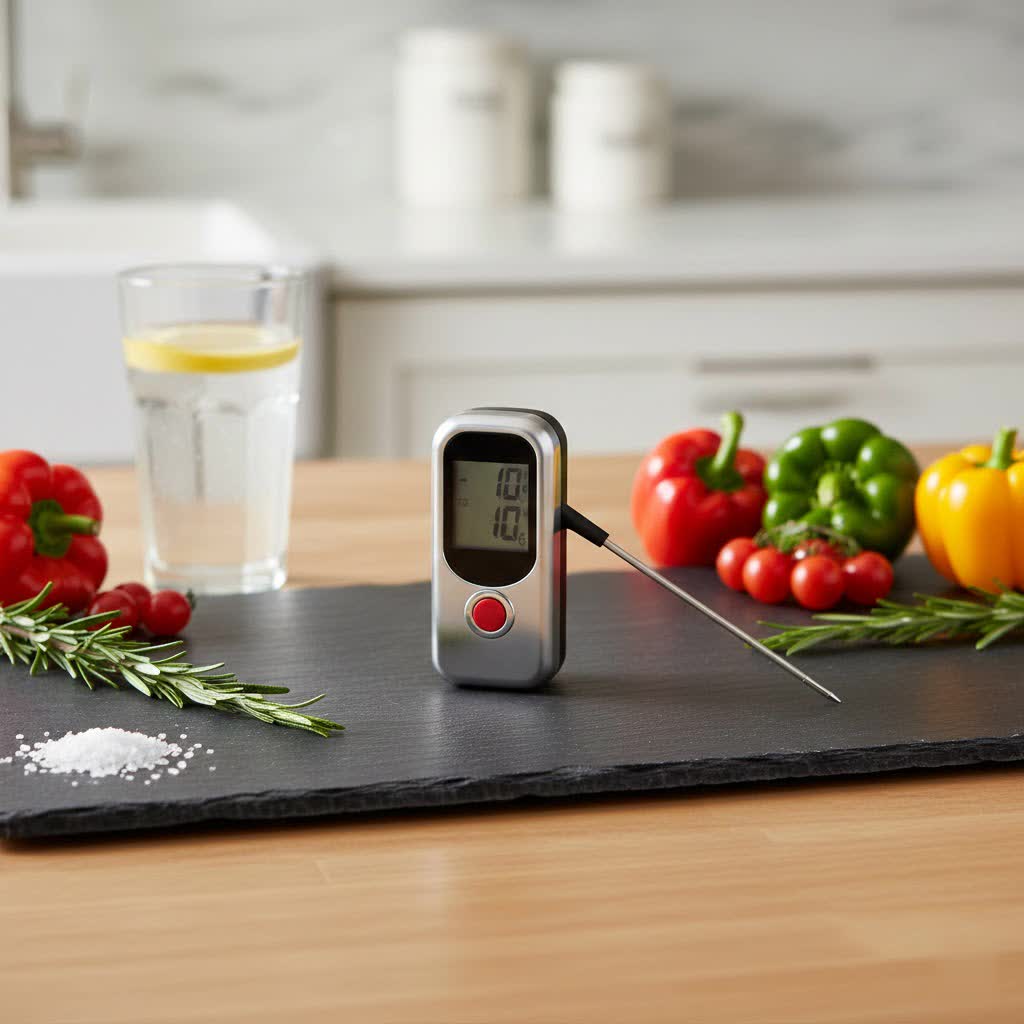
BBQ Meat Thermometer: Overview and Why You Need One
A BBQ meat thermometer is an essential tool designed to measure the internal temperature of food, particularly meat, as it cooks. Its primary purpose is twofold: to ensure food safety by confirming that meat reaches temperatures sufficient to eliminate harmful bacteria, and to achieve optimal doneness, preventing both undercooked risks and overcooked dryness. Whether you’re grilling succulent steaks, slow-smoking a brisket, or roasting a whole chicken, an accurate thermometer is indispensable for consistent, mouth-watering results. Without it, you’re often left guessing, relying on visual cues that can be misleading and lead to culinary mishaps.
On the market today, you’ll encounter several main categories of meat thermometers, each with distinct advantages for various cooking styles. These generally include instant-read digital thermometers for quick checks, wired probe thermometers for continuous monitoring, and advanced wireless models that offer remote tracking, perfect for long BBQ sessions.
Popular BBQ Meat Thermometer Types: Pros and Cons
Choosing the right meat thermometer depends heavily on your specific grilling and cooking habits. Each type offers a unique set of benefits and limitations.
Instant-Read Digital Meat Thermometers
These are arguably the most popular choice for everyday grilling and quick checks. As their name suggests, instant-read thermometers provide a temperature reading in a matter of seconds (typically 1 to 5 seconds). They feature a thin probe attached to a digital display and are handheld.
- Pros:
- Speed: Delivers quick and accurate readings, crucial for avoiding heat loss by keeping grill lids open for minimal time.
- Accuracy: Generally highly precise, often within ±1°F (0.5°C).
- Portability: Compact and easy to carry, often with foldable probes.
- Versatility: Excellent for quick spot checks on everything from steaks and burgers to chicken breasts and fish fillets. Many are waterproof for easy cleaning.
- Cons:
- Spot Checks Only: Not designed to be left in the meat during cooking in a hot grill or oven, as this can damage the electronics.
- Manual Monitoring: Requires you to physically insert the probe each time you want a reading.
|
Our Picks for the Best Meat Thermometer in 2026
As an Amazon Associate I earn from qualifying purchases.
|
||
| Num | Product | Action |
|---|---|---|
| 1 | Meat Thermometer Digital - Instant Read Waterproof Food Thermometer with Backlight for Cooking, Grill, Candy, Kitchen & Stocking Stuffers for Men - Red |

|
| 2 | Meat Thermometer Digital for Grilling and Cooking - ANDAXIN Waterproof Ultra-Fast Instant Read Food thermometers with Backlight & Calibration for Kitchen, Deep Fry, BBQ, Grill(Red/Black), LCD |
|
| 3 | Escali AH1 Stainless Steel Oven Safe Meat Thermometer, Extra Large 2.5-inches Dial, Temperature Labeled for Beef, Poultry, Pork, and Veal Silver NSF Certified |
|
| 4 | Instant Read Meat Thermometer, Fast & Accurate Digital Food Thermometer with Backlight, Waterproof & Magnet for Grilling, Cooking, BBQ, Smoker, Baking, and Candy Making Blue |
|
| 5 | ThermoPro TP19H Digital Meat Thermometer for Cooking with Ambidextrous Backlit and Motion Sensing Kitchen Cooking Food Thermometer for BBQ Grill Smoker Oil Fry Candy Instant Read Thermometer |
|
| 6 | Meat Thermometer Digital, Instant Read Meat ThermometerI for Grill and Cooking, Waterproof Food Thermometer for Kitchen and Outside, BBQ, Turkey, Candy, Liquids, Beef |
|
| 7 | 0.5 Sec Instant Read Meat Thermometer Digital with ±0.5℉ Precision, Food Thermometer for Cooking Kitchen Gadgets, Oven Grill Candy BBQ Essentials Accessories, Gifts for Him Dad Men Birthday, Red |
|
| 8 | Alpha Grillers Meat Thermometer Digital - Instant Read Food Thermometer for Cooking and Grilling Gifts for Men Valentines Day Gifts for Him Her Mom Dad |
|
| 9 | 2 Pack Stainless Steel Meat Thermometer, Safe Leave in Oven, 2.5-in Extra-Large Dial Food Thermometer for Cooking, Temperature Probe for Baking, Steak, Turkey - Kitchen Gadgets - Silver |
|
| 10 | ThermoPro TP16 Large LCD Digital Cooking Food Meat Thermometer for Smoker Oven Kitchen BBQ Grill Thermometer Clock Timer with Stainless Steel Temperature Probe |
|
Wired Digital Probe Meat Thermometers
Wired probe thermometers are designed for continuous monitoring of your meat’s internal temperature throughout the entire cooking process, especially beneficial for longer cooks. They consist of a heat-resistant probe that is inserted into the meat and connected by a long, high-temperature wire to an external display unit.
- Pros:
- Continuous Monitoring: Allows you to track temperature changes without opening the grill or oven, preserving heat and smoke.
- Oven/Grill Safe: The probe and wire are designed to withstand high cooking temperatures.
- Alarms: Many models feature customizable high/low temperature alarms, notifying you when your desired doneness is reached.
- Larger Displays: External units often have clear, backlit displays for easy reading.
- Cons:
- Wires: Wires can be cumbersome and may get in the way, requiring careful routing.
- Limited Mobility: The base unit must stay relatively close to the grill.
- Cleaning: The probe and wire need careful cleaning, though some probes are dishwasher-safe.
Wireless (Bluetooth/Wi-Fi) Meat Thermometers
Representing the cutting edge in meat thermometer technology, wireless models offer unparalleled convenience for remote monitoring. These thermometers communicate with your smartphone or a dedicated receiver via Bluetooth or Wi-Fi, allowing you to track your cook from a distance.
- Pros:
- Remote Monitoring: Monitor your cook from anywhere within range (Bluetooth) or even from outside your home (Wi-Fi, with a hub/bridge).
- Smart Features: Often integrate with smartphone apps, offering pre-set temperatures for different meats, cooking graphs, timers, and alerts.
- Multi-Probe Options: Many models come with multiple probes, allowing you to monitor several pieces of meat or even ambient grill temperature simultaneously.
- Ideal for Long Cooks: Perfect for smoking, roasting, and other low-and-slow BBQ methods where constant lid opening is detrimental.
- Cons:
- Higher Cost: Generally more expensive than instant-read or wired probe thermometers.
- Reliance on Technology: Requires battery charging for probes and reliance on app functionality and connectivity, which can sometimes be inconsistent with Bluetooth over long distances or through thick grill walls.
- Learning Curve: May take some getting used to the app interface and features.
Analog Meat Thermometers
Analog thermometers, typically with a dial display, are the most basic and often the most affordable type. They use a bimetallic coil or spring to measure temperature.
- Pros:
- Inexpensive: Budget-friendly option.
- No Batteries: Doesn’t require power, always ready.
- Cons:
- Slower Readings: Can take a minute or more to register the correct temperature.
- Less Accurate: Generally less precise than digital counterparts.
- Harder to Read: Small dials can be difficult to read accurately, especially in dim light.
- Not Ideal for Precision BBQ: Their lack of speed and accuracy makes them less suitable for serious BBQ where precise temperature control is critical.
Comparison Table: BBQ Meat Thermometer Types
| Feature | Instant-Read Digital | Wired Digital Probe | Wireless (Bluetooth/Wi-Fi) | Analog (Dial) |
|---|---|---|---|---|
| Accuracy | High (±1°F/0.5°C) | High (±1°F/0.5°C) | High (±1°F/0.5°C) | Moderate (±2-5°F/1-3°C) |
| Speed | Very Fast (1-5 seconds) | Continuous monitoring | Continuous monitoring | Slow (30-60+ seconds) |
| Usage | Spot checks, handheld | Leave-in during cook | Leave-in during cook | Leave-in or spot check |
| Display | Digital, often backlit | Digital, external unit | Smartphone app / Base unit | Dial, often small |
| Features | Hold function, waterproof | Alarms, timer, pre-sets | App control, multi-probe, Wi-Fi range | Basic, no special features |
| Price | $15 – $50 | $20 – $80 | $50 – $200+ | $5 – $20 |
| Pros | Fast, accurate, portable | Continuous monitoring, alarms | Remote control, smart features | Affordable, no batteries |
| Cons | Not leave-in | Wires, limited mobility | Higher cost, battery reliance | Slow, less accurate, hard to read |
How to Choose the Right BBQ Meat Thermometer
Selecting the ideal BBQ meat thermometer involves evaluating your cooking style, preferences, and budget. It’s about finding the tool that best complements your grilling journey.
Define Your Cooking Needs
Consider what you typically cook and how you cook it. Do you mostly grill quick-cooking items like thin steaks, burgers, or chicken breasts where an instant-read thermometer is perfect for a rapid check? Or are you a fan of low-and-slow smoking of large cuts like brisket and pork shoulder, which demand continuous, hands-free monitoring provided by wired or wireless probes? If you often cook multiple items simultaneously, a multi-probe wireless system might be invaluable. Think about whether you need features like a waterproof design for easy cleaning, a backlit display for nighttime grilling, or smart app integration for ultimate convenience.
Consider Your Budget
Meat thermometers vary significantly in price, from under $15 for basic analog or entry-level instant-reads to over $200 for premium wireless systems. While it might be tempting to opt for the cheapest option, investing in a good quality thermometer often pays off in accuracy, durability, and features that enhance your cooking experience. Determine how much you’re willing to spend, keeping in mind that higher prices often correlate with faster readings, better build quality, and more advanced smart features.
Brand Reputation and Reviews
Always opt for reputable brands known for quality and customer support. Brands like ThermoWorks, Meater, and ThermoPro consistently receive high praise for their performance and reliability. Reading user reviews can provide invaluable insights into real-world performance, durability, ease of use, and any common issues. Look for consistent positive feedback regarding accuracy and customer service.
Using Your BBQ Meat Thermometer Correctly
Even the best thermometer is only as good as its user. Proper technique is key to getting accurate readings and achieving perfectly cooked meat every time.
To ensure the most accurate reading, always insert the thermometer probe into the thickest part of the meat, avoiding bones, large pockets of fat, or gristle, as these can give false low readings. For thinner cuts like steaks or chicken breasts, insert the probe horizontally from the side to reach the true center. For large roasts or whole poultry, aim for the deepest part of the muscle. Push the probe slightly past the estimated center, then slowly pull it back. The lowest temperature you observe as you pull back indicates the coolest, most critical part of the meat.
Before its first use and periodically thereafter, calibrate your meat thermometer to ensure accuracy. A simple way to do this is with an ice bath: fill a glass with crushed ice and water, stir well, then insert the probe. It should read 32°F (0°C). For a high-temperature check, insert it into boiling water (being careful not to touch the pot’s bottom or sides), where it should read 212°F (100°C) at sea level (adjust for higher elevations). If your thermometer is off, recalibrate it according to the manufacturer’s instructions or consider replacement.
Understanding safe internal temperatures is crucial for food safety. The USDA provides clear guidelines:
- Poultry (whole, ground, or parts): 165°F (74°C)
- Ground Meats (beef, pork, veal, lamb): 160°F (71°C)
- Fresh Pork (roasts, chops, steaks): 145°F (63°C) with a 3-minute rest
- Beef, Veal, Lamb (steaks, roasts, chops):
- Rare: 120-125°F (49-52°C)
- Medium-Rare: 130-135°F (54-57°C)
- Medium: 140-145°F (60-63°C)
- Medium-Well: 150-155°F (66-68°C)
- Well-Done: 160-165°F (71-74°C)
Remember “carryover cooking,” where meat continues to cook for a few minutes after being removed from the heat. To account for this, pull your meat off the grill 5-10°F below your target temperature, especially for larger cuts, and let it rest. This allows the internal temperature to rise to the desired level while redistributing juices for maximum tenderness.
Finally, always clean your thermometer probe thoroughly after each use, especially between different types of meat, to prevent cross-contamination. Most digital probes can be wiped clean with a damp cloth; many instant-read models are waterproof and can be rinsed under the tap. Store your thermometer in a clean, dry place to maintain its accuracy and prolong its lifespan.
> “The difference between a good cook and a great cook often comes down to precise temperature control. A quality meat thermometer isn’t a luxury; it’s a fundamental tool for consistent success and food safety.”
Top 5 BBQ Meat Thermometers: Expert Picks & Reviews
Based on extensive testing and user feedback, here are five highly-regarded BBQ meat thermometers that stand out in their respective categories:
- ThermoWorks Thermapen ONE: Often hailed as the gold standard for instant-read thermometers. It delivers readings in a blazing fast 1 second with superior accuracy. Its auto-rotating display, waterproof design, and robust build make it a favorite for professional chefs and serious backyard grillers alike. Ideal for quick checks on anything from delicate fish to searing steaks.
- MEATER Plus Smart Wireless Meat Thermometer: This truly wireless, leave-in probe is a game-changer for smoking and slow roasting. With a Bluetooth range extender integrated into its charger, it offers extended monitoring via a user-friendly app. It features dual sensors to simultaneously track internal meat temperature and ambient grill/oven temperature, providing predictive cook times and custom alerts. Perfect for hands-off, long-duration BBQ.
- ThermoPro TP20 Wireless Remote Digital Cooking Food Meat Thermometer: A popular wired probe thermometer that offers excellent value and reliability. It comes with two probes, allowing you to monitor both meat and ambient temperatures. The remote receiver has a range of up to 300 feet, pre-programmed USDA approved temperatures, and custom alarm settings. It’s a workhorse for consistent grilling and smoking without the high cost of fully wireless systems.
- FireBoard Spark Instant-Read Thermometer: Combining the speed of an instant-read with smart features, the Spark is incredibly versatile. It offers a fast, accurate probe, plus the ability to connect to up to three external probes for multi-channel monitoring via Bluetooth or Wi-Fi (with a FireBoard Gateway). Its large, clear display and rugged design make it suitable for any BBQ environment.
- ThermoWorks Smoke X2 Remote BBQ Alarm Thermometer: Designed specifically for serious pitmasters, the Smoke X2 is a robust, wired multi-probe thermometer with an impressive 6,500-foot line-of-sight radio frequency range, far surpassing typical Bluetooth limits. Its two probes allow for monitoring meat and ambient temperatures, and its sturdy receiver unit offers clear temperature readouts and alarms, making it perfect for monitoring long, slow cooks without staying tethered to the grill.
Conclusion
A BBQ meat thermometer is more than just a kitchen gadget; it’s an indispensable tool for anyone serious about grilling and smoking. It empowers you to achieve food safety, eliminate guesswork, and consistently deliver perfectly cooked, juicy, and flavorful meats. From the lightning-fast instant-read models that offer quick spot checks to the advanced wireless systems that provide remote, continuous monitoring, there’s a perfect thermometer for every style of cook and every type of BBQ. Investing in a quality meat thermometer and learning to use it correctly will elevate your culinary skills, ensuring that every meal you prepare is a resounding success. Which type of BBQ meat thermometer will you choose to transform your grilling game?
Frequently Asked Questions
Can I leave my meat thermometer in the grill or oven while cooking?
Yes, but only certain types. Wired digital probe thermometers and wireless smart probes are specifically designed to be left in the meat throughout the cooking process. Instant-read thermometers, however, should never be left in the oven or grill as their electronic components are not built to withstand continuous high heat and can be damaged.
How often should I calibrate my meat thermometer?
It’s a good practice to calibrate your meat thermometer before its first use and then periodically, such as every few months or if you suspect it’s giving inaccurate readings. The ice bath test is a quick and easy way to check its accuracy.
What is the safe internal temperature for chicken on the grill?
According to USDA guidelines, all poultry, including grilled chicken, should reach a safe internal temperature of 165°F (74°C). Always measure in the thickest part of the meat, avoiding bone.
What’s the difference between a Bluetooth and Wi-Fi meat thermometer?
Bluetooth meat thermometers connect directly to your smartphone within a limited range (typically 50-300 feet, often less through walls). Wi-Fi meat thermometers connect to your home Wi-Fi network, allowing you to monitor your cook from virtually anywhere with internet access, offering an unlimited range through their app. Wi-Fi models often require a dedicated hub or bridge.
Are analog meat thermometers good for BBQ?
While inexpensive and simple, analog meat thermometers are generally not recommended for precise BBQ cooking. They are slower to read, less accurate, and their dials can be hard to interpret. For the best BBQ results and food safety, digital or wireless thermometers are far superior.
