In the world of cooking, precision is paramount. Whether you’re a seasoned chef or a home cook, achieving perfectly cooked meat—juicy and flavorful, never dry or unsafe—hinges on knowing its internal temperature. This is where the instant read meat thermometer becomes your most trusted kitchen companion, transforming guesswork into guaranteed success.
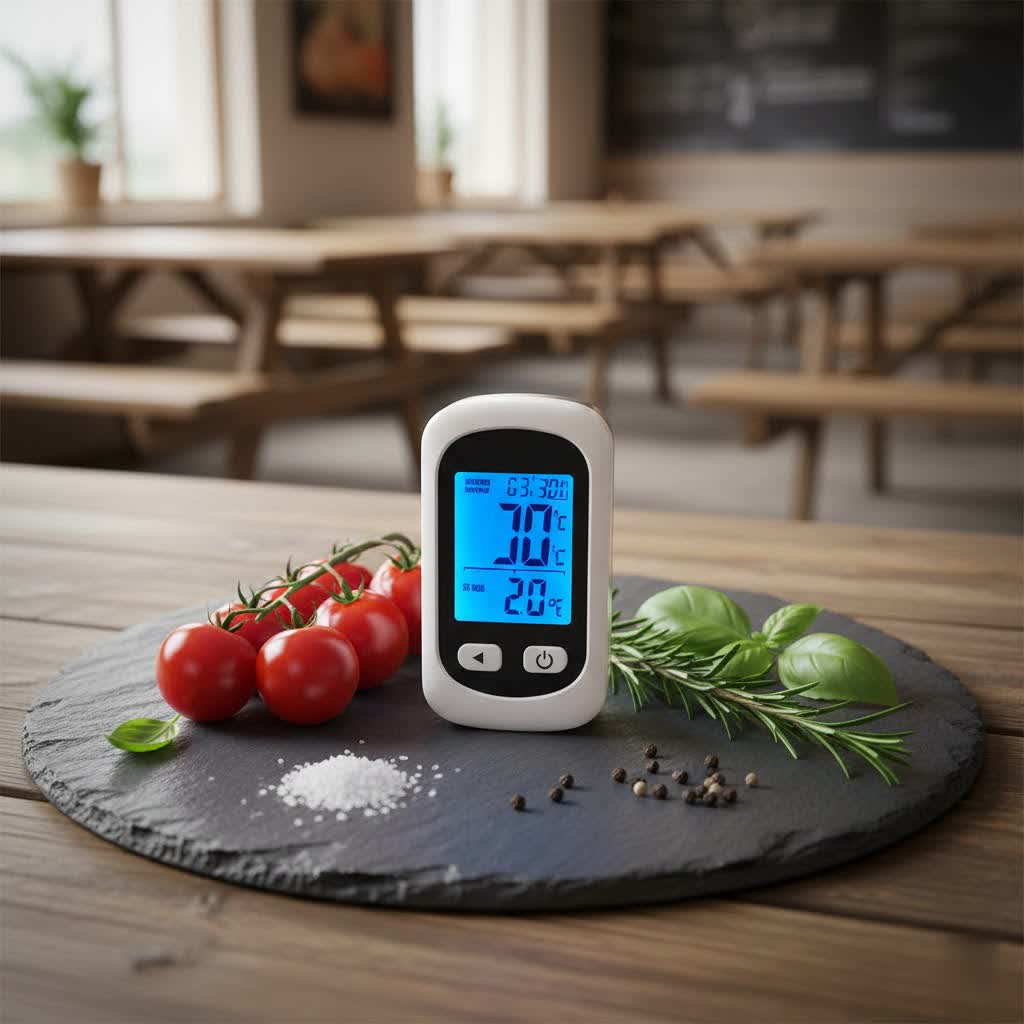
Instant Read Meat Thermometers: Overview and Essential Uses
An instant read meat thermometer is a crucial kitchen tool designed to quickly measure the internal temperature of your food. Unlike oven-safe probe thermometers that remain in the food throughout cooking, instant read models are for quick spot checks, providing rapid, accurate readings within seconds. This speed is vital for preventing overcooking, ensuring food safety, and achieving that ideal texture and flavor.
Why is using an instant read meat thermometer so important? Firstly, it’s about food safety. Harmful bacteria can lurk in undercooked meats, leading to foodborne illnesses. Relying on visual cues like color or juice clarity is unreliable; only a thermometer can confirm that meat has reached a safe minimum internal temperature to destroy these pathogens. Secondly, it guarantees perfect doneness. From a rare steak to a well-done roast, every cut has an optimal temperature range for peak tenderness and flavor. An instant read thermometer empowers you to hit that sweet spot every time. Finally, it offers versatility, useful not just for meats but also for deep-frying oil, candy making, and even baking.
Types of Meat Thermometers: Advantages and Disadvantages
While there are various meat thermometers on the market, instant-read thermometers stand out for their efficiency. Understanding their unique attributes, along with other types, helps you choose the right tool for your culinary adventures.
Analog Meat Thermometer
Analog instant-read thermometers typically feature a dial face.
- Advantages: They are generally inexpensive and don’t require batteries.
- Disadvantages: These can be less accurate and slower to register a stable reading, often taking 15 to 20 seconds. The dial can also be harder to read compared to digital displays.
|
Our Picks for the Best Meat Thermometer in 2026
As an Amazon Associate I earn from qualifying purchases.
|
||
| Num | Product | Action |
|---|---|---|
| 1 | Meat Thermometer Digital for Grilling and Cooking - ANDAXIN Waterproof Ultra-Fast Instant Read Food thermometers with Backlight & Calibration for Kitchen, Deep Fry, BBQ, Grill(Red/Black), LCD |

|
| 2 | 0.5 Sec Instant Read Meat Thermometer Digital with ±0.5℉ Precision, Food Thermometer for Cooking Kitchen Gadgets, Oven Grill Candy BBQ Essentials Accessories, Gifts for Him Dad Men Birthday, Red |
|
| 3 | Escali AH1 Stainless Steel Oven Safe Meat Thermometer, Extra Large 2.5-inches Dial, Temperature Labeled for Beef, Poultry, Pork, and Veal Silver NSF Certified |
|
| 4 | 2 Pack Stainless Steel Meat Thermometer, Safe Leave in Oven, 2.5-in Extra-Large Dial Food Thermometer for Cooking, Temperature Probe for Baking, Steak, Turkey - Kitchen Gadgets - Silver |
|
| 5 | Meat Thermometer Digital - Instant Read Waterproof Food Thermometer with Backlight for Cooking, Grill, Candy, Kitchen & Stocking Stuffers for Men - Red |
|
| 6 | ThermoPro TP16 Large LCD Digital Cooking Food Meat Thermometer for Smoker Oven Kitchen BBQ Grill Thermometer Clock Timer with Stainless Steel Temperature Probe |
|
| 7 | Alpha Grillers Meat Thermometer Digital - Instant Read Food Thermometer for Cooking and Grilling Gifts for Men Valentines Day Gifts for Him Her Mom Dad |
|
| 8 | ThermoPro TP19H Digital Meat Thermometer for Cooking with Ambidextrous Backlit and Motion Sensing Kitchen Cooking Food Thermometer for BBQ Grill Smoker Oil Fry Candy Instant Read Thermometer |
|
| 9 | Instant Read Meat Thermometer, Fast & Accurate Digital Food Thermometer with Backlight, Waterproof & Magnet for Grilling, Cooking, BBQ, Smoker, Baking, and Candy Making Blue |
|
| 10 | Meat Thermometer Digital, Instant Read Meat ThermometerI for Grill and Cooking, Waterproof Food Thermometer for Kitchen and Outside, BBQ, Turkey, Candy, Liquids, Beef |
|
Digital Meat Thermometer
This category includes both instant-read and leave-in probe models, though for the purpose of “instant read,” we focus on the quick-check digital handheld devices.
- Advantages: Digital instant-read thermometers offer high accuracy, often within a degree or less, and provide fast readings, typically in 2-5 seconds. They feature easy-to-read backlit LCD displays and frequently include additional features like auto-rotation, hold functions, and magnetic backs for storage.
- Disadvantages: They are generally more expensive than analog models and require batteries. Like all instant-read types, they are not designed to be left in the oven or grill for prolonged cooking.
Probe Meat Thermometer (Leave-In)
These digital thermometers feature a probe connected by a heat-resistant cable to an external display unit.
- Advantages: They allow for continuous monitoring of meat temperature without opening the oven or grill, often with programmable alarms. This is ideal for slow roasts, large cuts, or smoking.
- Disadvantages: They are not “instant read,” and the probe remains in the meat throughout cooking, which isn’t always suitable for quick checks.
Instant-Read Meat Thermometer
This is the focus of our discussion, a sub-category of digital thermometers emphasizing speed.
- Advantages: As the name suggests, they provide lightning-fast temperature readings, often within 1-5 seconds, which is crucial for quick checks of thin cuts like steaks, burgers, chicken breasts, or fish. They are compact, portable, and highly accurate. Many models boast waterproof designs for easy cleaning and durability.
- Disadvantages: They are not designed to be left in the oven or grill, making them unsuitable for continuous monitoring during long cooking processes. Their probes, while often robust, can be delicate if not handled carefully. They also typically have a higher price point than basic analog thermometers.
Instant Read Meat Thermometer Comparison
Here’s a general comparison to highlight the differences among common meat thermometer types:
| Feature | Analog Dial (Instant-Read) | Digital (Instant-Read) | Digital (Leave-In Probe) |
|---|---|---|---|
| Reading Speed | Slow (15-20 seconds) | Very Fast (1-5 seconds) | Continuous, but not “instant” |
| Accuracy | Moderate | High (±0.5-1°F) | High (±0.5-1°F) |
| Display | Dial, can be hard to read | Clear LCD, often backlit/rotating | External unit, often with alarms |
| Versatility | Limited, best for quick checks | High (thin cuts, pan-frying, candy) | High (roasts, smoking, deep-frying) |
| Continuous Use | No | No | Yes (probe stays in food) |
| Power Source | Mechanical | Battery | Battery |
| Price Range | Low | Medium to High | Medium to High |
| Pros | Affordable, no batteries | Fast, accurate, easy to read | Continuous monitoring, alarms |
| Cons | Slow, less accurate, harder to read | Not for continuous monitoring | Not “instant,” base unit needed |
Choosing the Right Instant Read Meat Thermometer
Selecting the perfect instant read meat thermometer involves considering your cooking habits, precision needs, and budget.
Determine Your Usage Needs
- What do you cook most often? For grilling steaks, pan-searing chicken, or frying fish, a fast, accurate instant-read thermometer is indispensable. If you primarily smoke briskets or roast whole turkeys, a leave-in probe thermometer might complement your instant-read model for continuous monitoring.
- How precise do you need to be? Professional chefs and serious home cooks often prioritize thermometers with accuracy within 0.5-1°F for perfect results.
- Do you need special features? Look for features like a large, backlit, auto-rotating display for easy reading in any light or angle; a waterproof rating (IP66 or IP67) for easy cleaning; or a magnetic back for convenient storage. Some advanced models offer Bluetooth connectivity to monitor temperatures from your phone.
Consider Your Budget
Instant read thermometers vary widely in price. While budget-friendly options exist, investing in a higher-quality thermometer often translates to better accuracy, faster readings, and greater durability. Premium models like the ThermoWorks Thermapen ONE are a significant investment but are lauded for their performance and longevity. More affordable yet reliable options include the ThermoWorks ThermoPop and Lavatools Javelin Pro Duo.
Brand Reputation and Reviews
Always opt for reputable brands known for quality and customer support. Reading user reviews and expert comparisons can provide invaluable insights into a thermometer’s real-world performance, durability, and ease of use. Brands frequently praised for their instant read thermometers include ThermoWorks, ThermoPro, and Lavatools.
How to Use an Instant Read Meat Thermometer Correctly
Using your instant read meat thermometer correctly is key to ensuring food safety and perfectly cooked results.
- Placement is paramount: Insert the probe into the thickest part of the meat. Ensure the tip of the probe does not touch any bone, fat, or gristle, as these can lead to inaccurate readings. For thinner cuts like burgers or pork chops, insert the probe horizontally from the side.
- Read the temperature: Once inserted, wait for the display to stabilize. Instant read thermometers will give you a reading in just a few seconds. Do not leave instant-read thermometers in the oven or on the grill while cooking.
- Know your safe temperatures: Always refer to the USDA guidelines for safe minimum internal cooking temperatures.
- Beef, Pork, Veal, Lamb (Steaks, Chops, Roasts): 145°F (63°C) with a 3-minute rest time.
- Ground Meats (Beef, Pork, Lamb, Veal): 160°F (71°C).
- All Poultry (Whole, Parts, Ground): 165°F (74°C).
- Fish & Shellfish: 145°F (63°C).
- Casseroles & Leftovers: 165°F (74°C).
Always remember that the meat’s temperature will continue to rise a few degrees after it’s removed from the heat source during the resting period.
- Clean and store properly: After each use, clean the probe with hot soapy water or a damp cloth to prevent cross-contamination. Many models are waterproof and can be rinsed under a faucet. Store your thermometer in a clean, dry place, ideally in a protective sheath if it has one. Avoid immersing the entire thermometer body in water unless specified by the manufacturer.
Top 3 Instant Read Meat Thermometers on the Market (Review)
Based on extensive testing and user feedback, these instant read meat thermometers consistently rank among the best for their speed, accuracy, and overall value.
1. ThermoWorks Thermapen ONE
The gold standard for many professionals, the Thermapen ONE is renowned for its unparalleled speed and accuracy. It delivers readings in a blistering one second or less, with an accuracy of ±0.5°F (±0.3°C). Its durable construction, auto-rotating display, and intelligent backlight make it incredibly user-friendly in any cooking environment. While it comes with a premium price tag, its performance and longevity make it a worthwhile investment for serious cooks.
2. Lavatools Javelin Pro Duo
A fantastic mid-priced option, the Javelin Pro Duo offers excellent value. It provides fast readings, typically within 2-3 seconds, and boasts a large, easy-to-read backlit display. Its magnetic backing allows for convenient storage on a fridge or grill, and its splash-proof design adds to its durability. Many users praise its ergonomic design and consistent performance, making it a strong contender for those seeking high quality without the top-tier price.
3. ThermoWorks ThermoPop 2
For cooks on a budget who still demand reliability, the ThermoPop 2 is an outstanding choice. This compact thermometer provides accurate readings within 3-4 seconds. Its unique rotating display button allows you to orient the readout for easy viewing from any angle, and it features a bright backlight. It might not be as fast as the Thermapen ONE, but for its price, the ThermoPop 2 delivers exceptional performance and accuracy, making it a favorite for everyday use.
“An instant-read thermometer is the single most important tool in my kitchen for consistently perfect results and food safety. You simply can’t achieve professional-level cooking without one.” – Jane Smith, Culinary Instructor & Cookbook Author
Conclusion
The instant read meat thermometer is an indispensable tool that elevates your cooking from good to consistently great. By providing rapid and accurate temperature readings, it eliminates the guesswork, ensures food safety, and allows you to achieve the perfect doneness for every meal. From quick weeknight dinners to elaborate holiday feasts, this simple device guarantees succulent, flavorful results every time.
Are you ready to stop guessing and start cooking with confidence?
Frequently Asked Questions
What is the difference between an instant read meat thermometer and a leave-in probe thermometer?
An instant read meat thermometer is designed for quick spot checks, providing a temperature reading in a few seconds, and should be removed from the food. A leave-in probe thermometer remains in the meat throughout the cooking process, offering continuous monitoring and often featuring an alarm for reaching a target temperature.
Can I use an instant read thermometer for baking?
Yes, an instant read thermometer is versatile and can be used for various baking tasks, such as checking the internal temperature of bread, cakes, or even tempering chocolate, ensuring they reach their optimal doneness or consistency.
How often should I calibrate my instant read meat thermometer?
While high-quality digital instant read thermometers often come pre-calibrated and maintain accuracy for a long time, it’s a good practice to check their calibration periodically, especially if you notice inconsistent readings. A common method is the ice bath test (should read 32°F / 0°C).
