Achieving culinary perfection often comes down to precise temperature control – an invisible ingredient that can make or break a dish. While traditional probe thermometers have long been staples for checking internal doneness, the world of cooking has embraced infrared (IR) thermometers for their unparalleled speed and non-contact convenience. These devices excel at measuring surface temperatures, transforming how we approach tasks like searing steaks, grilling vegetables, or baking pizza. However, it’s crucial to understand their specific role: a pure infrared thermometer measures the surface of an object, not its internal temperature, which is vital for ensuring meat safety and doneness. This guide will navigate the landscape of infrared thermometers, including innovative hybrid models that combine IR accuracy with probe functionality, helping you select the best tool to elevate your cooking precision and safety.
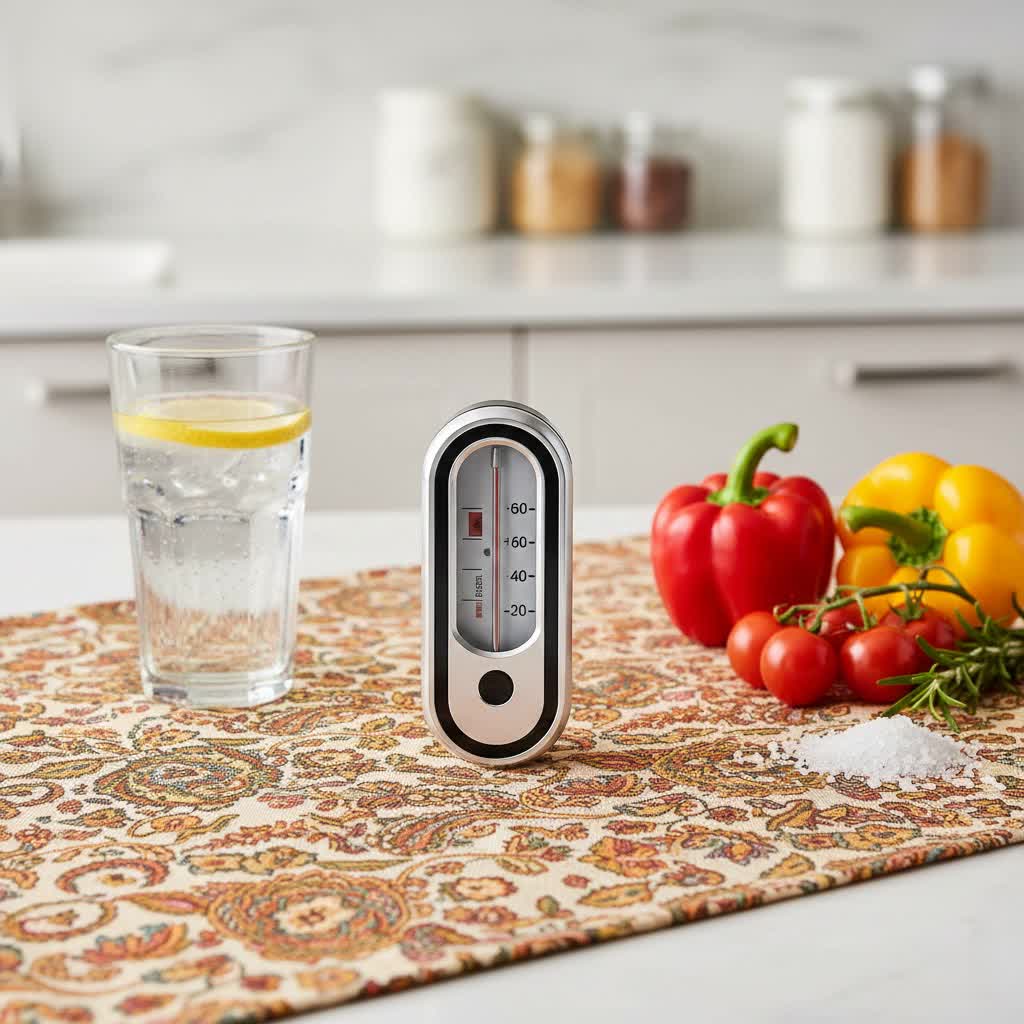
Infrared Thermometers in Cooking: An Overview and Their Niche
An infrared thermometer is a handheld, non-contact device designed to measure the surface temperature of an object. Unlike traditional thermometers that require direct physical contact, IR thermometers detect the thermal radiation naturally emitted by surfaces. This technology has become increasingly popular in kitchens, providing immediate and accurate readings without touching your food or cookware.
Their primary utility in cooking lies in measuring the temperature of various cooking surfaces. Imagine needing to know if your cast iron skillet is precisely 400°F for a perfect sear, if your grill grates are ready for delicate fish, or if your pizza stone has reached the optimal 700°F for a crispy crust. An infrared thermometer provides this data in an instant, helping you avoid underheated pans that lead to steaming instead of searing, or overheated surfaces that burn food. They are also excellent for checking the temperature of deep-frying oil or even oven walls.
However, it’s paramount to understand that infrared thermometers cannot measure the internal temperature of food [cite: how to use IR 4, IR vs Probe 1, 3, 5]. This is a critical distinction for meat cooking, as internal temperature is the only reliable indicator of doneness and food safety. While an IR thermometer can tell you your steak’s surface is hot, it offers no information about its core, where harmful bacteria may reside. For this reason, a pure infrared thermometer is best used as a complementary tool alongside a reliable probe thermometer, or by choosing a hybrid model that offers both functionalities.
Infrared vs. Probe: Understanding the Right Tool for Meat Temperature
When it comes to measuring temperatures in the kitchen, particularly for meat, distinguishing between infrared and probe thermometers is key. Each serves a unique purpose, and understanding their strengths and limitations is crucial for achieving both culinary excellence and food safety.
Infrared Thermometers: Pros and Cons for Cooking Surfaces
Infrared thermometers shine in specific cooking scenarios due to their unique non-contact measurement capabilities.
-
Pros:
- Instant Readings: They provide temperature readings in less than a second, allowing for quick adjustments during cooking [cite: how to use IR 1, IR vs Probe 1].
- Non-Contact and Hygienic: Without physical contact, there’s no risk of cross-contamination between different foods or surfaces [cite: how to use IR 5, IR vs Probe 1, 2, 5]. This also keeps food looking pristine, as no holes are poked [cite: how to use IR 5].
- Ideal for Surfaces: Perfect for measuring the temperature of grill grates, cast iron skillets, pizza stones, griddles, and deep-frying oil. This helps ensure optimal cooking conditions for searing, baking, and frying [cite: how to use IR 1, 3, 4, IR vs Probe 1].
- Safe Distance: Allows you to measure extremely hot surfaces from a safe distance, protecting you from burns [cite: how to use IR 3].
-
Cons:
- Surface Temperature Only: The most significant limitation is that IR thermometers only measure the exterior temperature of an object. They cannot determine the internal doneness of meat or other thick foods, which is crucial for food safety [cite: how to use IR 4, IR vs Probe 1, 3, 5].
- Affected by Emissivity and Reflectivity: Shiny or reflective surfaces (like polished stainless steel) can give inaccurate readings because they reflect ambient infrared energy rather than emitting their own [cite: how to use IR 1]. Many devices allow emissivity adjustment to compensate.
- Distance to Spot Ratio: The accuracy can be affected by the distance from the target. A higher distance-to-spot ratio allows for accurate readings from further away.
|
Our Picks for the Best Meat Thermometer in 2026
As an Amazon Associate I earn from qualifying purchases.
|
||
| Num | Product | Action |
|---|---|---|
| 1 | Meat Thermometer Digital for Grilling and Cooking - ANDAXIN Waterproof Ultra-Fast Instant Read Food thermometers with Backlight & Calibration for Kitchen, Deep Fry, BBQ, Grill(Red/Black), LCD |

|
| 2 | Alpha Grillers Meat Thermometer Digital - Instant Read Food Thermometer for Cooking and Grilling Gifts for Men Valentines Day Gifts for Him Her Mom Dad |
|
| 3 | 2 Pack Stainless Steel Meat Thermometer, Safe Leave in Oven, 2.5-in Extra-Large Dial Food Thermometer for Cooking, Temperature Probe for Baking, Steak, Turkey - Kitchen Gadgets - Silver |
|
| 4 | ThermoPro TP16 Large LCD Digital Cooking Food Meat Thermometer for Smoker Oven Kitchen BBQ Grill Thermometer Clock Timer with Stainless Steel Temperature Probe |
|
| 5 | ThermoPro TP19H Digital Meat Thermometer for Cooking with Ambidextrous Backlit and Motion Sensing Kitchen Cooking Food Thermometer for BBQ Grill Smoker Oil Fry Candy Instant Read Thermometer |
|
| 6 | Instant Read Meat Thermometer, Fast & Accurate Digital Food Thermometer with Backlight, Waterproof & Magnet for Grilling, Cooking, BBQ, Smoker, Baking, and Candy Making Blue |
|
| 7 | Meat Thermometer Digital, Instant Read Meat ThermometerI for Grill and Cooking, Waterproof Food Thermometer for Kitchen and Outside, BBQ, Turkey, Candy, Liquids, Beef |
|
| 8 | 0.5 Sec Instant Read Meat Thermometer Digital with ±0.5℉ Precision, Food Thermometer for Cooking Kitchen Gadgets, Oven Grill Candy BBQ Essentials Accessories, Gifts for Him Dad Men Birthday, Red |
|
| 9 | Meat Thermometer Digital - Instant Read Waterproof Food Thermometer with Backlight for Cooking, Grill, Candy, Kitchen & Stocking Stuffers for Men - Red |
|
| 10 | Escali AH1 Stainless Steel Oven Safe Meat Thermometer, Extra Large 2.5-inches Dial, Temperature Labeled for Beef, Poultry, Pork, and Veal Silver NSF Certified |
|
Probe Thermometers: Essential for Internal Meat Doneness
Probe thermometers remain indispensable for cooking meat and other foods where internal temperature is the primary concern.
- Why They Are Necessary: Probe thermometers directly measure the core temperature of food by inserting a metal probe into the thickest part. This is the only reliable way to confirm that meat has reached a safe internal temperature to kill harmful bacteria and to achieve your desired level of doneness (e.g., rare, medium, well-done) [cite: IR vs Probe 1, 3, 4].
- Accuracy for Internal Readings: They offer highly accurate readings of internal temperatures, essential for recipes like roasts, poultry, and baked goods [cite: IR vs Probe 1].
- Types:
- Instant-Read Probe Thermometers: Provide quick internal temperature checks in seconds.
- Leave-In Probe Thermometers: Designed to remain in the food throughout the cooking process (often in an oven or grill), typically connected to a base unit that monitors temperature and may have alarms.
Hybrid Infrared/Probe Thermometers: The Best of Both Worlds
For cooks seeking versatility and comprehensive temperature control, hybrid thermometers combine the benefits of both technologies. These innovative devices feature an infrared sensor for surface temperature measurements and a fold-out or wired probe for internal temperature checks.
- Comprehensive Monitoring: A single tool can measure both pan readiness and internal meat doneness, simplifying your kitchen toolkit [cite: best IR 2, 5, IR vs Probe 1].
- Convenience: Offers the speed and hygiene of non-contact measurements for surfaces, combined with the precision of a probe for food safety.
- Ideal for Grilling and Roasting: Perfect for grill masters and roasters who need to ensure the grill grates are hot enough for a crust and the meat is perfectly cooked inside.
Comparing Infrared and Hybrid Thermometers
To help you decide which type of thermometer best suits your culinary needs, here’s a comparison of pure infrared and hybrid models:
| Feature | Pure Infrared Thermometer | Hybrid Infrared/Probe Thermometer |
|---|---|---|
| Measurement | Surface temperature only | Surface temperature (IR) and Internal temperature (Probe) |
| Contact Type | Non-contact | Non-contact (IR) and Contact (Probe) |
| Speed | Instant (under 1 second) | Instant for IR; usually 2-5 seconds for probe |
| Key Use Cases | Grill grates, pans, pizza stones, oil, oven walls | All pure IR uses, plus internal doneness for meat, poultry, baking |
| Food Safety | Not suitable for ensuring internal doneness | Essential for ensuring internal doneness of meat |
| Hygiene | High (no cross-contamination) | High (IR non-contact, probe cleaned after use) |
| Typical Price | Lower to mid-range | Mid-range to high-end |
| Portability | Very portable, gun-style | Often portable, with fold-out probe or detachable wired probe |
How to Choose the Best Infrared Meat Thermometer
Selecting the right infrared thermometer, especially when considering its role in meat cooking, involves evaluating your specific needs, budget, and desired features.
Assess Your Cooking Needs
Before diving into product specifications, consider how you typically cook and what temperatures you need to measure most often.
- Primary Use: Do you mainly need to check the temperature of your cast iron skillet for searing, the grill surface, or a pizza stone? A pure infrared thermometer will suffice.
- Internal Meat Doneness: If ensuring the internal temperature of meats like chicken, beef, or pork is a priority, you must have a probe thermometer. In this case, a hybrid infrared/probe thermometer offers the most comprehensive solution within a single device. If you opt for a pure IR thermometer, you’ll need a separate, reliable probe thermometer.
- Specific Features:
- Emissivity Adjustment: Look for models with adjustable emissivity, especially if you measure various surface types. This allows for more accurate readings on different materials [cite: how to use IR 1, IR vs Probe 1].
- Distance-to-Spot Ratio (D:S): A higher D:S ratio (e.g., 12:1, 30:1) means the thermometer can measure a smaller area from a greater distance, providing more precise readings and keeping your hand further from the heat [cite: best IR 1].
- Temperature Range: Ensure the thermometer can handle the high temperatures of your grill or oven (e.g., up to 1000°F or more).
- Laser Targeting: Single or dual lasers help you pinpoint the exact area being measured.
- Backlit Display: Essential for reading temperatures in low-light conditions, such as outdoor grilling at night.
Budget Considerations
Infrared and hybrid thermometers vary widely in price. While professional-grade models can be expensive, many affordable and highly accurate options are available for home cooks. Determine how much you’re willing to invest, keeping in mind that a slightly higher price often translates to better accuracy, durability, and additional features like adjustable emissivity or hybrid functionality.
Brand Reputation and Reviews
Opt for reputable brands known for their accuracy and customer support. Reading user reviews and professional tests can provide valuable insights into a thermometer’s real-world performance, durability, and ease of use. Brands like ThermoWorks, Cuisinart, Etekcity, and Fluke are frequently highlighted for their quality.
Mastering Your Infrared Thermometer: Tips for Accurate Readings
To get the most accurate and useful readings from your infrared thermometer, especially when incorporating it into your meat cooking routine, follow these best practices:
- Aim Directly: For the most accurate reading, point the thermometer straight down at the surface, rather than at an angle. Hold it a suitable distance away (typically 8-10 inches for many models) to avoid heat affecting the device [cite: how to use IR 3].
- Address Reflective Surfaces: Shiny surfaces like bare stainless steel have low emissivity and can provide inaccurate readings [cite: how to use IR 1]. To overcome this, spray a thin layer of cooking oil or place a piece of masking tape on the area you want to measure. The oil or tape will increase the emissivity, allowing for a more reliable reading [cite: how to use IR 1, 4, IR vs Probe 1].
- Take Multiple Readings: Surface temperatures can vary across a pan or grill. Take several readings in different spots and consider the average to get a comprehensive understanding of the heat distribution [cite: how to use IR 3, IR vs Probe 1].
- Allow Sensor to Acclimate: If your thermometer has been in a very cold or hot environment, give it a few minutes to acclimate to the ambient temperature before taking readings for optimal accuracy [cite: IR vs Probe 1].
- Clean and Store Properly: While non-contact, the lens should be kept clean to ensure accurate readings. Store your thermometer in a cool, dark, dry place away from direct sunlight [cite: how to use IR 5].
- Always Use a Probe for Internal Meat Temperature: This cannot be stressed enough: an infrared thermometer is NOT for checking the internal doneness of meat. For food safety and optimal results, always follow up your surface temperature checks with a reliable digital probe thermometer inserted into the thickest part of the meat to verify internal temperature against USDA guidelines.
Top Infrared and Hybrid Thermometers for Your Kitchen (Detailed Review)
Here are five highly-regarded infrared and hybrid thermometers that can significantly enhance your cooking precision:
-
ThermoWorks Hi-Temp Industrial IR (or Industrial IR Gun)
- Type: Pure Infrared Thermometer
- Overview: ThermoWorks is renowned for its high-quality thermometers, and their industrial IR guns are no exception. The Hi-Temp Industrial IR model is lauded for supreme accuracy, a wide temperature range, and adjustable emissivity. Its target-shaped laser helps pinpoint measurements. The Industrial IR Gun is another excellent choice, offering accuracy and versatility with customizable features like high/low alarms. These are professional-grade tools perfect for serious home cooks who need precise surface temperature readings for grills, ovens, and stovetops.
- Pros: Exceptional accuracy, robust build, adjustable emissivity, high distance-to-spot ratio.
- Cons: Higher price point, no internal probe.
-
Cuisinart CSG-200 Infrared and Folding Grilling Thermometer
- Type: Hybrid Infrared/Probe Thermometer
- Overview: This Cuisinart model stands out as an excellent dual-purpose tool, offering both an infrared mode for surface temperatures and a convenient flip-out probe for internal readings [cite: best IR 2, 5]. It provides fast and accurate results at an approachable price, making it a fantastic value for grillers and home cooks who want comprehensive temperature control in one device.
- Pros: Combines IR and probe in one unit, fast and accurate, backlit display, compact design, affordable.
- Cons: Probe response time may not be as fast as dedicated instant-read probes, some reports of screen being upside down for left-handed users.
-
Etekcity Lasergrip 800 Digital Infrared Thermometer
- Type: Pure Infrared Thermometer
- Overview: The Etekcity Lasergrip 800 is a popular budget-friendly option that delivers reliable performance for its price point [cite: best IR 4]. It offers sufficient accuracy for most home cooking surface temperature needs, such as checking griddle or pan heat. Its 16:1 D:S ratio allows for good measurement range, making it a solid choice for those new to infrared thermometers or on a tighter budget.
- Pros: Very affordable, good accuracy for the price, wide temperature range, good distance-to-spot ratio.
- Cons: No internal probe, may not be as precise as high-end models, limited advanced features.
-
Fluke 568 Dual Infrared Thermometer
- Type: Professional Hybrid Infrared/Thermocouple Probe Thermometer
- Overview: For those seeking the utmost in precision and versatility, the Fluke 568 is a professional-grade tool that offers both infrared measurements and an external wired thermocouple probe for contact measurements [cite: best IR 2]. It boasts an impressive 50:1 distance-to-spot ratio and high accuracy, making it suitable for discerning chefs and those with diverse temperature measurement needs beyond typical kitchen tasks.
- Pros: Extremely accurate, dual functionality (IR + contact probe), high D:S ratio, robust professional build, advanced features.
- Cons: Very expensive, might be overkill for the average home cook.
-
Wintact Infrared Thermometer
- Type: Pure Infrared Thermometer
- Overview: Cited as a reliable and affordable budget option, the Wintact Infrared Thermometer offers dependable surface temperature readings without breaking the bank [cite: best IR 1]. While it may have fewer features than more expensive models, its core function of providing accurate temperature checks for cooking surfaces makes it a strong contender for those looking for a basic, effective infrared tool.
- Pros: Highly affordable, reliable for basic surface temperature checks, easy to use.
- Cons: Fewer features, no internal probe, potentially lower maximum temperature range compared to industrial models.
Conclusion
Incorporating an infrared thermometer into your kitchen arsenal can revolutionize your approach to cooking, bringing unprecedented precision to surface temperature control. While these non-contact marvels are indispensable for tasks like perfectly searing a steak, dialing in your pizza oven, or ensuring optimal deep-frying oil temperatures, it’s crucial to remember their primary limitation: they measure surfaces, not internal doneness. For the comprehensive safety and perfection of cooked meats, a dedicated probe thermometer remains essential.
However, the emergence of hybrid infrared/probe thermometers offers the ultimate solution, combining the speed and hygiene of non-contact surface measurements with the critical internal temperature readings needed for food safety. By understanding the unique strengths of each tool and choosing wisely based on your cooking style and budget, you can empower yourself to cook with greater confidence, consistency, and culinary flair. Which temperature control tool will you add to your kitchen to unlock your next level of cooking mastery?
Frequently Asked Questions
Can an infrared thermometer measure the internal temperature of meat?
No, an infrared thermometer measures only the surface temperature of an object. For accurate internal temperature readings of meat, which are crucial for food safety and desired doneness, you must use a probe thermometer inserted into the thickest part of the meat [cite: how to use IR 4, IR vs Probe 1, 3, 5].
What is emissivity and why is it important for infrared thermometers?
Emissivity is an object’s efficiency in emitting thermal energy. Different materials have different emissivities. For accurate readings, some advanced infrared thermometers allow you to adjust the emissivity setting to match the surface you’re measuring. For most kitchen applications, an emissivity of 0.95 is suitable, and adding a thin layer of oil can help reflective surfaces give better readings [cite: how to use IR 1, 4, 5, IR vs Probe 1].
Are infrared thermometers safe to use with food?
Yes, infrared thermometers are safe to use with food because they measure temperature without any physical contact, eliminating the risk of cross-contamination. They simply detect the infrared radiation emitted by the object [cite: how to use IR 5, IR vs Probe 1].
How far away should I hold an infrared thermometer from the surface?
The ideal distance depends on the thermometer’s distance-to-spot (D:S) ratio. Generally, holding it about 3-10 centimeters (1-4 inches) from the surface is recommended for precise readings, though some models with higher D:S ratios can be used effectively from further away [cite: IR vs Probe 1]. Always refer to your specific model’s instructions.
Why would I choose a hybrid infrared/probe thermometer over a pure infrared model?
You would choose a hybrid model if you need both surface temperature measurements (for pans, grills) and internal temperature measurements (for meat doneness) in a single device. It offers the versatility of checking cooking surface readiness while also ensuring food safety by verifying internal core temperatures with a probe [cite: best IR 2, 5, IR vs Probe 1].
