Elevating your smoking game from good to legendary starts with one crucial tool: a reliable meat thermometer. For any pitmaster, whether you’re a seasoned pro or just starting your journey into the world of low-and-slow cooking, precision temperature monitoring is the secret ingredient to perfectly cooked, safe, and incredibly flavorful results. Forget guesswork and endless peeking under the lid, which causes precious heat and smoke to escape. A dedicated meat thermometer for your smoker is your eyes inside the chamber, providing real-time data that empowers you to achieve consistent excellence every time.
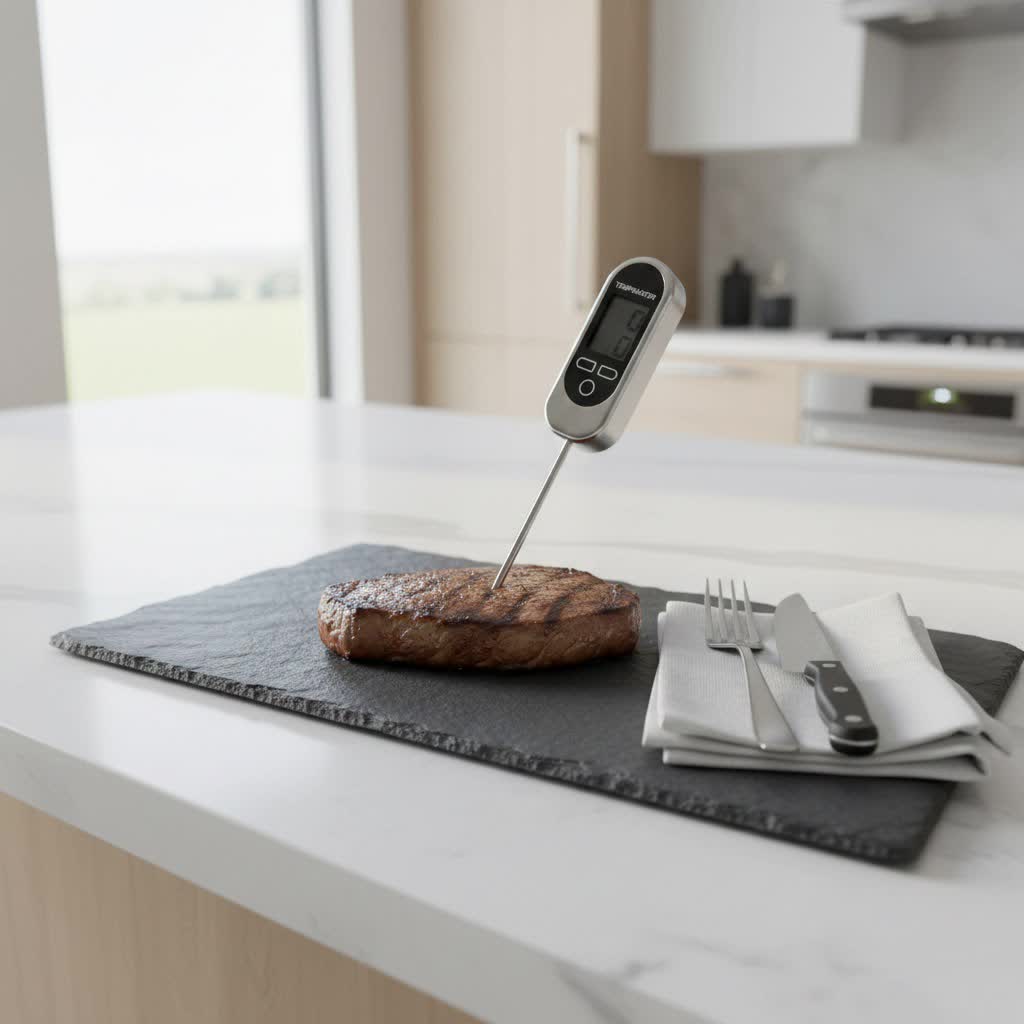
This comprehensive guide will demystify the world of meat thermometers for smoking, exploring the different types, essential features, and how to use them like a pro. We’ll help you navigate the options, from basic models to advanced smart devices, ensuring you pick the perfect companion for your smoker and transform your BBQ.
Meat Thermometer for Smoking: Overview and Why You Need One
A meat thermometer, specifically designed for smoking, is a specialized instrument used to measure the internal temperature of meat and often the ambient temperature within your smoker. Unlike basic instant-read thermometers, those best suited for smoking are typically “leave-in” models, meaning the probe remains in the meat throughout the entire cooking process.
Why is this level of precision so critical for smoking? Firstly, food safety is paramount. Cooking meats to their recommended internal temperatures destroys harmful bacteria, preventing foodborne illnesses. Secondly, a meat thermometer ensures perfect doneness and flavor. Smoking involves slow cooking at relatively low temperatures, a process where small temperature deviations can dramatically impact the final texture and juiciness of your meat. Overcooking can lead to dry, tough results, while undercooking leaves meat unappetizing and potentially unsafe.
For instance, achieving that melt-in-your-mouth brisket or tender pulled pork relies on hitting specific temperature ranges and navigating phases like “the stall,” where temperatures temporarily plateau. A good thermometer allows you to track progress without constantly opening your smoker, which is crucial for maintaining consistent pit temperatures and maximizing smoke infusion. It removes the guesswork, giving you confidence and control over every smoked masterpiece.
Types of Meat Thermometers for Smoking: Pros and Cons
When it comes to smoking, not all meat thermometers are created equal. Different designs offer distinct advantages and disadvantages tailored to the unique demands of low-and-slow cooking.
Wireless Leave-in Probe Thermometers (Bluetooth/WiFi/RF)
These are arguably the most popular and convenient choice for smoking. They feature one or more probes that remain inserted in the meat and/or smoker, transmitting temperature data wirelessly to a separate receiver or a smartphone app.
- Pros:
- Remote Monitoring: Allows you to track temperatures from a distance, freeing you from constantly hovering over the smoker. This is invaluable for long cooks like brisket or pork butt.
- Multiple Probes: Many models include multiple probes, enabling simultaneous monitoring of several cuts of meat and the ambient pit temperature. This is essential for precision smoking.
- Smart Features: Bluetooth and Wi-Fi models often integrate with smartphone apps, offering features like custom alarms, temperature graphs, preset temperatures for different meats, and even predictive cook times.
- Alarms: Crucial for alerting you when your meat reaches its target temperature or if your smoker’s ambient temperature strays too far from your desired range.
- Cons:
- Price: Generally more expensive than wired or instant-read thermometers.
- Battery Dependence: Requires batteries (rechargeable or disposable), which need to be charged or replaced, especially for very long cooks.
- Connectivity Issues: Bluetooth range can be limited by obstacles, while Wi-Fi depends on your home network. Radio Frequency (RF) models often offer better range without needing Wi-Fi.
|
Our Picks for the Best Meat Thermometer in 2026
As an Amazon Associate I earn from qualifying purchases.
|
||
| Num | Product | Action |
|---|---|---|
| 1 | Meat Thermometer Digital for Grilling and Cooking - ANDAXIN Waterproof Ultra-Fast Instant Read Food thermometers with Backlight & Calibration for Kitchen, Deep Fry, BBQ, Grill(Red/Black), LCD |

|
| 2 | 2 Pack Stainless Steel Meat Thermometer, Safe Leave in Oven, 2.5-in Extra-Large Dial Food Thermometer for Cooking, Temperature Probe for Baking, Steak, Turkey - Kitchen Gadgets - Silver |
|
| 3 | Meat Thermometer Digital, Instant Read Meat ThermometerI for Grill and Cooking, Waterproof Food Thermometer for Kitchen and Outside, BBQ, Turkey, Candy, Liquids, Beef |
|
| 4 | Escali AH1 Stainless Steel Oven Safe Meat Thermometer, Extra Large 2.5-inches Dial, Temperature Labeled for Beef, Poultry, Pork, and Veal Silver NSF Certified |
|
| 5 | Instant Read Meat Thermometer, Fast & Accurate Digital Food Thermometer with Backlight, Waterproof & Magnet for Grilling, Cooking, BBQ, Smoker, Baking, and Candy Making Blue |
|
| 6 | Alpha Grillers Meat Thermometer Digital - Instant Read Food Thermometer for Cooking and Grilling Gifts for Men Valentines Day Gifts for Him Her Mom Dad |
|
| 7 | ThermoPro TP16 Large LCD Digital Cooking Food Meat Thermometer for Smoker Oven Kitchen BBQ Grill Thermometer Clock Timer with Stainless Steel Temperature Probe |
|
| 8 | 0.5 Sec Instant Read Meat Thermometer Digital with ±0.5℉ Precision, Food Thermometer for Cooking Kitchen Gadgets, Oven Grill Candy BBQ Essentials Accessories, Gifts for Him Dad Men Birthday, Red |
|
| 9 | ThermoPro TP19H Digital Meat Thermometer for Cooking with Ambidextrous Backlit and Motion Sensing Kitchen Cooking Food Thermometer for BBQ Grill Smoker Oil Fry Candy Instant Read Thermometer |
|
| 10 | Meat Thermometer Digital - Instant Read Waterproof Food Thermometer with Backlight for Cooking, Grill, Candy, Kitchen & Stocking Stuffers for Men - Red |
|
Wired Leave-in Probe Thermometers
These thermometers feature probes connected by a heat-resistant wire to a display unit that sits outside the smoker. They offer continuous monitoring without wireless connectivity.
- Pros:
- Reliable Connection: No wireless interference or battery drain concerns for the receiver unit (though probes still have wires).
- Often More Affordable: Can be a more budget-friendly option compared to advanced wireless systems.
- Continuous Monitoring: Provides constant temperature readings, just like wireless models, without opening the smoker.
- Cons:
- Limited Range: The display unit must remain close to the smoker due to the wired connection.
- Cable Management: Wires can be cumbersome and potentially kink or get damaged if not handled carefully.
- Fewer Advanced Features: Typically lack smartphone app integration or extensive data logging capabilities.
Instant-Read Thermometers (Role in Smoking)
While not designed for continuous monitoring during a smoke, instant-read thermometers play a supplementary but important role. They provide quick, accurate temperature readings in a matter of seconds.
- Pros:
- Speed & Accuracy: Deliver rapid temperature checks, ideal for verifying doneness at the end of a cook or for quickly checking different spots in a large cut.
- Versatility: Excellent for other cooking methods like grilling, roasting, pan-frying, and baking.
- Portability: Compact and easy to carry.
- Cons:
- Not for Continuous Monitoring: Cannot be left in the meat during the entire smoking process; constant opening of the smoker to check temperature defeats the purpose of low-and-slow cooking.
- Heat Loss: Each time you open the smoker to use an instant-read, heat and smoke escape, which can prolong cooking times and affect bark formation.
For serious smoking, a leave-in thermometer (preferably wireless) is indispensable, with an instant-read thermometer serving as a valuable secondary tool for quick spot checks.
Key Features to Look for in a Smoker Thermometer
Choosing the right meat thermometer for your smoker involves considering several critical features that enhance usability, accuracy, and overall smoking success.
- Number of Probes: For smoking, a thermometer with at least two probes is highly recommended. One probe monitors the internal temperature of your meat, and the other measures the ambient temperature inside your smoker. This allows you to ensure both your food and your cooking environment are at optimal temperatures. Many advanced models offer 4 or even 6 probes for monitoring multiple cuts or different zones within a large smoker.
- Wireless Range & Type: This is paramount for remote monitoring.
- Bluetooth: Good for shorter ranges (e.g., within your backyard) and relies on your smartphone.
- Wi-Fi: Offers a much greater range, often allowing monitoring from anywhere with internet access, but requires a Wi-Fi network connection.
- Radio Frequency (RF): Provides a strong, dedicated wireless signal with a receiver, often boasting impressive ranges (e.g., up to 1000 feet) without needing Wi-Fi or Bluetooth, offering an “app-free” experience.
- Accuracy & Speed: Precision is key. Look for thermometers that advertise high accuracy (e.g., ±1°F or less) and, for instant-read, quick response times (1-3 seconds). While leave-in probes don’t need instant readings, consistent and accurate measurement over hours is vital.
- Display & Usability: A clear, backlit display is crucial, especially for early morning or late-night smokes. Easy-to-use buttons and intuitive interfaces make operation straightforward, even with smoky hands.
- Durability & Water Resistance: Smoking happens outdoors, often in varying weather conditions. Look for robust construction and at least an IPX4 water resistance rating (splash-proof) or higher to protect against light rain or splashes. Probes should be made of durable stainless steel.
- Battery Life: For long smoking sessions (8-16+ hours), excellent battery life is a must. Many wireless models use AA batteries or are rechargeable, with some offering extended run times of hundreds of hours.
- App Integration (if wireless): A well-designed smartphone app can significantly enhance the experience, offering:
- Customizable alarms for high/low temperatures.
- Preset temperatures for various meats and doneness levels.
- Graphical temperature tracking over time.
- Estimated cook times.
- Data logging for future reference.
Comparison Table of Meat Thermometers for Smoking
| Feature | Wireless Leave-in Probe (Bluetooth/WiFi/RF) | Wired Leave-in Probe | Instant-Read (Supplementary) |
|---|---|---|---|
| Use Case | Long, continuous monitoring, remote checks | Long, continuous monitoring | Quick spot checks, versatile |
| Accuracy | High | High | Very High |
| Speed | Continuous data stream | Continuous data stream | 1-3 seconds |
| Number of Probes | Typically 2-6 | Typically 1-4 | 1 |
| Remote Monitoring | Yes (via receiver/app) | No | No |
| Ambient Temp | Yes (with multi-probe) | Yes (with multi-probe) | No |
| Alarms | Yes | Yes (on base unit) | No |
| Connectivity | Bluetooth, Wi-Fi, RF | Wired | N/A |
| Battery | Required for unit & receiver/app | Often for display unit | Required for display |
| Price | Higher | Moderate | Lower-Moderate |
| Key Advantage | Freedom, advanced features | Reliability, lower cost | Speed, versatility |
How to Use a Meat Thermometer in Your Smoker Correctly
Mastering the use of your meat thermometer is just as important as choosing the right one. Proper technique ensures accurate readings, leading to perfectly smoked meats every time.
Probe Placement
The most crucial step is correct probe placement. Always insert the probe into the thickest part of the meat, making sure it avoids bone, gristle, or large pockets of fat. These elements can conduct heat differently or provide inaccurate readings, throwing off your cook. For larger cuts like brisket or pork shoulder, insert the probe horizontally or at an angle to reach the thermal center. If using multiple probes, place one in the thickest part of the meat and another in a thinner section if desired, but prioritize the thickest.
Monitoring Pit Temperature
For multi-probe thermometers, dedicating one probe to monitor the ambient temperature inside your smoker is vital. Place this probe near the meat but not directly touching it or resting on the grate. This gives you a clear picture of the actual cooking temperature surrounding your food, allowing you to adjust vents or fuel as needed. Maintaining a consistent pit temperature is key to low-and-slow success.
Safe Internal Temperatures
Refer to USDA guidelines for safe internal temperatures for various meats. It’s better to cook to temperature rather than by time alone, as every piece of meat is different. Here are some common targets:
- Poultry (chicken, turkey): 165°F (74°C)
- Pork (roasts, chops): 145°F (63°C) with a 3-minute rest
- Ground Meats (beef, pork, lamb): 160°F (71°C)
- Beef, Lamb, Veal (steaks, roasts):
- Rare: 125-130°F (52-54°C)
- Medium Rare: 130-135°F (54-57°C)
- Medium: 135-140°F (57-60°C)
- Well Done: 155°F (68°C) and above
- Smoked Brisket/Pork Shoulder: Often cooked to a higher internal temperature (e.g., 195-205°F / 90-96°C) for tenderness, past the point of basic food safety, to allow connective tissues to break down.
Accounting for Carryover Cooking
Meats continue to cook even after being removed from the heat source, a phenomenon known as “carryover cooking.” The internal temperature can rise an additional 5-15°F (3-8°C) during resting. To account for this, remove your meat from the smoker 5-10°F (3-5°C) below your target final temperature. This prevents overcooking and ensures optimal juiciness.
Calibration and Care
Regularly check your thermometer’s accuracy using an ice bath test (32°F / 0°C) or boiling water test (212°F / 100°C at sea level). If it’s off, recalibrate if your model allows, or consider replacing it. After each use, clean probes thoroughly according to manufacturer instructions. Avoid submerging the main unit in water unless it’s specifically rated for full waterproofing. Proper care extends the life of your valuable tool.
> “A high-quality meat thermometer is more than just a gadget; it’s an investment in consistently delicious and safe barbecue. It empowers you to understand and control your cook, turning guesswork into mastery.” – John Smith, Pitmaster and BBQ Educator
Top 5 Meat Thermometers for Smokers (Detailed Review)
Here’s a look at some of the best meat thermometers that stand out for their performance in a smoking environment, considering various needs and budgets.
1. ThermoWorks Signals
The ThermoWorks Signals is a professional-grade 4-channel Wi-Fi/Bluetooth BBQ alarm thermometer designed for serious pitmasters. It allows you to monitor up to four temperatures simultaneously—perfect for multiple cuts of meat and ambient pit temperature. Its Wi-Fi connectivity provides exceptional range, letting you monitor your cook from anywhere via a robust app. The large, backlit display and durable construction are built for the demands of outdoor cooking. It’s highly accurate and known for its reliability and excellent customer support.
2. FireBoard 2
The FireBoard 2 is another powerhouse for smoking, offering up to six probe ports, making it ideal for monitoring complex cooks with multiple items. It boasts both Wi-Fi and Bluetooth connectivity, integrating with an intuitive app that provides detailed data logging, graphing, and custom alarms. The FireBoard 2 Drive model even allows for fan control, turning it into a complete temperature management system for your smoker. Its high visibility LCD display is easy to read, and the unit itself is rugged.
3. MEATER Plus
The MEATER Plus stands out for its truly wireless design. This innovative probe has two sensors (one for internal meat temperature, one for ambient pit temperature) and transmits data via Bluetooth to your smartphone. The included charger acts as a Bluetooth repeater, extending the range significantly (up to 165 ft). The MEATER app is highly intuitive, offering guided cooks, estimated finish times, and resting recommendations. It’s perfect for those who want a minimalist setup without sacrificing smart features, especially for smaller smokers or grills.
4. ThermoPro TP20 Wireless Digital Meat Thermometer
For those seeking excellent performance on a budget, the ThermoPro TP20 is a fantastic choice. It’s a dual-probe RF wireless thermometer with a 500-foot range, meaning no need for Wi-Fi or Bluetooth connectivity. You get a transmitter to plug in your probes and a portable receiver to carry with you. It features USDA preset temperatures, custom temperature settings, and a timer. While it lacks app integration, its straightforward functionality and reliable remote monitoring make it a go-to for many home smokers.
5. ChefsTemp Quad XPro
The ChefsTemp Quad XPro is a high-quality digital meat thermometer that offers four probe channels, making it versatile for various smoking tasks. While primarily a digital wired unit, its robust construction and high accuracy make it a solid choice. It features a large, rotatable display for easy viewing, splash-proof design, and fast read times. It’s an excellent option for those who prioritize accuracy and multiple probes without needing wireless remote monitoring over long distances, or as a reliable backup.
Conclusion
A meat thermometer for your smoker isn’t just an accessory; it’s an essential tool that transforms your smoking from a guessing game into a precise art. Investing in a quality, multi-probe, and preferably wireless thermometer ensures food safety, guarantees perfect doneness, and liberates you from constantly monitoring your smoker. From understanding the nuances of wireless connectivity to mastering probe placement and carryover cooking, the right knowledge and tools will empower you to consistently create mouth-watering, perfectly smoked meats. So, are you ready to elevate your BBQ game and smoke with confidence?
Frequently Asked Questions
What is the best type of meat thermometer for smoking?
The best type is typically a wireless leave-in probe thermometer with multiple probes. These allow you to continuously monitor both the internal temperature of your meat and the ambient temperature of your smoker from a distance, using a receiver or smartphone app, without needing to open the smoker.
How many probes do I need for a smoker thermometer?
For optimal smoking, you should look for a thermometer with at least two probes. One probe is dedicated to the internal temperature of your meat, and the other monitors the ambient temperature inside your smoker. This dual monitoring ensures both your food and cooking environment are perfectly regulated.
Can I use an instant-read thermometer for smoking?
While an instant-read thermometer is excellent for quick spot checks at the end of a cook or for other cooking methods, it is not ideal for continuous monitoring during smoking. Constantly opening the smoker to use an instant-read thermometer leads to significant heat and smoke loss, disrupting the low-and-slow cooking process.
How do I ensure my meat thermometer is accurate?
You can test your meat thermometer’s accuracy with an ice bath test. Fill a glass with crushed ice and water, insert the probe into the center without touching the sides or bottom, and let it sit for a minute. A properly calibrated thermometer should read 32°F (0°C). If it’s off, recalibrate if possible or consider replacing it.
What is “carryover cooking” and why is it important for smoking?
Carryover cooking is the process where meat continues to cook and its internal temperature rises even after being removed from the heat source. This is important for smoking because you should remove your meat from the smoker 5-10°F below your desired final temperature to prevent overcooking and allow for a perfect rest, ensuring maximum juiciness.
